12th Chief Directorate
Somewhere on the forested coast of the Tatar Strait, near where Sakhalin Island narrows toward its northern reaches, sits one of the most sensitive military installations in Russia. No signs mark its entrance. No satellite images clearly resolve its boundaries. It belongs to the 12th Chief Directorate of the Russian Ministry of Defense, an organization so secretive that for decades its very existence was barely acknowledged. Created in 1947, at the dawn of the Soviet nuclear age, the 12th GU MO has one overriding mission: to keep every Russian nuclear warhead accounted for, maintained, transported, and secure.
Higher Than Intelligence
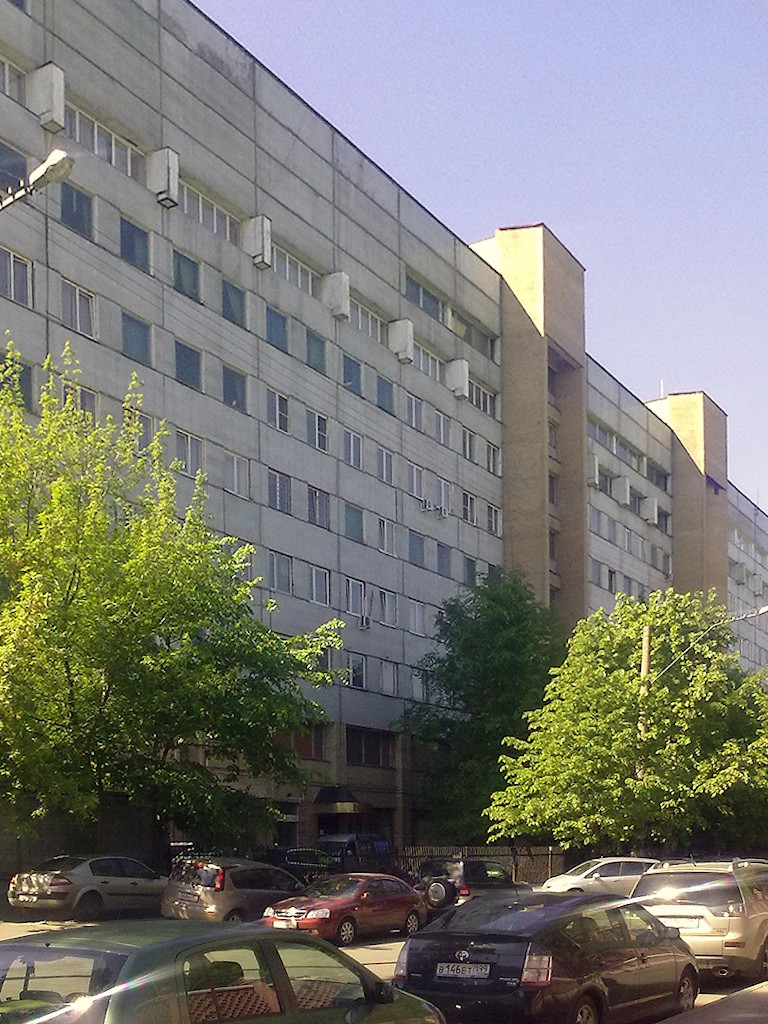
The 12th Chief Directorate occupies a peculiar position in Russia's military hierarchy. Unlike the GRU, the famous military intelligence service, the 12th GU MO reports directly to the Minister of Defense rather than the Chief of the General Staff. This makes it, in bureaucratic terms, more powerful than the spy agency that dominates Western headlines. Its chief holds a rank equivalent to a military district commander, a position meant for a four-star general or Marshal of Artillery, though in practice only one of the organization's seven leaders has actually held that lofty rank. The directorate's headquarters sits in central Moscow at Znamenskiy Pereulok 19, a nondescript address that houses what insiders call the 'nuclear registrar,' a central archive where every piece of Soviet and Russian nuclear munitions is cataloged.
The Arsenal Network
Across eleven time zones, from Murmansk's Arctic coast to the Pacific shores near Sakhalin, the 12th GU MO operates a sprawling constellation of nuclear weapons storage facilities. During the Soviet era, more than twenty arsenals dotted the landscape; by 2005, consolidation had reduced that number to fourteen. These installations, once called 'Repair-Technical Bases' in deliberate bureaucratic camouflage, now go by the equally opaque name 'Special-Technical Formations.' Each base stores, maintains, and when necessary transports nuclear warheads for the Strategic Rocket Forces, Ground Forces, Air Force, and Navy. Officers for these bases train at a dedicated facility in Serpukhov, south of Moscow, where a specialized curriculum covers nuclear weapons design, safe handling, and the engineering of warhead storage. Graduates emerge into careers defined by extraordinary secrecy and extraordinary responsibility.
Listening for the Bomb
Nested within the 12th GU MO is a smaller, semi-autonomous unit that functions as Russia's nuclear detective agency. The Special Control Service, established on March 4, 1954, monitors nuclear weapons tests conducted by other nations using six distinct technical methods, from seismic detection to analysis of atmospheric samples. During the Cold War, this unit tracked every American, British, French, and Chinese nuclear detonation, assembling a picture of each adversary's weapons program from fragments of data. The service also maintains Russia's own nuclear test sites, including the polygon on Novaya Zemlya in the Arctic Ocean, where the Soviet Union detonated the largest nuclear weapon ever built, the Tsar Bomba, in 1961. Even today, the Special Control Service ensures the ecological monitoring of these former test grounds, measuring the lingering radioactive signatures of tests conducted decades ago.
Ghosts of the Cold War
The collapse of the Soviet Union in 1991 created an urgent crisis for the 12th GU MO. Nuclear weapons were suddenly scattered across newly independent nations, including Ukraine, Kazakhstan, and Belarus. Arsenals that had operated under unified Soviet command now sat in foreign countries, and the directorate faced the monumental task of consolidating the world's largest nuclear stockpile back onto Russian soil. Some bases, like the one at Kirovograd in Ukraine and another at Liepaja in Latvia, were disbanded and their warheads relocated. Others, deeper inside Russia, absorbed the returning weapons. The directorate's motto might well be borrowed from the nuclear registrar's mandate: every warhead tracked, every warhead accounted for. In a world where a single missing weapon represents a catastrophic threat, the 12th GU MO's obsessive record-keeping may be the most consequential clerical work on Earth.
The Invisible Guardians
Today the 12th Chief Directorate remains one of the least understood major military organizations in any nuclear-armed state. Its bases appear on no tourist maps. Its personnel rarely speak publicly. When Russia released video footage of its nuclear weapons monitoring systems, the images revealed little more than banks of screens and uniformed officers at anonymous consoles. Yet the directorate's work touches the central anxiety of the modern age. Every nuclear arms reduction treaty, every inspection protocol, every diplomatic assurance about warhead security ultimately depends on organizations like this one functioning as intended. From the frozen Arctic test ranges of Novaya Zemlya to the Pacific coast installations near the Sea of Japan, the 12th GU MO operates in the space between geopolitics and physics, where the stakes are measured not in territory or treasure but in the survival of civilization itself.
From the Air
Located at 50.27°N, 137.47°E on the coast of Khabarovsk Krai near the Tatar Strait. The area is heavily restricted military airspace. Nearest civilian airport is Yuzhno-Sakhalinsk (UHSS). The coastline of eastern Siberia and Sakhalin Island are visible from cruising altitude. Recommended viewing altitude: 35,000 ft for broad geographic context of the Sakhalin-mainland corridor.