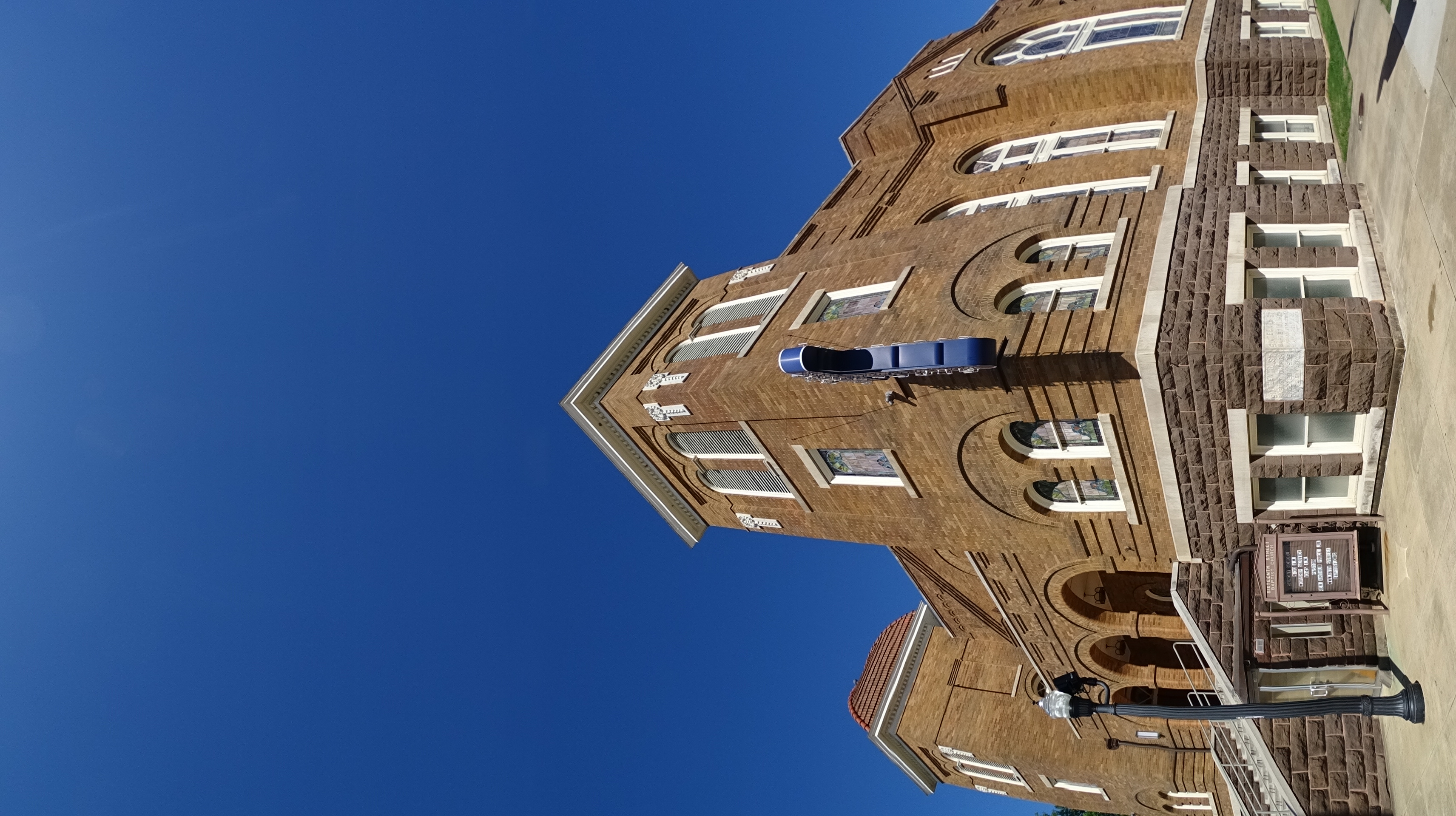
16th Street Baptist Church: From First Congregation to National Landmark
Two years after Birmingham, Alabama, was incorporated in 1871, a group of Black congregants organized the First Colored Baptist Church of Birmingham. It was the first Black church in a city that was barely a city at all -- a raw industrial settlement in Jones Valley, surrounded by the iron ore and coal seams that would define its future. The congregation met in a small building at 12th Street and Fourth Avenue North, then moved to 3rd Avenue North, then in 1880 purchased the lot at 16th Street and 6th Avenue North where the church stands today. That address would become one of the most consequential in American history -- not because anyone planned it that way, but because a church built to serve a community became the place where that community fought for its rights, buried its children, and refused to close its doors.
Brick by Brick
Under pastor William R. Pettiford, who led the congregation from 1883 to 1904, the church completed its first permanent brick building on the 16th Street site in 1884. Pettiford was a formidable figure -- an educator, banker, and organizer who co-founded the Alabama Penny Savings Bank, the first Black-owned bank in Birmingham. But by 1908, the city condemned the 1884 structure and ordered it demolished. The congregation turned to Wallace Rayfield, one of the few formally trained Black architects in the South, to design a replacement. Rayfield created a building in modified Romanesque and Byzantine style -- twin towers framing a grand facade -- and local Black contractor T.C. Windham built it in 1911 for $26,000. The church housed a main sanctuary, a basement auditorium used for lectures and meetings, and rooms for Sunday school. It became the largest and most prominent Black church in Birmingham, hosting speakers including W. E. B. Du Bois, Mary McLeod Bethune, Paul Robeson, and Ralph Bunche.
The Gathering Place
By the early 1960s, the 16th Street Baptist Church had become the organizational nerve center of Birmingham's civil rights movement. Its basement auditorium -- designed decades earlier for lectures -- became the staging ground for mass meetings, strategy sessions, and nonviolence training. Fred Shuttlesworth, the chief local organizer, and Southern Christian Leadership Conference leaders Martin Luther King Jr. and James Bevel used the church as their base of operations. In May 1963, the Children's Crusade launched from its doors: more than a thousand students marched to downtown Birmingham to demand an end to segregation. Six hundred were arrested on the first day alone. The church's size, location, and stature in the Black community made it the natural heart of the movement. That same visibility made it a target. Birmingham's segregationists had already detonated more than forty-five bombs at Black properties in the preceding decade, earning the city the grim nickname "Bombingham."
September 15, 1963
On a Sunday morning, Ku Klux Klan members Thomas Blanton, Bobby Frank Cherry, and Robert Edward Chambliss planted nineteen sticks of dynamite beneath the church's east steps. The explosion at 10:22 a.m. killed four girls -- Addie Mae Collins, Carole Robertson, Cynthia Wesley, and Denise McNair -- who were in the basement changing into choir robes for Youth Day services. Twenty-two others were injured. The blast blew a hole in the rear wall, destroyed all but one of the church's stained-glass windows, and created a crater in the basement lounge. More than 8,000 mourners attended the funeral for three of the four victims at Sixth Avenue Baptist Church, though no city officials came. The bombing accelerated federal involvement in Alabama's civil rights struggle. President Lyndon Johnson signed the Civil Rights Act into law the following year. The Voting Rights Act followed in 1965.
Resurrection in Glass and Stone
The church reopened on June 7, 1964, rebuilt with more than $300,000 in unsolicited gifts from around the world. Among them was a stained-glass window from Wales -- designed by artist John Petts and funded by ordinary Welsh citizens through a newspaper campaign. The window depicts a Black Christ with arms outstretched, the right hand pushing away hatred, the left offering forgiveness. The inscription reads, "You do it to me," referencing the biblical parable of the sheep and the goats. The church was added to the Alabama Register of Landmarks and Heritage in 1976, designated a National Historic Landmark in 2006, and placed on UNESCO's tentative list of World Heritage Sites in 2008. In 2017, it became part of the Birmingham Civil Rights National Monument. A multi-million-dollar restoration in the early 2000s addressed decades of water damage and exterior brick deterioration.
Still Standing, Still Open
Today the 16th Street Baptist Church receives more than 200,000 visitors annually. Its membership hovers around 500, but weekly attendance approaches 2,000 -- a testament to the pull of a place that carries the weight of history while still functioning as a living congregation. The church operates a drug counseling program and continues to host community events. Across 6th Avenue North, Kelly Ingram Park holds the Birmingham Civil Rights Institute, which preserves and teaches the history of the movement that gathered strength within the church's walls. The Four Spirits memorial in the park depicts the four girls killed in 1963 in the moments before the explosion -- one releasing doves, another kneeling to tie a dress sash. From the air, Rayfield's twin-towered facade anchors the northwest corner of the Civil Rights District, a single building that contains more American history per square foot than most entire cities.
From the Air
Located at 33.52°N, 86.81°W in downtown Birmingham, Alabama, at the corner of 16th Street and 6th Avenue North. The church's distinctive twin-towered Romanesque-Byzantine facade is identifiable from lower altitudes. Kelly Ingram Park and the Birmingham Civil Rights Institute are directly across the street to the east. The church sits within the Birmingham Civil Rights National Monument. Birmingham-Shuttlesworth International Airport (KBHM) is approximately 5 nautical miles northeast. Best viewed at 1,500-2,500 feet AGL for architectural detail. Vulcan Park on Red Mountain lies approximately 2 nautical miles to the south.