The 16th Street Baptist Church Bombing: Four Girls and the Sunday That Changed America
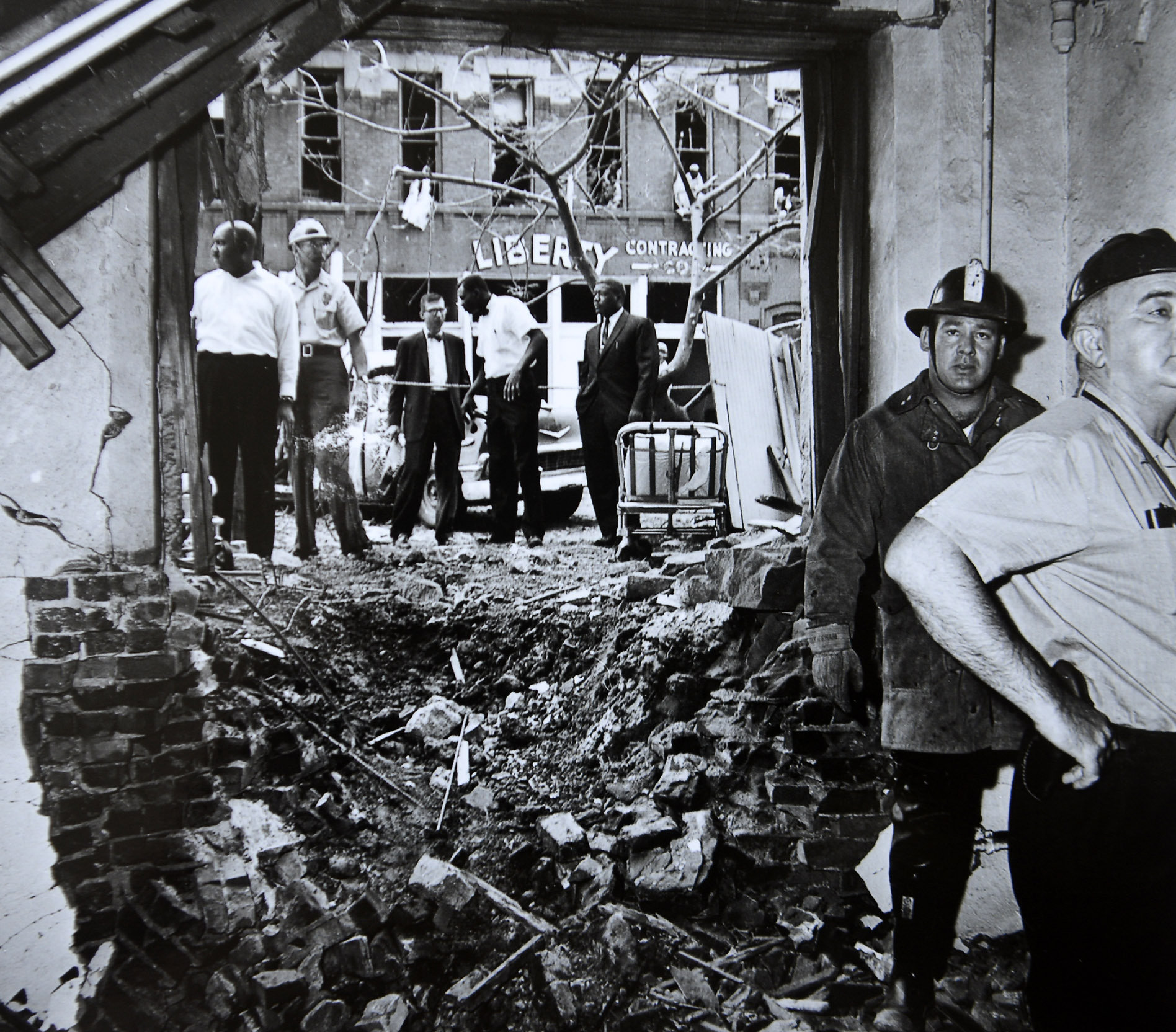
At 10:22 on a Sunday morning in Birmingham, Alabama, four girls were changing into choir robes in a basement restroom. Addie Mae Collins was tying a dress sash. Cynthia Wesley, Carole Robertson, and Denise McNair were beside her. They were fourteen, fourteen, fourteen, and eleven years old. The sermon they were preparing to attend was titled "A Love That Forgives." They never heard it. Nineteen sticks of dynamite, planted beneath the church steps by members of the Ku Klux Klan, detonated and blew a hole through the rear wall. The blast hurled the girls' bodies through the air. All four were pronounced dead on arrival at Hillman Emergency Clinic. The sole stained-glass window to survive the explosion depicted Christ leading a group of young children.
Bombingham
The 16th Street Baptist Church was not bombed in isolation. Birmingham, Alabama, had earned the nickname "Bombingham" through at least 21 separate explosions at Black properties and churches in the eight years before 1963. The city's Commissioner of Public Safety, Bull Connor, enforced racial segregation with water cannons, police dogs, and mass arrests. Black and white residents used separate water fountains, separate movie theaters, separate everything. The city had no Black police officers or firefighters. In the spring of 1963, the Birmingham campaign and its Children's Crusade brought more than a thousand students -- some as young as eight -- to march from the 16th Street Baptist Church to downtown. Six hundred were arrested on the first day. The demonstrations forced an agreement on May 8 to integrate public facilities within ninety days. Staunch Klansmen saw the concessions as intolerable surrender. As a rallying point for the movement, the church was an obvious target.
Three Minutes
In the early hours of September 15, 1963, four members of the United Klans of America -- Thomas Edwin Blanton Jr., Robert Edward Chambliss, Bobby Frank Cherry, and allegedly Herman Frank Cash -- placed a minimum of fifteen sticks of dynamite with a time delay under the east steps of the church, near the basement. Shortly before the explosion, an anonymous caller phoned the church. Fifteen-year-old Carolyn Maull, acting as Sunday School secretary, answered. The caller said two words: "Three minutes." The detonation destroyed the rear steps, blew a crater in the basement lounge, shattered windows two blocks away, and knocked a passing motorist out of his car. Between fourteen and twenty-two people were injured. Addie Mae Collins's twelve-year-old sister, Sarah, had twenty-one pieces of glass embedded in her face and was blinded in one eye. In the seven hours that followed the bombing, two more Black youths -- Johnny Robinson, sixteen, and Virgil Ware, thirteen -- were shot to death in Birmingham.
Decades of Reckoning
Martin Luther King Jr. called the bombing "one of the most vicious and tragic crimes ever perpetrated against humanity." The FBI identified four suspects by 1965 -- Blanton, Cash, Chambliss, and Cherry -- but J. Edgar Hoover blocked prosecutions and sealed the files. The case went cold for over a decade. In 1971, newly elected Alabama Attorney General William Baxley reopened the investigation, building trust with reluctant witnesses and uncovering evidence the FBI had never shared with local prosecutors. In 1977, Robert Chambliss was convicted of first-degree murder and sentenced to life in prison. He died incarcerated in 1985, still proclaiming his innocence. The case reopened again in 1995, when 9,000 sealed FBI evidence files were finally unsealed. In 2001, Thomas Blanton was convicted after jurors heard a secretly recorded FBI tape in which he said, "You've got to have a meeting to plan a bomb." Bobby Cherry was convicted the following year. Herman Cash died in 1994 without ever being charged.
A Window from Wales
After the bombing, Welsh artist John Petts designed a replacement stained-glass window for the church, funded by donations from citizens of Wales collected through a campaign in the Western Mail newspaper. The window depicts a Black Christ with arms outstretched -- the right hand pushing away hatred and injustice, the left offering forgiveness. It faces south from the front of the church. The bombing's cultural aftershock rippled far beyond Birmingham. Nina Simone channeled it into "Mississippi Goddam." John Coltrane recorded "Alabama" two months after the blast as a direct musical tribute. Spike Lee's 1997 documentary "4 Little Girls" earned an Academy Award nomination. In 2013, President Barack Obama awarded a posthumous Congressional Gold Medal to all four girls, recognizing that their deaths served as a catalyst for the Civil Rights Act of 1964 and the Voting Rights Act of 1965.
The Church Still Stands
The 16th Street Baptist Church reopened on June 7, 1964, rebuilt with more than $300,000 in unsolicited donations from around the world. Today it receives more than 200,000 visitors annually. Its weekly attendance of nearly 2,000 far exceeds its membership of around 500. Across the street, Kelly Ingram Park holds the Four Spirits memorial -- a bronze and steel sculpture depicting the four girls in the moments before the explosion. Denise McNair stands on tiptoe releasing doves. Addie Mae Collins kneels, tying a dress sash. The church was designated a National Historic Landmark in 2006 and placed on UNESCO's tentative list of World Heritage Sites in 2008. From the air, the Romanesque and Byzantine brick structure designed by Black architect Wallace Rayfield in 1911 sits at the heart of the Birmingham Civil Rights District -- a building that absorbed the worst of American hatred and answered with an open door.
From the Air
Located at 33.52°N, 86.81°W in downtown Birmingham, Alabama, at the intersection of 16th Street and 6th Avenue North. The church's Romanesque-Byzantine brick structure is identifiable from lower altitudes within the Birmingham Civil Rights District. Kelly Ingram Park and the Birmingham Civil Rights Institute sit directly across the street. Birmingham-Shuttlesworth International Airport (KBHM) is approximately 5 nautical miles northeast. Best viewed at 1,500-2,500 feet AGL. The site is part of the Birmingham Civil Rights National Monument, designated in 2017.