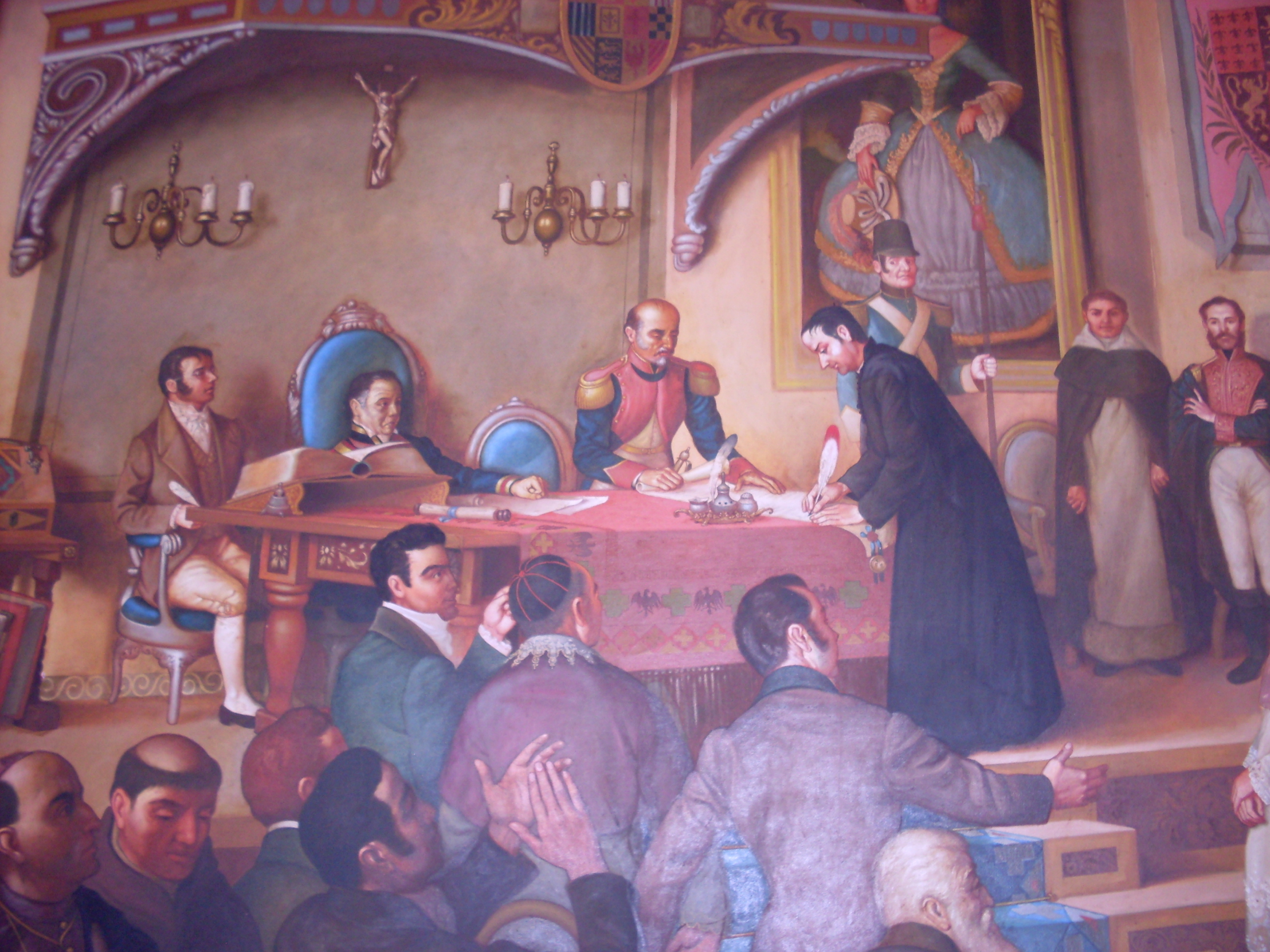
1811 Independence Movement
The bell was supposed to ring. On the evening of November 5, 1811, a group of conspirators gathered near the Church of La Merced in San Salvador, waiting for the signal from the bell tower that would launch their revolt against Spanish rule. The signal never came -- whether through betrayal, cold feet, or simple miscommunication, no one rang the bell. The rebels went ahead anyway. What followed was the Primer Grito de Independencia, the First Shout of Independence, and it would echo across Central America for the next decade.
Indigo, Taxes, and a Distant King
The roots of the 1811 revolt lay in economics as much as ideology. The Intendancy of San Salvador had grown wealthy on indigo, the blue dye cultivated across its lowlands and traded throughout the isthmus. That wealth made San Salvador the second city of the Captaincy General of Guatemala -- but the taxes flowed upward to Guatemala City and onward to Spain. Creole landholders, the American-born descendants of Spanish settlers, wanted to keep more of what their plantations earned. The ideas of the Enlightenment, the example of the American and French Revolutions, and the chaos unleashed by Napoleon's 1808 invasion of Spain all fed a growing conviction that the colonial order was crumbling. When Ferdinand VII was removed from the Spanish throne, the legitimacy of every official he had appointed came into question. In San Salvador, that question became a rallying cry.
The Shout in the Square
The conspirators were not peasants or soldiers. They were priests like Jose Matias Delgado, doctors like Santiago Jose Celis, and educated merchants like the Aguilar y Bustamante brothers -- Nicolas, Vicente, and Manuel. Manuel Jose Arce emerged as the voice of the movement. Standing in the town square outside the Church of La Merced, he declared to the crowd: "There is no King, nor Intendant, nor Captain General. We only must obey our alcaldes." The logic was simple and radical: Ferdinand VII had been deposed, so every appointment he had made was void. The crowd chose Arce as their leader. Arms were taken up, and the insurgents proclaimed the total independence of San Salvador from Spain. In the days that followed, the revolt spread to Santiago Nonualco, Usulutan, Chalatenango, Santa Ana, Tejutla, and Cojutepeque. Further risings flared in Metapan on November 24 and Sensuntepeque on December 20.
Suppression Without Bloodshed
The revolt faltered as quickly as it spread. The city councils of San Miguel, San Vicente, and Santa Ana refused to join. Without broader support, the insurgents could not hold their ground. A delegation arrived from Guatemala City, led by the new Intendant, Colonel Jose Alejandro de Aycinena, backed by Guatemalan troops and priests. By December 8, San Salvador was back under crown authority. Aycinena chose conciliation over punishment, and most of the population accepted the restored government without resistance. What makes the Central American independence movement unusual is precisely this restraint -- unlike the brutal wars that tore through Mexico, Colombia, and Venezuela, the struggle here was largely peaceful. Many conspirators were imprisoned, but the consequences were measured rather than savage.
From Prison to the Presidency
The story did not end in December 1811. Jose Matias Delgado was taken to Guatemala City, but his captors could not silence his influence. By 1813, he had been elected to the Provincial Deputation of Guatemala under the liberal Spanish Constitution of 1812. He became director of the Tridentino Seminary in the capital. A second, smaller revolt broke out in San Salvador in 1814, but Delgado was in Guatemala and took no part. When the Spanish Constitution was restored in 1820, Delgado was again elected provincial deputy. On September 15, 1821, he was among the signatories of the Act of Independence of Central America. He then led San Salvador's separation from Guatemala to prevent it from being absorbed into the First Mexican Empire. Manuel Jose Arce, the man who had shouted defiance in the town square, became the first president of the Federal Republic of Central America, serving from 1825 to 1829. Every November 5, El Salvador commemorates the day the bell did not ring -- and the revolt that happened regardless.
From the Air
Located at 13.699N, 89.191W in San Salvador, El Salvador's capital. The Church of La Merced, where the rebels gathered, is in the historic center of the city. San Salvador sits in a valley surrounded by volcanic peaks, including the San Salvador Volcano to the northwest. Nearest airport is El Salvador International (MSLP), approximately 40 km south of the city center. The historic center is densely built and best identified from the air by the Metropolitan Cathedral and surrounding plaza.