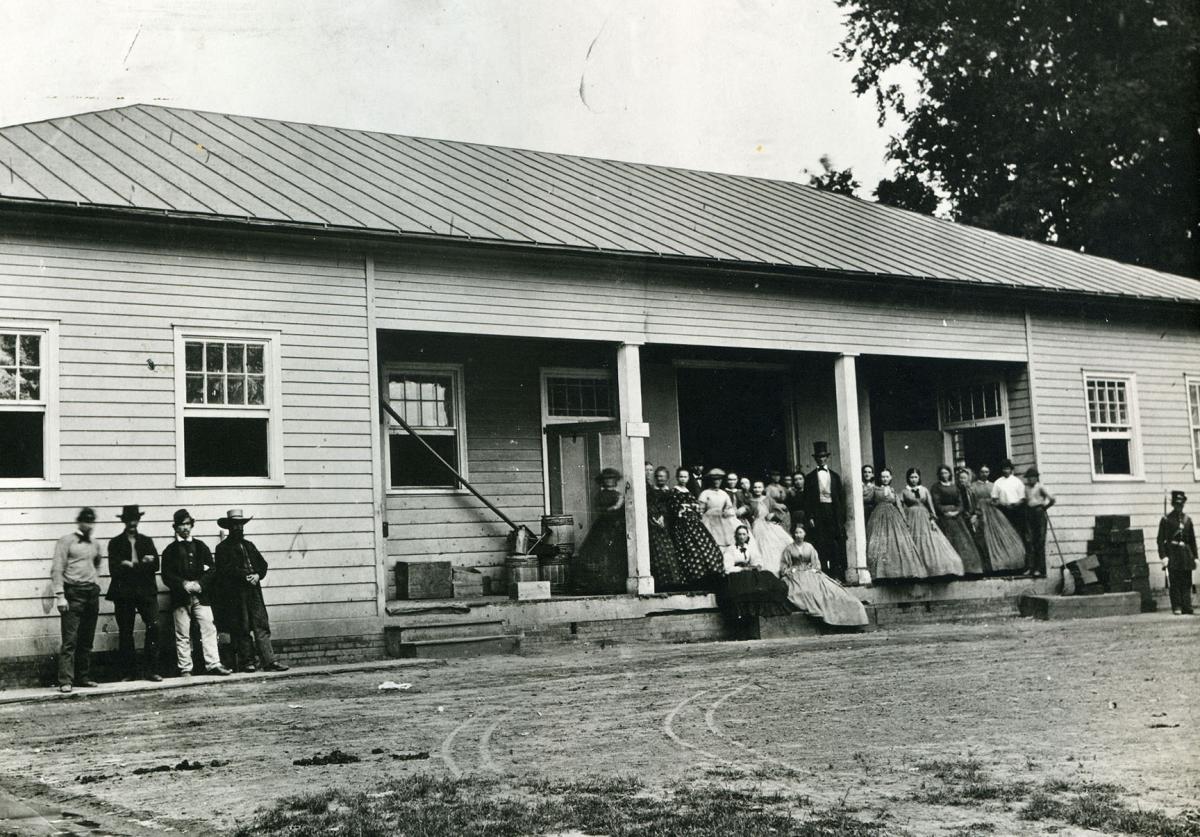
1864 Washington Arsenal Explosion
That morning, the 108 women working inside the Arsenal warehouse had received a thank-you note. It praised their $170 donation toward a memorial for victims of the Allegheny Arsenal explosion two years earlier -- another munitions disaster, another group of women workers killed. By noon on June 17, 1864, many of the women who read that note would themselves be dead, killed in an explosion at the Washington Arsenal that remains the worst civilian disaster in the history of the nation's capital during wartime. The Arsenal sits on a narrow peninsula where the Potomac and Anacostia rivers converge in southwest Washington, D.C. -- a place once known simply as "The Island." Today it carries the name Fort Lesley J. McNair, one of the oldest military installations in the United States, established in 1791.
Flares in the Summer Sun
The cause was negligence, pure and simple. The Arsenal's superintendent had left hundreds of signal flares spread out to dry in the brutal June heat, positioned dangerously close to the warehouse buildings. When the flares ignited, some launched through an open warehouse window. Inside, fire raced through the workroom. Then a barrel of gunpowder caught. The blast tore the roof clean off the building. At the time of the explosion, the Arsenal was the largest of its kind in the Union, housing roughly 40 buildings packed with ammunition, flares, and artillery. An 1862 inspection had counted an estimated 16.5 million rounds of ammunition on the grounds. The women who filled cartridges and assembled munitions there had taken these jobs while their husbands fought in the Civil War -- working-class women and Irish immigrants earning money and demonstrating patriotism in the only ways available to them.
Hoop Skirts and Flames
What made the disaster especially horrific was the clothing the women wore. The wide hoop skirts fashionable in the 1860s became wicks for the spreading fire, igniting as women tried to flee the burning building. Heavy worktables blocked exits and windows, trapping workers inside. Rescuers pulled burning women from the wreckage and threw them into the Potomac River to extinguish the flames. Three women, likely in shock, ran up a hill with their clothes on fire before Arsenal employees caught them. Survivors who could still walk staggered to boats heading for the Sixth Street Wharf, where families waited to take them home. In all, 21 women died. Some were burned so completely that they could only be identified by a ring, a scrap of dress fabric, or some other small personal item.
A President at the Graveside
The day after the explosion, four women were buried at Mount Olivet Cemetery. The following day, a funeral procession gathered at the Arsenal itself, and the attendees included President Abraham Lincoln and Secretary of War Edwin Stanton. At 3:15 in the afternoon, the Army Medical Department loaded coffins into hearses, and the procession wound its way to Congressional Cemetery. There, workers had dug two pits: one for the women who had been identified, and a second for those who could not be. Washington's citizens soon raised $3,000 for a monument to the victims. That monument still stands at Congressional Cemetery -- a marble column honoring women whose names were nearly lost to history. It was the same building, incidentally, where the co-conspirators in Lincoln's assassination would later be hanged, binding this single patch of ground to two of the Civil War era's darkest chapters.
The Arsenal's Unquiet Legacy
The 1864 explosion was not the last. In July 1871, another massive blast destroyed several warehouses, powerful enough to shatter windows across the entire installation. That explosion came at 3 a.m. and killed no one, a small mercy of timing. But the pattern of catastrophe was clear. The government closed the Arsenal in 1881, renaming it the Washington Barracks. It became Fort Lesley J. McNair in 1948. Today, the grounds serve as the home of the National Defense University. Each year on the anniversary, personnel from Joint Base Myer-Henderson Hall hold a ceremony at the monument. At 11:50 a.m. -- the exact time of the 1864 blast -- they observe a moment of silence. Then, one by one, the name of each victim is read aloud. Historian Ed Bearss has spoken at the ceremony, ensuring that the story of these women endures.
From the Air
Located at 38.881N, 76.981W on Greenleaf Point, the narrow peninsula at the confluence of the Potomac and Anacostia rivers in southwest Washington, D.C. The triangular footprint of Fort Lesley J. McNair is clearly visible from the air. Recommended viewing altitude: 2,000-3,000 feet AGL. Nearest airport: KDCA (Ronald Reagan Washington National), approximately 2 nm south. Be aware of the Washington D.C. Special Flight Rules Area (SFRA) and the Flight Restricted Zone (FRZ) surrounding the capital.