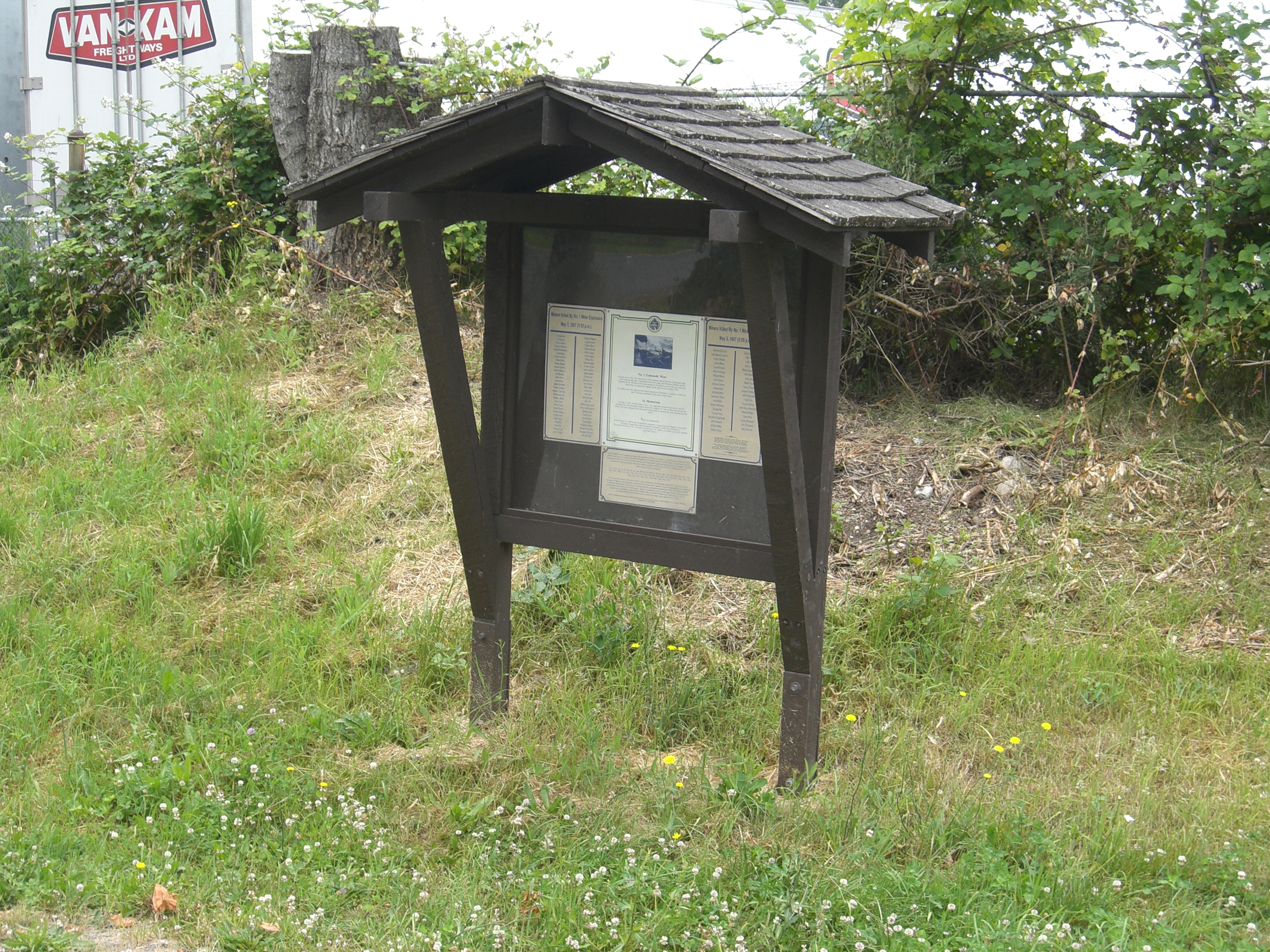
1887 Nanaimo Mine Explosion
The men who did not die instantly wrote their goodbyes in the dust on their shovels. Deep underground in the Number One Coal Mine at Nanaimo, trapped behind collapsed tunnels and spreading fire on May 3, 1887, miners who had survived the initial explosion found themselves sealed in with poisonous gas. Most would not die from the blast or the flames but from choking, slowly, in darkness, with time enough to scratch final messages to families who would never see them delivered. Above ground, 150 children lost their fathers that day. Forty-six women became widows. Only seven miners walked out alive.
Under the Harbour
The Number One Coal Mine opened in 1884 at the foot of Milton Street in Nanaimo, operated by the Vancouver Coal Company. Its shafts and tunnels did not merely dig into the earth beneath the town -- they extended under Nanaimo Harbour itself, reaching toward Protection Island, Newcastle Island, and the Nanaimo River. The geography that made Nanaimo a coal town also made its mines uniquely dangerous: tunnels running beneath a harbour meant water pressure above and gas pockets below, with the sea itself as a constant threat to any breach in the rock. On May 3, 1887, improperly laid explosives triggered a detonation deep in the mine. The blast propagated through the tunnel network, collapsing passages, igniting coal dust, and trapping scores of men in chambers that rapidly filled with afterdamp -- the carbon monoxide and carbon dioxide mixture that is the true killer in most mine explosions.
Names Unknown
For decades, the official death toll stood at 148. Researchers later revised it to 150, a correction that finally counted all of the dead. Among them were 53 Chinese workers, men who were listed in the government inquest and the annual report of the Minister of Mines not by name but as "Chinamen, names unknown," followed by a payroll number. British Columbia employers were not legally required to report the deaths of Chinese employees until 1897, a full decade after the explosion. Some accounts suggest that 48 of the 53 Chinese miners shared the surname Mah, but records that might have confirmed their identities may have been destroyed when Nanaimo's Chinatown burned to the ground in 1960. The monument on Milton Street that commemorates the disaster lists the names of the white miners -- settlers from Cornwall, Wales, and Yorkshire -- but for the Chinese dead, it lists only payroll numbers. The distinction between who was named and who was numbered tells a story about colonial British Columbia that no memorial plaque was designed to tell.
The Mine Reopened
The fire burned for a full day after the explosion. When it was finally extinguished and the bodies recovered, the mine did not close. The Number One reopened, and over the following decades it produced 18 million tons of coal before permanently shutting down in 1938. Nanaimo's economy depended on coal, and the demand for it overrode the memory of what had happened in those tunnels. The plaque at the foot of Milton Street stands as the primary physical memorial -- a modest marker for the worst mining disaster in British Columbia's history. The tunnels themselves still exist beneath the harbour, sealed and flooded, a hidden geography of loss underlying the ferry terminals and waterfront parks that Nanaimo built atop its coal mining past.
From the Air
Located at 49.16N, 123.95W in Nanaimo, on the east coast of Vancouver Island. The Number One Mine entrance was at the foot of Milton Street, and its tunnels extended under Nanaimo Harbour toward Protection Island and Newcastle Island -- both visible from the air. The memorial plaque is near the waterfront. Nearest airports: CYCD (Nanaimo Airport, ~15 km S). From 3,000 ft AGL, the harbour, Protection Island, and Newcastle Island provide context for the underground extent of the mine workings.