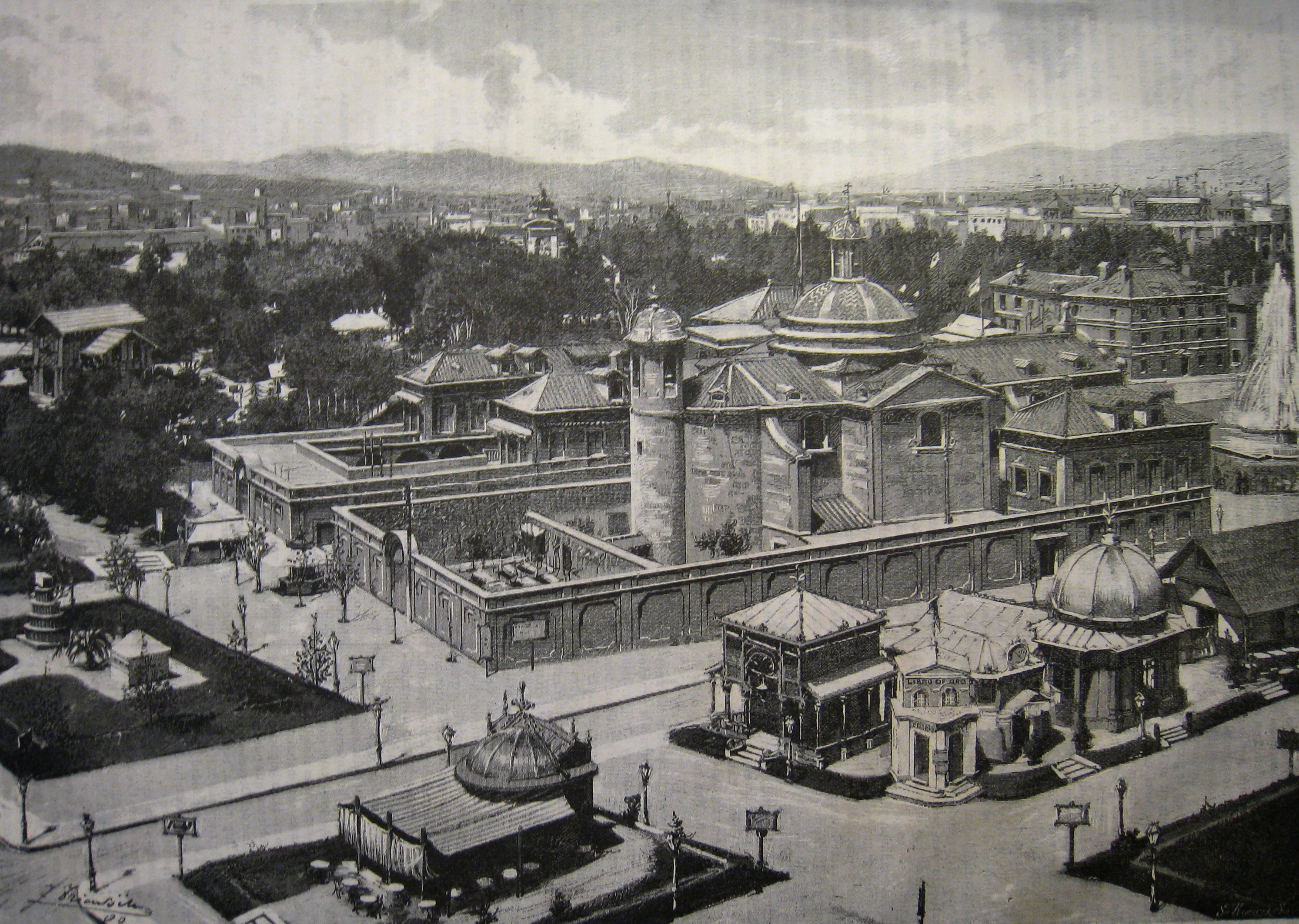
1888 Barcelona Universal Exposition
Before 1888, a military fortress stood where families now stroll beneath palm trees and row boats across a small lake. The Ciutadella -- literally "citadel" -- had been built by the Bourbon monarchy after the siege of 1714 to keep Barcelona in line, its cannons pointed inward at the city it occupied. When Spain's first World's Fair opened on April 8, 1888, Barcelona did not merely host an exhibition. It demolished a symbol of oppression and built a park in its place.
A Mayor's Gamble
The exposition almost never happened. A journalist and entrepreneur named Eugenio Serrano de Casanova tried to launch an international fair in 1886, but the effort collapsed. Mayor Francesc Rius i Taulet seized the idea and drove it forward with a conviction that bordered on recklessness -- the city was betting its reputation on pulling off something no Spanish city had attempted. The artistic director Tomas Moragas oversaw the transformation of the old citadel grounds into exhibition spaces, gardens, and monuments. A young Antoni Gaudi, still years away from the Sagrada Familia, designed a pavilion for the Companyia Transatlantica Espanola. The fair ran from April through December 1888 and generated the equivalent of roughly $1.7 million in revenue, a modest return that masked the real payoff: Barcelona had announced itself as a modern European capital.
The Arch That Welcomed the World
Visitors entered through the Arc de Triomf, a grand triumphal arch built in the Modernista and Neo-Mudejar style -- a blend of industrial-age ambition and Islamic-influenced ornamentation unique to the Iberian peninsula. The arch still presides over the broad Passeig de Lluis Companys, its reddish brick glowing in the Mediterranean light. Unlike its Parisian counterpart, Barcelona's arch was not built to celebrate military conquest. Its friezes depict commerce, industry, and agriculture -- a declaration that this city's triumphs would be earned through trade and creativity, not warfare. It remains one of Barcelona's most recognizable landmarks, a gateway that now leads to the park rather than the fair.
Dragons, Greenhouses, and a Monument to Columbus
The fair left Barcelona with an inheritance of buildings and monuments that still define the city's character. Domenech i Montaner designed the Castell dels Tres Dracs -- the Castle of the Three Dragons -- as the fair's cafe and restaurant, a building so striking it later became the Zoology Museum. The Hivernacle, an elegant iron-and-glass greenhouse, and the Umbracle, a shaded structure designed to shelter tropical plants, gave the park its botanical character. At the lower end of Les Rambles, a 60-meter monument to Christopher Columbus was erected on the spot where the explorer reportedly returned from his first voyage to the Americas. The Columbus Monument still points out to sea, marking the intersection of the city's medieval waterfront and its modern aspirations.
From Citadel to Civic Heart
The deepest legacy of the 1888 exposition is not any single building but the park itself. Ciutadella Park in its present form -- its monumental fountain, its small ponds, its gravel paths shaded by magnolias and orange trees -- is entirely a product of the World's Fair. What had been a fortress designed to subjugate Barcelonans became the green heart of the city, a place where children chase pigeons and musicians perform on Sunday afternoons. The exposition also ignited the Modernisme movement that would reshape Barcelona's architecture over the following decades, producing not just Gaudi's fantastical buildings but an entire aesthetic vocabulary. Forty-one years later, in 1929, Barcelona would host a second international exposition on Montjuic, but this first fair -- scrappy, ambitious, and slightly improbable -- was the one that changed the city's self-image forever.
From the Air
Located at 41.39N, 2.19E in Barcelona's Ciutadella Park, near the waterfront. The Arc de Triomf is visible as a distinct reddish-brick arch northwest of the park. Barcelona-El Prat Airport (LEBL) is 12 km southwest. Best viewed at 2,000-3,000 feet approaching from the sea, with the park's green rectangle contrasting against the dense Eixample grid.