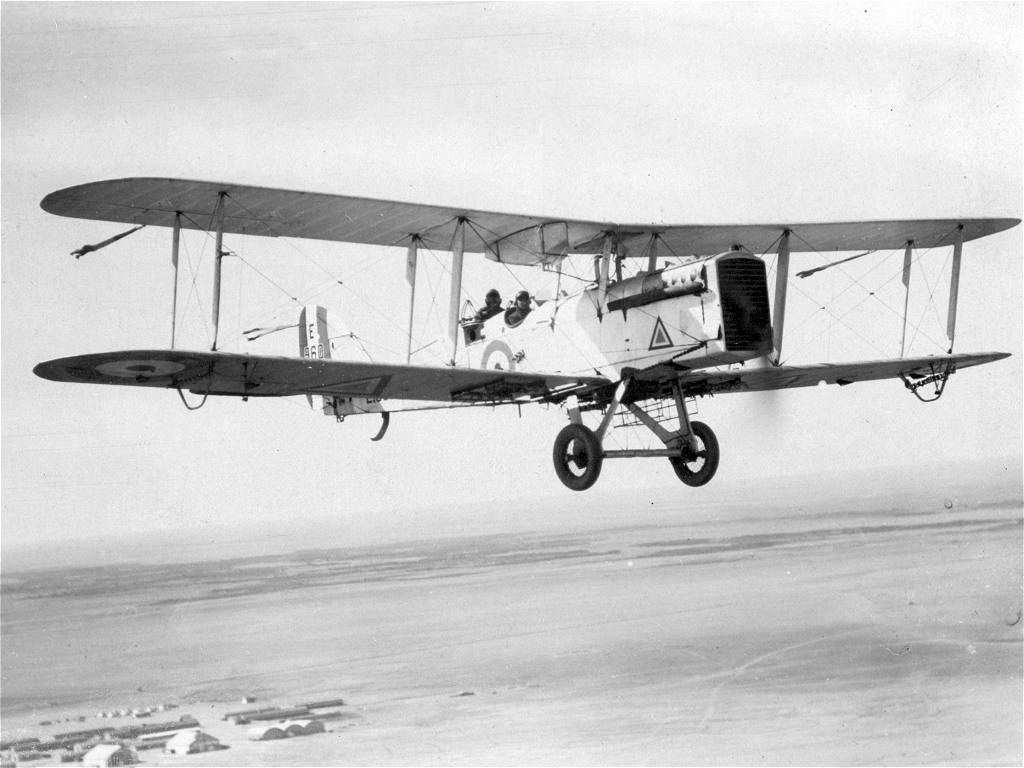
1922 Burao Tax Revolt
The Camel Corps refused to fire. That single act of disobedience, in the dusty streets of Burao in February 1922, changed everything. British authorities had announced a new tax on the people of the Somaliland Protectorate, paired with a disarmament program meant to tighten colonial control over the interior. The policy was straightforward imperial arithmetic: the protectorate was draining Colonial Office coffers, and someone had to pay. The people of Burao had a different calculation in mind.
A Tax Too Far
The roots of the revolt ran deeper than money. Britain's Somaliland Protectorate had just emerged from the long Dervish War, a two-decade struggle against Mohammed Abdullah Hassan's resistance movement that had drained British resources and prestige. With the Dervish state finally crushed in 1920, the colonial administration under Governor Geoffrey Archer moved to consolidate control. The twin policies of taxation and disarmament were designed to fill empty treasury accounts and prevent any future armed resistance. For the Habr Yunis tribesmen of Burao, this was an intolerable overreach. They had their own traditions of self-governance, their own systems of justice and tribute, and no interest in funding an administration that governed from the coast and understood little of the interior. When the announcement came in early 1922, the response was immediate and violent.
The Death of Captain Gibb
Captain Allan Gibb was no newcomer to Somaliland. A veteran of the Dervish campaign, decorated with the Distinguished Service Order and the Distinguished Conduct Medal, he served as district commissioner at Burao and understood the region's tensions better than most colonial officials. When clashes erupted between the Rer Sugulleh and akils of other tribes, Gibb ordered the Camel Corps company to restore order, then walked forward with his interpreter to negotiate. It was a brave decision, and it killed him. Riflemen from the Rer Sugulleh opened fire, and Gibb fell instantly. The Camel Corps soldiers, many of them Somali, had already refused to shoot at the rioters. In the confusion and falling darkness, the men who killed Gibb disappeared into the night. Governor Archer's telegram to Winston Churchill, then Secretary of State for the Colonies, was blunt: he needed aeroplanes.
Bombers from Aden
Churchill authorized the request. Within two days, planes from No. 8 Squadron RAF flew from Aden to Burao, crossing the Gulf of Aden via Perim to minimize the sea journey. What followed was devastation. The inhabitants of Burao's native township were driven from their homes, and the entire settlement was razed through a combination of bombing, machine-gun fire, and deliberate burning. James Lawrence, in his history of Britain's imperial campaigns, described the destruction in stark terms: the town was simply eliminated. Archer also demanded a fine of 2,500 camels from the implicated clan sections, with the penalty doubling if they failed to surrender the man who killed Gibb. The aerial bombardment of a civilian settlement to punish a tax revolt was, even by the standards of colonial warfare, a disproportionate response — one that would leave lasting scars on Burao's collective memory.
A Victory Disguised as Defeat
The aftermath defied colonial expectations. The tribal leaders acquiesced to paying the livestock fine for Gibb's death, but they flatly refused to identify or hand over the men responsible for the killing. Most of those who fired on Gibb evaded capture entirely. More significantly, the revolt achieved its core objective. Governor Archer, confronted with the impossibility of peacefully implementing taxation in a territory where people would rather face RAF bombers than pay, abandoned the tax policy altogether. The Somaliland Protectorate would continue to operate at a loss to the Colonial Office. For the people of Burao, the revolt became a story of resistance — proof that collective defiance could bend even an empire's will. The 1922 revolt also foreshadowed later acts of anti-colonial resistance, including the 1945 Sheikh Bashir Rebellion, which drew on similar grievances against British authority in the Somaliland interior.
From the Air
Burao sits at 9.53°N, 45.53°E in central Somaliland, on an arid plateau in the Togdheer region. From cruising altitude, the city appears as a grid of streets in a semi-arid landscape, with the Togdheer seasonal river visible nearby. The nearest major airport is Burao Airport (HCMV), with Berbera Airport (HCMI) approximately 130 km to the northwest. The terrain is flat scrubland typical of the Somali interior, with visibility generally excellent in dry conditions.