1929 Barcelona International Exposition
Every weekend, water and light dance together on the slopes of Montjuic. The Magic Fountain -- Font Magica -- throws illuminated plumes into the Mediterranean night while crowds gather on the cascading terraces below the Palau Nacional. This spectacle has been running, with interruptions, since 1929, when Barcelona hosted its second World's Fair on the hill overlooking the harbor. The exposition cost 130 million pesetas, covered 118 hectares, and ran from May 1929 to January 1930. It also produced one of the most important buildings of the twentieth century -- one that existed for less than a year.
Building a Mountain Into a Stage
Montjuic had long been Barcelona's strategic high ground -- a place of fortresses and quarries, its stone used to build the city below. The 1929 exposition reimagined the entire hill as a monumental landscape. The architect Josep Puig i Cadafalch designed the grand avenue leading up from Placa d'Espanya, flanked by exhibition palaces and culminating at the Palau Nacional, a massive neoclassical building that now houses the Museu Nacional d'Art de Catalunya. Carles Buigas, a young engineer, created the Magic Fountain at the base of the approach -- an engineering marvel that combined water jets, colored lights, and music in a way that no public installation had attempted before. The effect was theatrical, and deliberately so: Barcelona wanted visitors to feel they were ascending toward something extraordinary.
Where Modernism Arrived in Spain
The exposition became a testing ground for the architectural movements reshaping Europe. At the local level, it consolidated Noucentisme, a classicist Catalan style that had supplanted the organic flamboyance of Modernisme. But the most radical statement came from Germany. Ludwig Mies van der Rohe designed the German Pavilion -- later known simply as the Barcelona Pavilion -- as a building with almost no conventional function. It contained no exhibits. Instead, the structure itself was the exhibit: floating planes of Tinos verde antico marble, golden onyx, and tinted glass, supported by cruciform chrome columns. The building existed for less than a year before being demolished in early 1930, yet it fundamentally changed how architects thought about space, material, and the relationship between interior and exterior.
Four Columns and a Political Statement
Not everything at the exposition was purely aesthetic. Before the fair, the architect Puig i Cadafalch had erected four Ionic columns on Montjuic as a symbol of the four stripes of the Catalan flag -- a statement of national identity within the framework of a Spanish state event. The dictator Primo de Rivera ordered them demolished in 1928 before the fair opened. The Magic Fountain was built nearby on the same hillside approach. The columns were not rebuilt until 2010, when they were re-erected near their original location. That eighty-year gap between demolition and reconstruction tells a compressed history of Catalonia's fraught relationship with Madrid -- a relationship that was ancient in 1929 and remains unresolved today.
A Legacy Written in Stone and Light
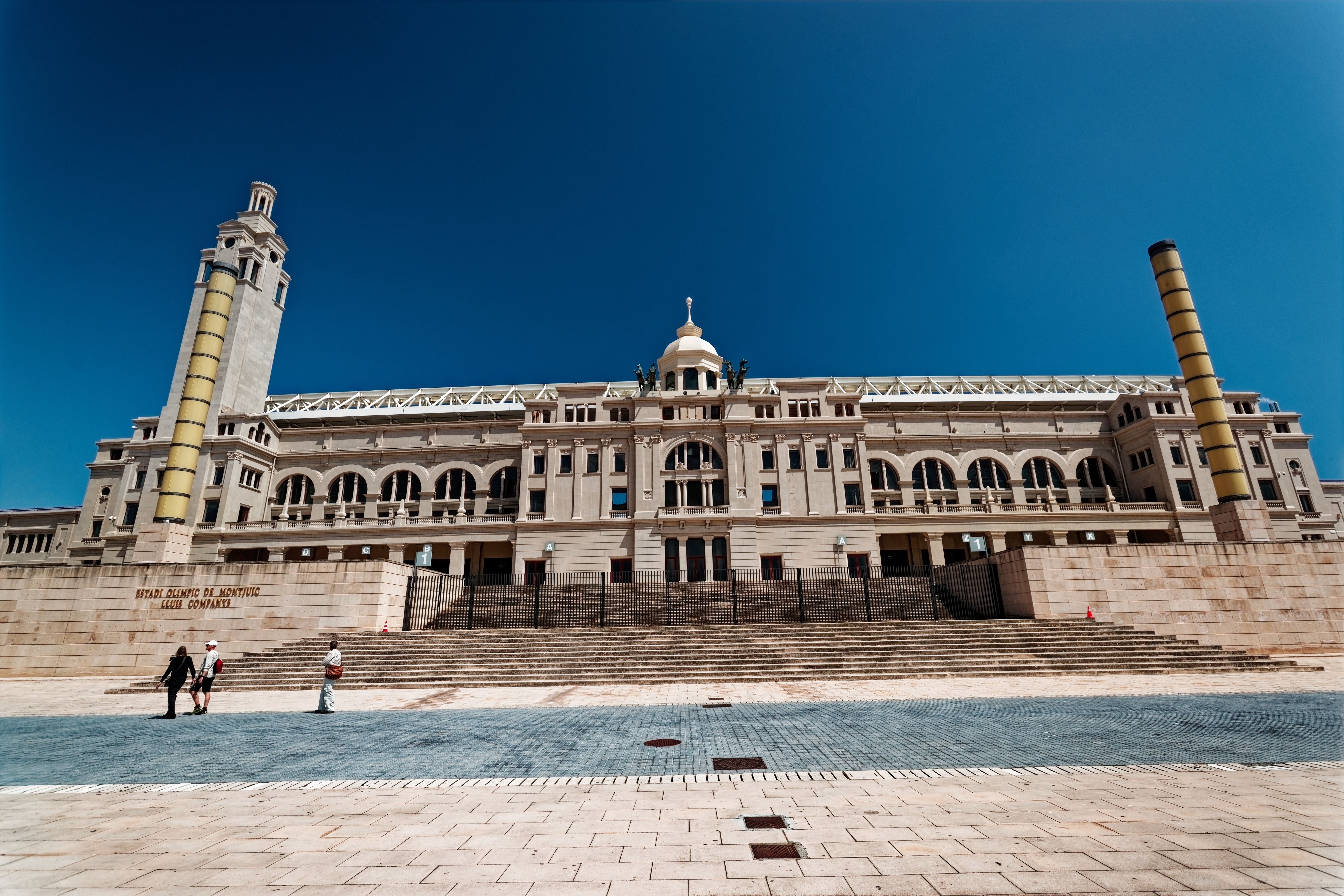
The 1929 exposition left Montjuic permanently transformed. The Palau Nacional, the Poble Espanyol -- a replica village showcasing architectural styles from across Spain -- the gardens, the sports facilities that would later serve the 1992 Olympics, and the fountains all remain. The Barcelona Pavilion, demolished after the fair, was reconstructed between 1983 and 1986 by a group of Catalan architects who formed the Mies van der Rohe Foundation. The reconstruction stirred controversy -- Philip Johnson wondered aloud whether a dream should be made real, and critic Paul Goldberger declared that the building was "not supposed to exist." But it does exist, drawing architects from around the world to stand in its serene spaces and contemplate what Mies called "an ideal zone of tranquillity." The fair opened five months before the Wall Street crash that would reshape the global economy. Barcelona, briefly, had stood at the center of the world.
From the Air
Located at 41.37N, 2.15E on Montjuic hill, southwest of Barcelona's city center overlooking the harbor. The Palau Nacional and Magic Fountain are visible as a grand axis ascending the hillside from Placa d'Espanya. Barcelona-El Prat Airport (LEBL) is 8 km southwest. Best viewed from 3,000-4,000 feet, where the exposition's monumental layout along the hillside is clearly legible against the port below.