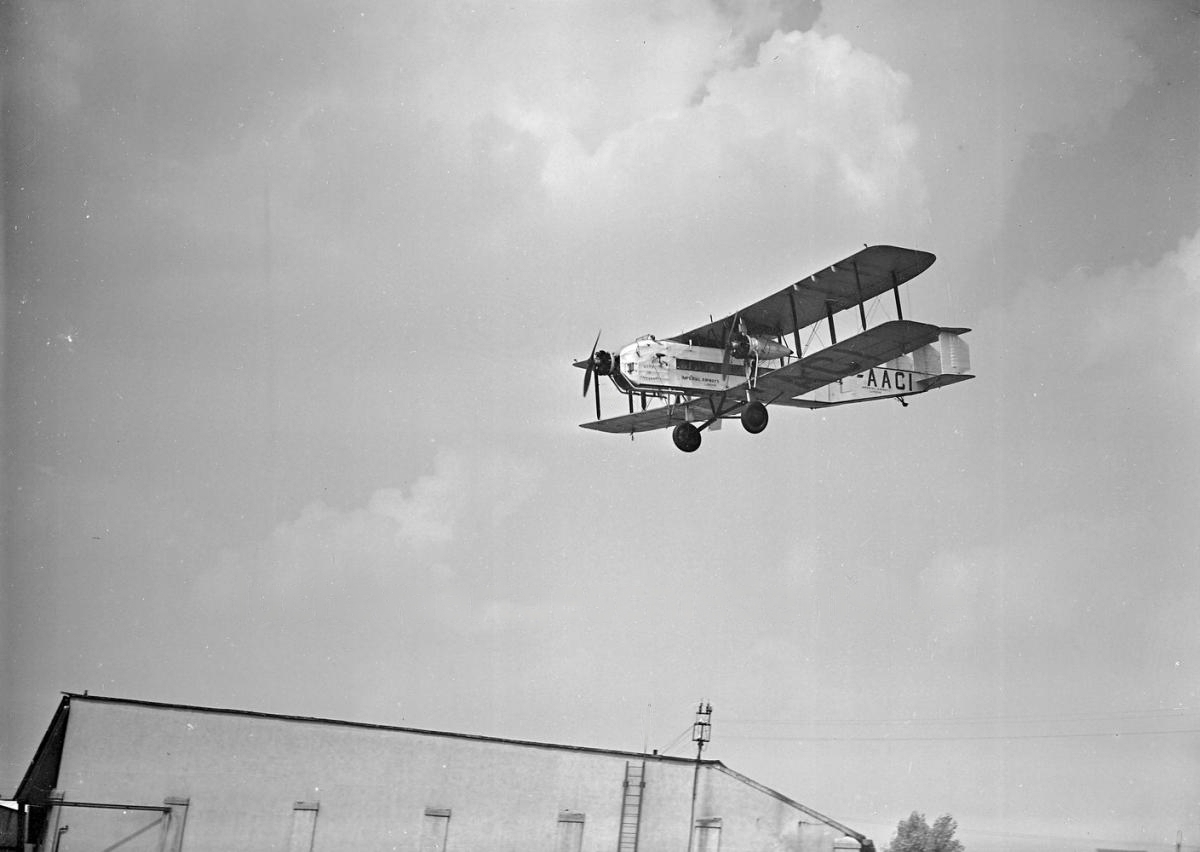
1933 Imperial Airways Diksmuide Crash
A man fell from the burning airliner without a parachute. Witnesses in the Belgian fields below watched Albert Voss plummet to earth on March 28, 1933, moments before the City of Liverpool split apart and crashed into the Flemish countryside. His niece Lottie was among the fourteen others who died in the wreckage. The inquest that followed would reveal a web of suspicion, financial troubles, and a flight delay that might have changed everything. This crash near Diksmuide became the deadliest accident in British civil aviation history to that point, and possibly the first airliner ever destroyed by deliberate sabotage.
The Final Flight
The Armstrong Whitworth Argosy II had flown Imperial Airways' London-Brussels-Cologne route for five years without incident. That March afternoon, the City of Liverpool departed Brussels for Croydon Airport in Surrey, running 36 minutes behind schedule. The route would carry the aircraft north over Flanders, across the English Channel, and over the Kent countryside. Just after 12:30 pm, with fifteen souls aboard, the biplane lifted into the gray Belgian sky. Over the flat farmlands of northern Belgium, witnesses on the ground saw flames erupt from the aircraft. As it began its fatal descent, they watched a figure emerge from the doomed plane and fall through the empty air.
The Suspicious Passenger
Albert Voss was a German dentist who had emigrated to Manchester and built a practice there. Postmortem examination revealed something troubling: apart from minor burns, Voss had been unharmed when he jumped. He had not been fleeing from flames consuming his body. His estranged brother testified at the inquest, accusing Albert of culpability. The theory emerged that Voss, facing unknown pressures and aware that authorities were investigating him, had planned to destroy the aircraft using flammable chemicals from his dental practice. He would bail out in the chaos, hoping no one would notice one fewer body in the wreckage. The flight's delay may have foiled his escape: had the plane departed on time, the fire would have ignited over the English Channel, where recovery would have been nearly impossible.
An Open Question
The Air Ministry delayed Voss's funeral while investigators examined the evidence. At the inquest, the coroner pushed for a verdict of accidental death, but the jury refused. They returned an open verdict, a rare finding that indicated they believed Voss's death may not have been accidental, even if they could not prove it. The distinction mattered: it meant the jury suspected foul play without being able to definitively assign blame. His niece Lottie, who had boarded the flight with her uncle, became one of aviation's earliest victims of suspected terrorism. The wreckage of the City of Liverpool settled into the quiet fields of Flanders, joining the countless other tragedies that have marked this corner of Belgium.
Legacy of Doubt
The Diksmuide crash introduced a new fear into the age of commercial aviation. If a single passenger could bring down an airliner through deliberate sabotage, no flight was truly safe. Security measures that seem obvious today did not exist in 1933. Passengers boarded with minimal scrutiny, and the flammable chemicals that Voss allegedly used would have raised no alarm. The crash occurred just as aviation was transforming from a novelty into a practical means of transportation. The questions raised over Flanders that March day would echo through the decades, reshaping how the world thought about the vulnerability of aircraft and those who flew in them.
From the Air
Located at 51.03N, 2.87E near Diksmuide in West Flanders, Belgium. The crash site lies approximately 15 km inland from the Belgian coast. Best viewed at 2,000-3,000 feet. The town of Diksmuide is visible as a reference point. Nearest airports include Ostend-Bruges (EBOS) to the north and Kortrijk-Wevelgem (EBKT) to the southeast. The flat Flemish farmland where the wreckage fell remains largely agricultural today.