1942 Phoenix Thanksgiving Day Riot
The soldiers of the 364th Infantry Regiment had not been granted leave in over a month. On Thanksgiving Day 1942, their commanding officer finally approved passes for the all-Black regiment stationed at Camp Papago Park, along with a generous supply of beer. By 11 p.m., a routine arrest outside a downtown venue had spiraled into chaos. By dawn, three people lay dead, a 28-block neighborhood had been cordoned off and swept by police with machine guns and armored cars, and Phoenix faced a reckoning with the racial tensions that historian Matthew C. Whitaker would later call 'a foreshadowing of the long struggle for civil rights.'
Jim Crow in the Desert
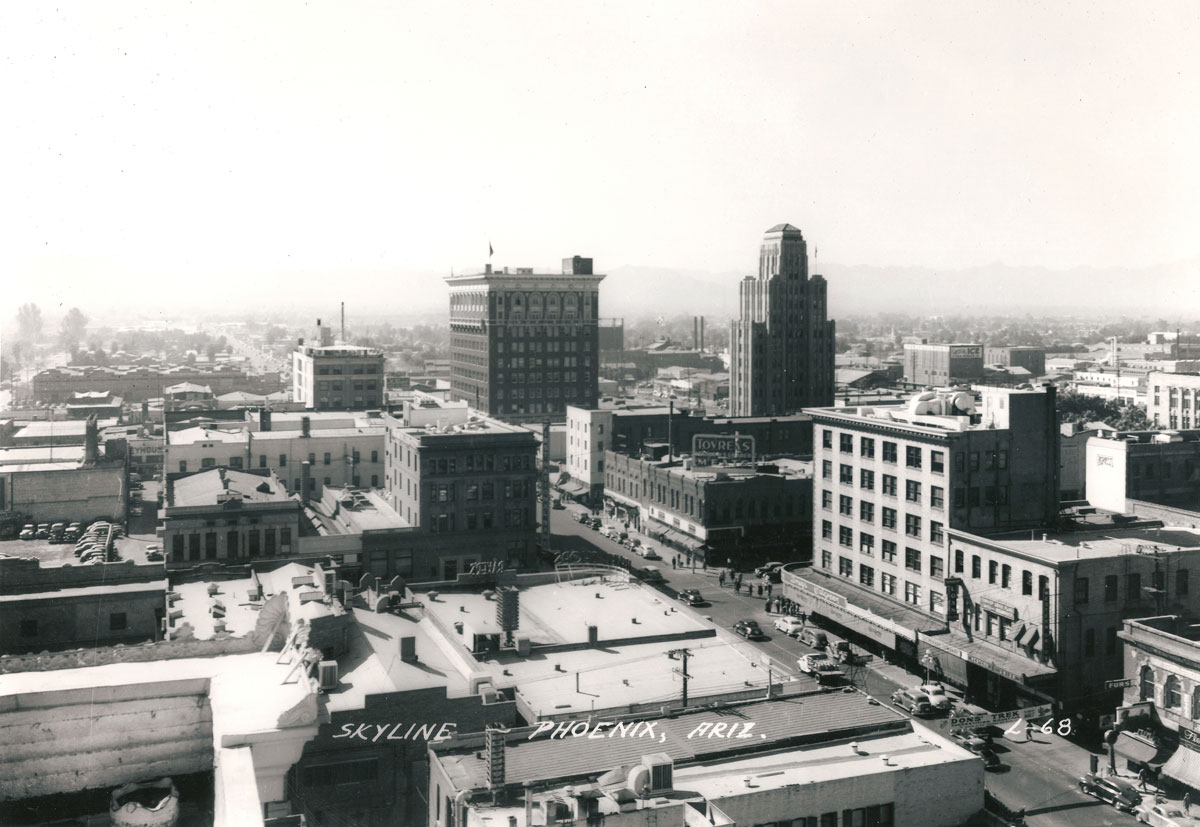
Phoenix in 1942 was a city of strict racial boundaries. The African American population numbered roughly 4,200, about five percent of the city's total, and residential segregation confined most of that community to an area east of downtown around Eastlake Park. The political climate was openly hostile; several city leaders, including at least one former mayor, had been members of the Ku Klux Klan in the 1920s. But World War II brought change. Phoenix became a hub of military activity, and the economic demands of war forced greater intermingling of people from different racial backgrounds. 'For the first time, you've got a huge intermingling of races you didn't have before,' noted history professor Paul Hietter in 2020. Into this volatile mix came the 364th Infantry Regiment in June 1942, inexperienced soldiers from Louisiana assigned to guard the prisoner-of-war camp at Papago Park and housed in what Truman Gibson described as 'tar-paper shacks' that became 'sweltering furnaces' in the Arizona summer.
A Holiday Unravels
The trouble began when an infantryman attacked a woman with a bottle at a venue east of downtown. Military police from the 733rd Battalion attempted an arrest, but the soldier fought back and brandished a knife. A crowd gathered. The MPs fired shots, wounding the knife-wielding soldier and accidentally hitting another servicemember when a bullet ricocheted off the ground. Within fifteen minutes, a fray had broken out. Army officials ordered the 364th back to base, and about 150 soldiers congregated at Washington Street and 17th Street waiting for transport. Meanwhile, a rumor spread through the waiting crowd: members of the 364th were being 'gunned down' by MPs. Several soldiers drove back to Camp Papago and told an exaggerated account to their fellow servicemembers. Men grabbed handguns, rifles, and automatic weapons from the armory. When they returned to the intersection, a full-scale shootout erupted.
Twenty-Eight Blocks Under Siege
The riot scattered soldiers into Phoenix's African American neighborhood, centered at Jefferson Street and 16th Street. Police cordoned off 28 blocks, setting up a machine gun at the intersection. Armed with automatic weapons and armored cars, officers went door to door searching for infantrymen who had taken refuge with friends in the area. According to multiple sources, police fired into houses where soldiers were suspected of hiding if occupants refused to leave. The Arizona Republic described the scene as resembling a 'minor battlefield.' The firefight lasted approximately three hours before MPs were reinforced by soldiers in armored scout cars and the violence subsided by early morning. The dead included Robert Riley, a Black civilian who lived in Phoenix; George Hunter, an Army private from New York City; and an unnamed white lieutenant. About a dozen others were wounded, including a 17-year-old civilian and a Phoenix police officer who lost a toe.
Aftermath and Reckoning
The event made national news, covered by Time and The New York Times. Over 150 members of the 364th were arrested, though most were released quickly. Fifteen faced courts-martial; fourteen received prison sentences, and one soldier, Joseph Sipp, received a death sentence later commuted by President Franklin D. Roosevelt, who also commuted all other sentences. Four days after the riot, Colonel Ross G. Hoyt declared Phoenix off-limits to military personnel, ostensibly due to sexually transmitted infections, though historian Elizabeth Tandy Shermer suggests this rationale was given 'to calm racial tensions.' The economic impact hit Phoenix's business leaders hard. They pushed Mayor Newell Stewart to dismiss the chief of police, city manager, city magistrate, and city clerk. Businessman Frank Snell called it a 'coup' or a 'putsch.' The 364th was transferred to Mississippi and later to the Aleutian Islands, far from the Arizona desert where Thanksgiving 1942 had erupted into violence.
From the Air
Located at 33.45N, 112.05W in downtown Phoenix, Arizona. The riot centered around the intersection of Jefferson Street and 16th Street, east of the modern downtown core. Phoenix Sky Harbor International (KPHX) lies 4nm southeast. Camp Papago Park, where the 364th was stationed, is now Papago Park, visible from the air as a distinctive red butte formation 5nm northeast of downtown.