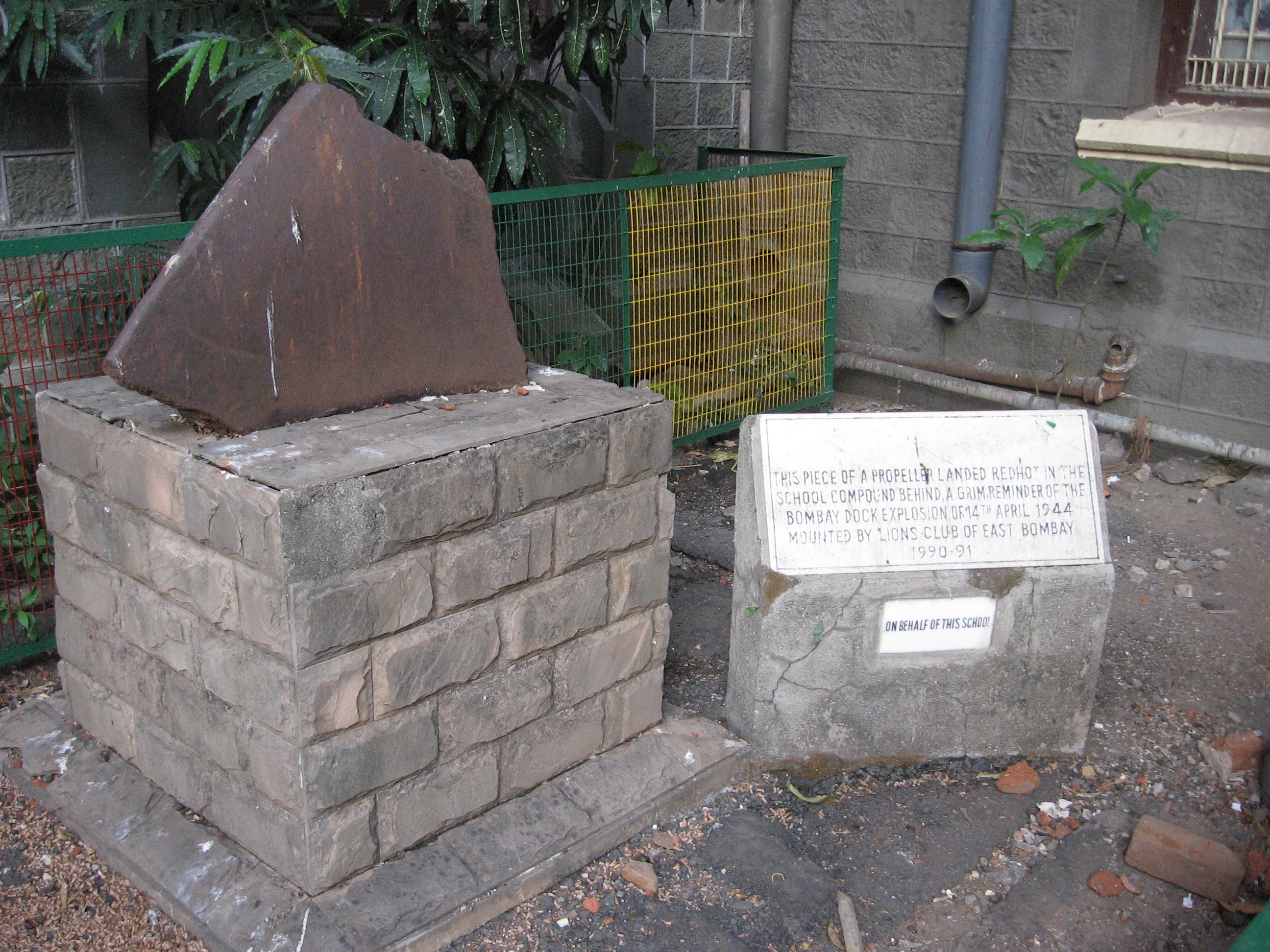
1944 Bombay Explosion
Captain Alexander James Naismith looked at the cargo manifest and recorded his protest. The SS Fort Stikine was carrying, as he put it, "just about everything that will either burn or blow up." He was not exaggerating. Packed into the 7,142-ton freighter were 1,395 tons of explosives, 238 tons of sensitive munitions, torpedoes, mines, shells, Supermarine Spitfire fighter aircraft, 8,700 bales of raw cotton, barrels of lubricating oil, timber, scrap iron, and 31 crates of gold bullion worth approximately 890,000 pounds sterling. On 14 April 1944, in the Victoria Dock of wartime Bombay, the ship caught fire. Naismith did not survive what happened next.
A Cargo That Should Never Have Been
The Fort Stikine had been built in 1942 in Prince Rupert, British Columbia, under a lend-lease agreement, and was named for the Stikine River. She sailed from Birkenhead on 24 February 1944, stopping at Gibraltar, Port Said, and Karachi before arriving in Bombay on 12 April. The cotton bales and lubricating oil had been loaded at Karachi -- packed alongside the explosives and ammunition already in the hold. Captain Naismith's formal protest about this mixture went unheeded. The logic of wartime supply demanded that ships carry whatever needed moving, regardless of how dangerous the combination. Every hold of the Fort Stikine was a disaster waiting for a spark. That spark came two days after docking.
The Day Bombay Burned
When the fire reached the explosives, the Fort Stikine detonated in two massive blasts. The first explosion scattered debris across the docks; the second, at 16:34, swept the area with devastating force. Burning cotton bales rained from the sky onto docked ships, the dockyard, and neighborhoods beyond the harbor walls. Eleven neighboring vessels sank or were sinking. The sound of the explosions carried for hundreds of kilometers. Some of the most developed and economically important parts of Bombay were obliterated by the blast and the fires that followed. Between 800 and 1,300 people died -- many of them residents of the adjoining slum areas who had no warning and no means of escape. Sixty-six firemen perished trying to fight the blaze. In all, 80,000 people were left without homes.
Neighbors Feeding Neighbors
In the days following the explosion, the survivors poured out of devastated South Mumbai into the suburbs. About 6,000 people from the Mandvi area, mostly middle class, went to Ghatkopar, where local workers opened three schools for emergency housing and private families took in strangers. Workers at Ghatkopar set up a kitchen at the Hindu Sabha Hall, serving food to a thousand people twice a day. When that was not enough, residents of Irla in Vile Parle opened a second relief center for 500 people. A third kitchen followed at Khotwadi and Narli Agripada in Santacruz, serving 300. In Khar, rations were distributed to families who had found shelter in Kherwadi and Old Khar village. Even the fishing village of Khar Danda arranged accommodation and food for about a hundred refugees. Across Salsette Island, families opened their doors to people they had never met. The city's response was instinctive and immediate -- a quality that journalist D.N. Wandrekar of The Bombay Chronicle attributed to Mumbaikars being "always known for their good heart."
Gold in the Rubble
Wartime censorship delayed the truth. The first detailed report of the disaster reached the outside world not through British channels but through Japanese-controlled Radio Saigon, which broadcast an account on 15 April, the day after the explosion. British-Indian authorities did not permit news reporters to file stories until the second week of May 1944. The full scale of the destruction -- 6,000 firms affected, 50,000 people out of work, families left with nothing but the clothes they were wearing -- emerged only gradually. Meanwhile, 31 wooden crates of gold bullion, each containing four bars weighing approximately 25 kilograms apiece, lay scattered somewhere in the wreckage. The salvage operation, led by sub-lieutenant Ken Jackson and chief petty officer Charles Brazier, took three months of pumping and de-watering to complete. Both men were recognized for their efforts: Brazier received the MBE, and Jackson an accelerated promotion.
Memory in Flame
The 1944 Bombay explosion ranks among the largest non-nuclear blasts in history, comparable to the 1917 Halifax Explosion. It devastated a city already strained by war, wiped out critical port infrastructure, and killed hundreds of people whose names were never fully recorded because wartime censorship kept the accounting incomplete. The Mumbai Fire Brigade's headquarters at Byculla maintains a memorial to the firefighters who died. Every year, India observes National Fire Safety Week from 14 April to 21 April -- the dates chosen to honor the 66 firemen who lost their lives at Victoria Dock. The Fort Stikine itself has vanished entirely, reduced to fragments and memory. But the docks remain, rebuilt and working, on the same waterfront where a ship carrying cotton and gold and Spitfires and enough explosives to level a neighborhood burned on an April afternoon in 1944.
From the Air
The 1944 Bombay explosion site is located at 18.95N, 72.85E in the Victoria Dock area of Mumbai (formerly Bombay), Maharashtra, India. The dock area is on the eastern waterfront of Mumbai's peninsula. Best viewed at 3,000-5,000 feet AGL. Mumbai's distinctive peninsula shape and harbor are easily identifiable from the air. Nearest airport: Chhatrapati Shivaji Maharaj International Airport (VABB). The docklands area is south of the modern airport, along the eastern shore where the harbor opens to the Arabian Sea.