1959 San Diego F3H Crash
Ensign Albert Joseph Hickman opened his cockpit canopy and waved. Below him, children played in the schoolyard of Hawthorne Elementary, unaware that a stricken fighter jet was plummeting toward them. Hickman could have pulled the ejection handle. At his altitude, he might have survived. Instead, the 21-year-old pilot from Sioux City, Iowa, kept his hands on the controls, steering his failing McDonnell F3H-2N Demon away from the school. He cleared the fence by feet. He did not survive. On December 4, 1959, Ensign Hickman became a different kind of hero, the kind who measures his own life against hundreds of others and makes the harder choice.
A Morning Like Any Other
Hickman had graduated from Sioux City's Central High School in 1956 and enlisted in the Navy before completing his studies. By December 1959, he was assigned to VF-121 at Naval Air Station Miramar, practicing carrier landings in the F3H Demon. The Demon was a single-seat fighter designed for fleet air defense, powered by a Westinghouse turbojet that had earned a troubled reputation. On that December morning, Hickman was returning to Miramar after a training sortie when his engine failed. The compressor stalled and surged. He was over Clairemont, a suburban neighborhood that had transformed from cattle grazing land into one of America's largest postwar planned communities during the 1950s. Thousands of homes spread below him. Directly ahead lay the elementary school.
Seven Hundred Lives
Estimates suggest as many as 700 people were on the ground in the immediate area, many of them children. Hickman had seconds to decide. Ejection might have worked. Might not. The aircraft would continue on its ballistic path, unguided, into the populated neighborhood. Into the school. He chose to stay with the aircraft. Witnesses reported that he opened the canopy and waved to warn the children below even as he fought to steer the doomed jet clear. The F3H cleared Hawthorne Elementary's fence by a narrow margin and crashed. Hickman was the only fatality. For his actions, he was posthumously awarded the Navy and Marine Corps Medal. He was buried at Memorial Park Cemetery in his hometown of Sioux City.
Memory in Concrete and Steel
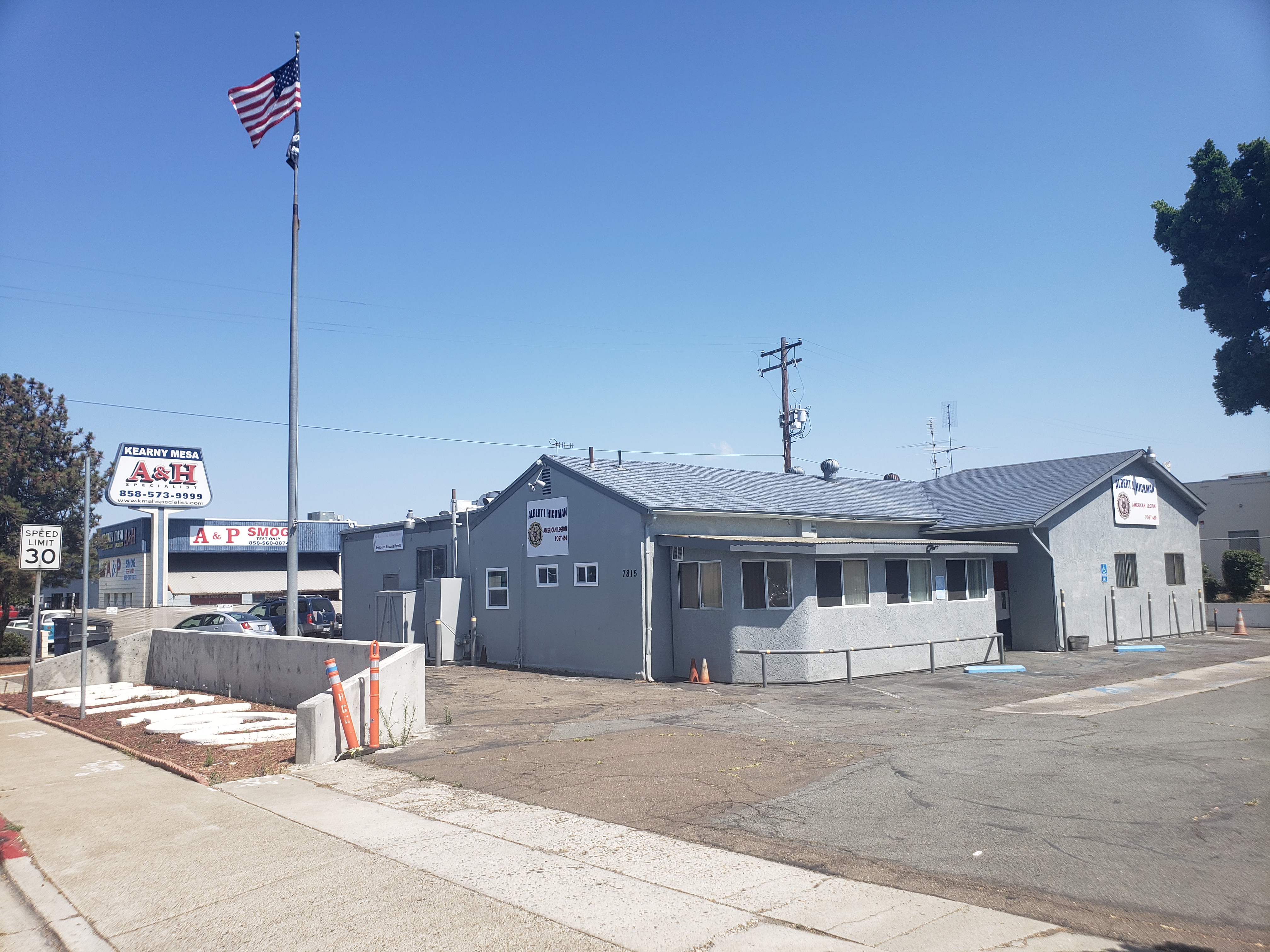
San Diego has not forgotten Albert Hickman. In 1962, an American Legion post in Kearny Mesa was dedicated in his name. In 1971, an elementary school in the Mira Mesa neighborhood was named Hickman Elementary. In 1994, on land leased from the Navy, the city dedicated the Hickman Field Athletic Area, a sports complex honoring the pilot who gave his life rather than risk the lives of children. These memorials cluster around the neighborhoods that Hickman flew over that December morning, permanent markers in the landscape reminding residents that their streets and schools exist because one man chose not to save himself.
History Repeating
Nearly fifty years later, another military jet crashed in San Diego under eerily similar circumstances. On December 8, 2008, an F/A-18 Hornet from Marine Fighter Attack Training Squadron 101 at Miramar experienced multiple engine failures. Lieutenant Dan Neubauer faced the same choice Hickman had faced. He ejected. The unguided aircraft struck a house in the University City neighborhood, killing four members of a family. The 2008 crash reignited memories of 1959 and renewed appreciation for what Hickman had done. In the five decades between crashes, aircraft technology had advanced dramatically, but the fundamental calculus facing pilots over populated areas remained unchanged. Some eject. Some don't. History remembers both.
From the Air
The crash site is located at approximately 32.84N, 117.19W in the Clairemont neighborhood, within the Class B airspace of MCAS Miramar (KNKX). The area remains densely populated suburban development. Hawthorne Elementary School still operates near the crash site. Hickman Elementary School, named for the pilot, is located in Mira Mesa approximately 5nm north. Miramar's approach and departure corridors pass over residential areas throughout this region.