1961 Goldsboro B-52 Crash
"Until my death I will never forget hearing my sergeant say, 'Lieutenant, we found the arm/safe switch.' And I said, 'Great.' He said, 'Not great. It's on arm.'" Lt. Jack ReVelle was standing in a muddy crater north of Goldsboro, North Carolina, three days into a frantic excavation. The switch he was looking at belonged to a 3.8-megaton hydrogen bomb -- a weapon 250 times more powerful than what leveled Hiroshima. It had fallen from a disintegrating B-52 Stratofortress just after midnight on January 24, 1961, and buried itself deep in the frozen soil of a tobacco and cotton farm near the crossroads community of Faro. The other bomb from the same aircraft had drifted down under a parachute and landed upright in a field nearby, its arming sequence nearly complete. One low-voltage safety switch -- a device requiring only 28 volts of direct current to flip -- had prevented a nuclear detonation over eastern North Carolina.
A Midnight Fuel Leak
The B-52G was based at Seymour Johnson Air Force Base in Goldsboro, flying a Strategic Air Command airborne alert mission called "Cover All." Nuclear-armed bombers flew continuous staggered routes into the Canadian Arctic and back, part of America's Cold War deterrence posture. Around midnight on January 23-24, the bomber rendezvoused with a tanker aircraft for aerial refueling. The tanker crew spotted the problem first: a fuel leak in the B-52's right wing. The refueling was aborted. Ground control directed the bomber to hold in a pattern off the coast and burn fuel, but the leak worsened catastrophically. The pilot, Major Walter Scott Tulloch, reported losing a massive amount of fuel in just three minutes. He was ordered to return immediately to Seymour Johnson. As the aircraft descended on approach, it entered an uncontrollable spin. Tulloch ordered the eight-man crew to abandon the aircraft. Five ejected or bailed out safely. Lt. Adam Mattocks became the only person known to have survived bailing out of a B-52's top hatch without an ejection seat. One crewman's parachute failed; two others died in the crash. The pilotless bomber broke apart in the air, and witnesses on the ground saw two flashes of red light as fuel explosions ripped the aircraft to pieces.
Two Bombs, Two Fates
When the B-52 disintegrated, its two Mark 39 Mod 2 thermonuclear bombs -- each weighing thousands of pounds -- separated from the aircraft and took very different paths to earth. Weapon No. 1, from the aft bomb bay, twisted free in a way that pulled its safing pins loose and retracted its arming rods, mimicking an intentional drop. Its parachute deployed. Its barometric pressure switch activated. Its timer ran its full 42-second countdown. Its high-voltage thermal battery charged. When it hit the ground, the crush switch on its nose closed -- the final step that, in combat, would trigger a nuclear fireball. Every mechanism in the firing chain had operated as designed, except one: the MC-722 Arm/Safe Switch remained in the "Safe" position. That single electromechanical switch, which could be flipped by any stray 28-volt current, was all that stood between rural North Carolina and a multi-megaton nuclear explosion. Weapon No. 2 took a harder fall. It separated at low altitude, still attached to its bomb rack, and slammed into the earth at full speed without a parachute. The impact carved a massive crater in the farmland. It took the recovery team three days of excavation through freezing mud to locate its arm/safe switch -- and found the indicator reading "Arm." Further analysis revealed that the switch had physically disconnected from its electrical contacts on impact. The bomb could not have detonated, but only because the crash itself had broken the very mechanism meant to fire it.
One Switch from Catastrophe
Sandia National Laboratories engineers subjected both weapons to exhaustive post-mortem analysis. The conclusions became one of the most consequential safety assessments in nuclear history. Parker F. Jones, a Sandia supervisor, wrote in a 1969 reassessment that "one simple, dynamo-technology, low voltage switch stood between the United States and a major catastrophe." He called it "credible" to imagine an electrical short flipping that switch to "Arm" during a violent accident. R.N. Brodie, in a 1987 Sandia study, noted that the ready/safe switches of that era had been observed "many times" to inadvertently arm from stray currents. Charlie Burks, a Sandia weapons engineer, put it plainly: there had been over thirty incidents where similar switches operated on their own. Secretary of Defense Robert McNamara used the Goldsboro accident in a 1963 Top Secret meeting to argue against delegating nuclear weapons authority, telling officials that "by the slightest margin of chance, literally the failure of two wires to cross, a nuclear explosion was averted."
What Lies Beneath
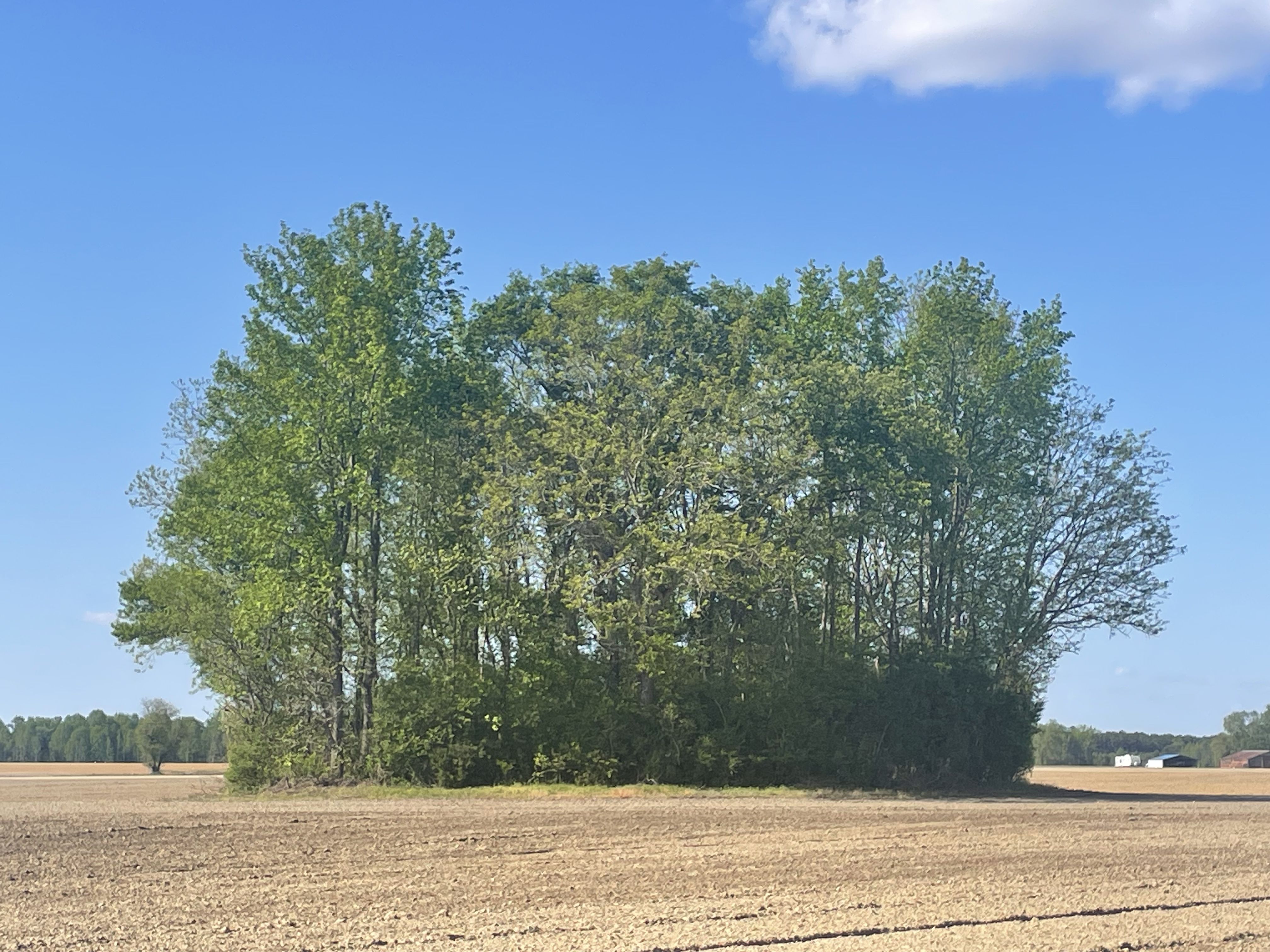
The primary stage of Weapon No. 2 was recovered from the mud six days after the crash. But its fusion secondary -- the thermonuclear component that produces the bulk of a hydrogen bomb's destructive yield -- sank beyond reach. Excavation crews fought freezing temperatures, a high water table, and bottomless mud. They reinforced the crater walls with plywood and ran pumps around the clock, eventually reaching a significant depth before abandoning the effort. The University of North Carolina at Chapel Hill later determined the secondary component lay even deeper. It remains there to this day. In 1962, the federal government paid the landowner $1,000 for a perpetual easement over the site. The terms prohibit any digging below five feet, any construction except farm fencing, and grant the government the right to inspect the property on foot at any time. The easement sits in the middle of a plowed field near Faro, not far from a visible circle of trees. In July 2012, North Carolina erected a historical road marker in nearby Eureka commemorating the crash. The sign's dry title -- "Nuclear Mishap" -- understates what Sandia's own engineers described as one of the closest brushes with accidental nuclear war in American history.
From the Air
Located at 35.49N, 77.86W in Wayne County, North Carolina, on flat Coastal Plain farmland north of Goldsboro. The crash site at Faro is approximately 12 miles north of Seymour Johnson Air Force Base (KGSB). The buried bomb easement is in agricultural fields and not visually distinct from the air, though a circular patch of trees near the site is visible on satellite imagery. Best viewed at 2,000-5,000 feet AGL. Nearby airports: KGSB (Seymour Johnson AFB / Goldsboro-Wayne Municipal, 12 nm south), KISO (Kinston Regional Jetport, 25 nm southeast). The Neuse River runs through the area to the south. The terrain is entirely flat coastal plain farmland -- tobacco, cotton, and soybean fields.