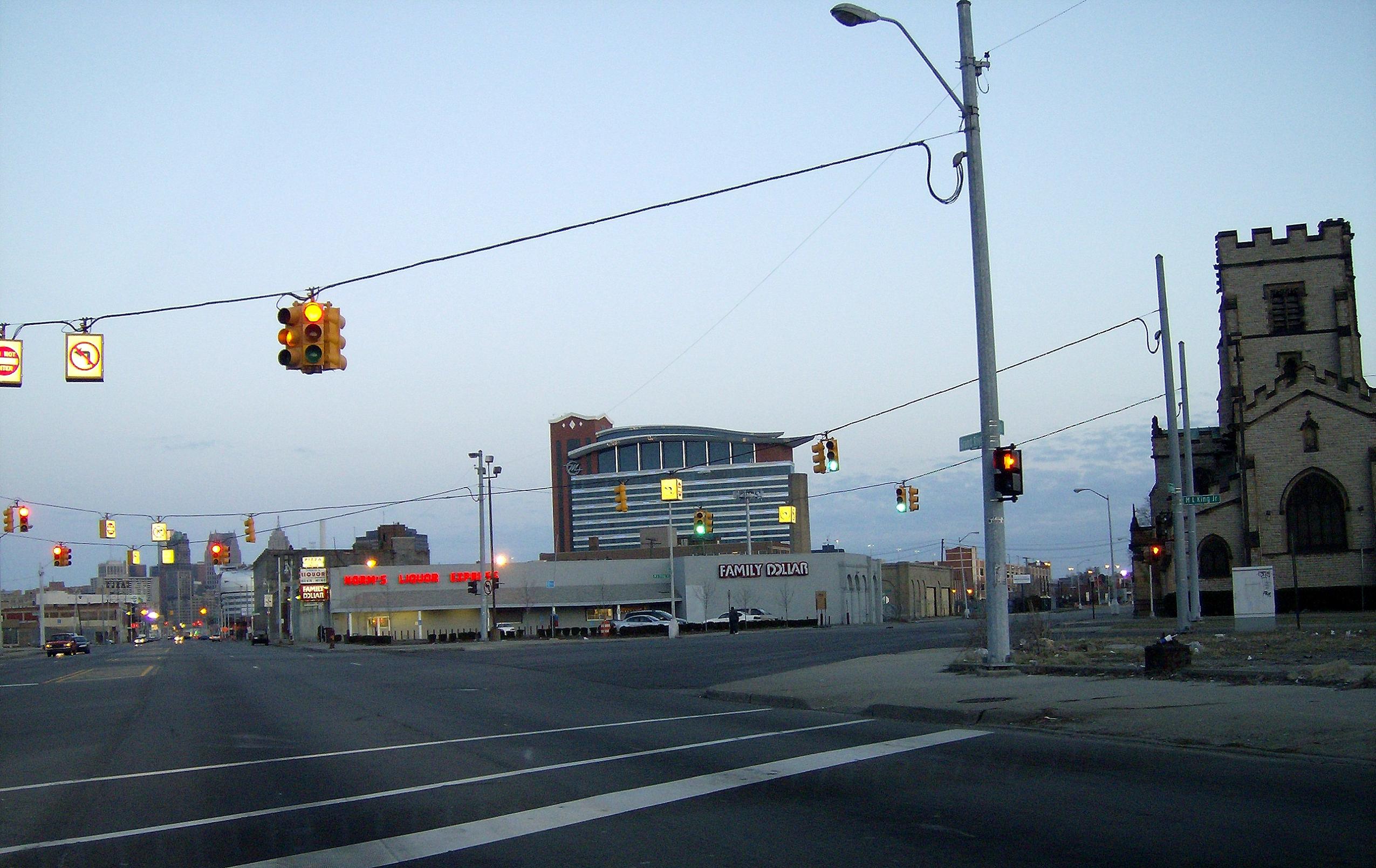
1967 Detroit Riot
At 3:45 in the morning on Sunday, July 23, 1967, Detroit police officers pushed through the door of a blind pig above the Economy Printing Company at 9125 12th Street. They expected to find a handful of drinkers in the unlicensed after-hours club. Instead, they found 85 people celebrating the return of two neighborhood soldiers from Vietnam. The officers decided to arrest everyone. As paddy wagons were summoned and the crowd waited on the summer sidewalk, a bottle arced through the humid air and shattered against a police car. Within hours, 12th Street was on fire. Within days, tanks rolled through American neighborhoods and paratroopers from the 82nd and 101st Airborne patrolled blocks that looked like a war zone. What erupted that July was not sudden - it was the combustion of decades of housing segregation, police brutality, job discrimination, and broken promises in a city that had been called a model of race relations.
A City Divided by Design
Detroit's racial fault lines had been engineered for decades before the first window shattered on 12th Street. The federal Home Owners' Loan Corporation systematically redlined black neighborhoods, rating any area with African American residents as grade 'D,' effectively barring residents from loans and locking them into deteriorating housing. Racial covenants and the Ku Klux Klan's presence throughout Michigan enforced residential boundaries. By 1967, the invisible walls were well established - Eight Mile Road and Wyoming served as a visible border, while Dequindre Road marked an invisible one. Rosa Parks, who had moved to Detroit from Alabama in the late 1950s, told an interviewer in 1964 that housing segregation was 'just as bad' as what she had left behind. Meanwhile, the city had lost nearly 150,000 jobs to the suburbs as automakers built new plants outside Detroit proper. Black unemployment ran more than double the white rate. Inner-city shoppers paid 20 percent more for groceries than suburbanites. The Kerner Commission would later find that 45 percent of police officers working in black neighborhoods were 'extremely anti-Negro.'
Five Days of Fire
What began as looting at Parker Brothers Shoes and Menswear escalated with terrifying speed. By Monday, 483 fires blazed across the city, incidents were reported at a rate of 231 per hour, and 1,800 people had been arrested. Black-owned businesses were not spared - Hardy's drug store, known for filling prescriptions on credit, was among the first looted. U.S. Representative John Conyers drove down 12th Street with a bullhorn, standing on the hood of his car, pleading with the crowd: 'We're with you! But, please! This is not the way to do things!' His car was pelted with rocks and bottles. Motown's Martha Reeves, performing at the Fox Theatre, calmly asked the audience to leave because there was 'trouble outside.' Governor George Romney activated the Michigan National Guard. President Johnson invoked the Insurrection Act and sent federal paratroopers, giving Detroit the grim distinction of being the only American city occupied by federal troops three times. Tanks and machine guns appeared on residential streets. International television cameras captured a major American city at war with itself.
The Toll
When the fires finally died and the last troops withdrew on July 29, the numbers were staggering: 43 dead - 33 black and 10 white - with 1,189 injured and 7,231 arrested. Property damage ran between $40 million and $45 million, with 2,509 businesses damaged or looted and 388 families left homeless. Among the dead were victims of deeply troubling circumstances. Four-year-old Tanya Blanding was shot by a National Guardsman who fired into her second-floor apartment after another soldier said sniper fire came from the building. At the Algiers Motel, three young black men - Carl Cooper, Aubrey Pollard, and Fred Temple - were killed during a police raid searching for an alleged sniper. The scale was unprecedented in modern America. Not since the 1863 New York City draft riots had the nation witnessed such domestic destruction, and it would not be surpassed until the 1992 Los Angeles riots. The Detroit Free Press staff won the 1968 Pulitzer Prize for their coverage. Mayor Jerome Cavanagh surveyed the wreckage and said, 'Today we stand amidst the ashes of our hopes.'
The Long Aftermath
The riot accelerated changes already underway and set new ones in motion. Between 1967 and 1969, 173,000 white residents left Detroit. Public schools lost 74 percent of their white students by 1978. But the upheaval also forced action. The Michigan State Police swore in its first black trooper in the organization's fifty-year history just weeks after the riot ended. By 1968, 35 percent of new Detroit police hires were black. Automakers and retailers lowered entry-level job requirements; a Michigan Bell supervisor noted that 'for years businesses tried to screen people out. Now we are trying to find reasons to screen them in.' Governor Romney pushed through fair housing legislation that had been blocked for years, warning lawmakers that failure would 'accelerate the recruitment of revolutionary insurrectionists.' Coleman Young, who would become Detroit's first black mayor in 1974, built his campaign partly on dismantling STRESS, the controversial police unit that had deepened racial polarization. The riot's cultural aftershocks rippled through music - from Marvin Gaye's 'What's Going On' to David Bowie's 'Panic in Detroit' - and through literature, including Jeffrey Eugenides' novel 'Middlesex' and Kathryn Bigelow's 2017 film 'Detroit.'
Kindness in the Ruins
Amid the destruction, a different story unfolded alongside the violence. UPI reporter Louis Cassells described whites and blacks working together through churches to feed and shelter the displaced. By Wednesday, Protestants, Catholics, and Jews had established an interfaith emergency center distributing aid 'strictly according to need, without regard for race, creed, or color.' The United Auto Workers and the Teamsters organized truck pools to move relief supplies into devastated areas. Cassells witnessed black families bringing cold water to white National Guardsmen standing in the blazing sun, and white reporters trapped during gunfights being sheltered in black homes at considerable risk to those families. 'People can be pretty wonderful - even in a riot,' he wrote. Decades later, polls found Detroit residents more optimistic about race relations than the national average. The scars remain - in the street grid, in the population patterns, in the collective memory. But so does the recognition that Detroit's story did not end in July 1967. It continued in the painful, unfinished work of building something more just from the ashes.
From the Air
Located at 42.38°N, 83.10°W on Detroit's Near West Side. The riot's epicenter at 12th Street (now Rosa Parks Boulevard) lies roughly 3 miles northwest of downtown Detroit. From altitude, the area is part of Detroit's dense urban grid between the Lodge Freeway (M-10) and Linwood Avenue. Detroit City Airport (KDET) is approximately 5 miles east. Detroit Metropolitan Wayne County Airport (KDTW) is about 18 miles southwest in Romulus. The broader urban fabric visible from the air still reflects the demographic shifts triggered by the riot, with notable contrasts in density between the city and its suburbs.