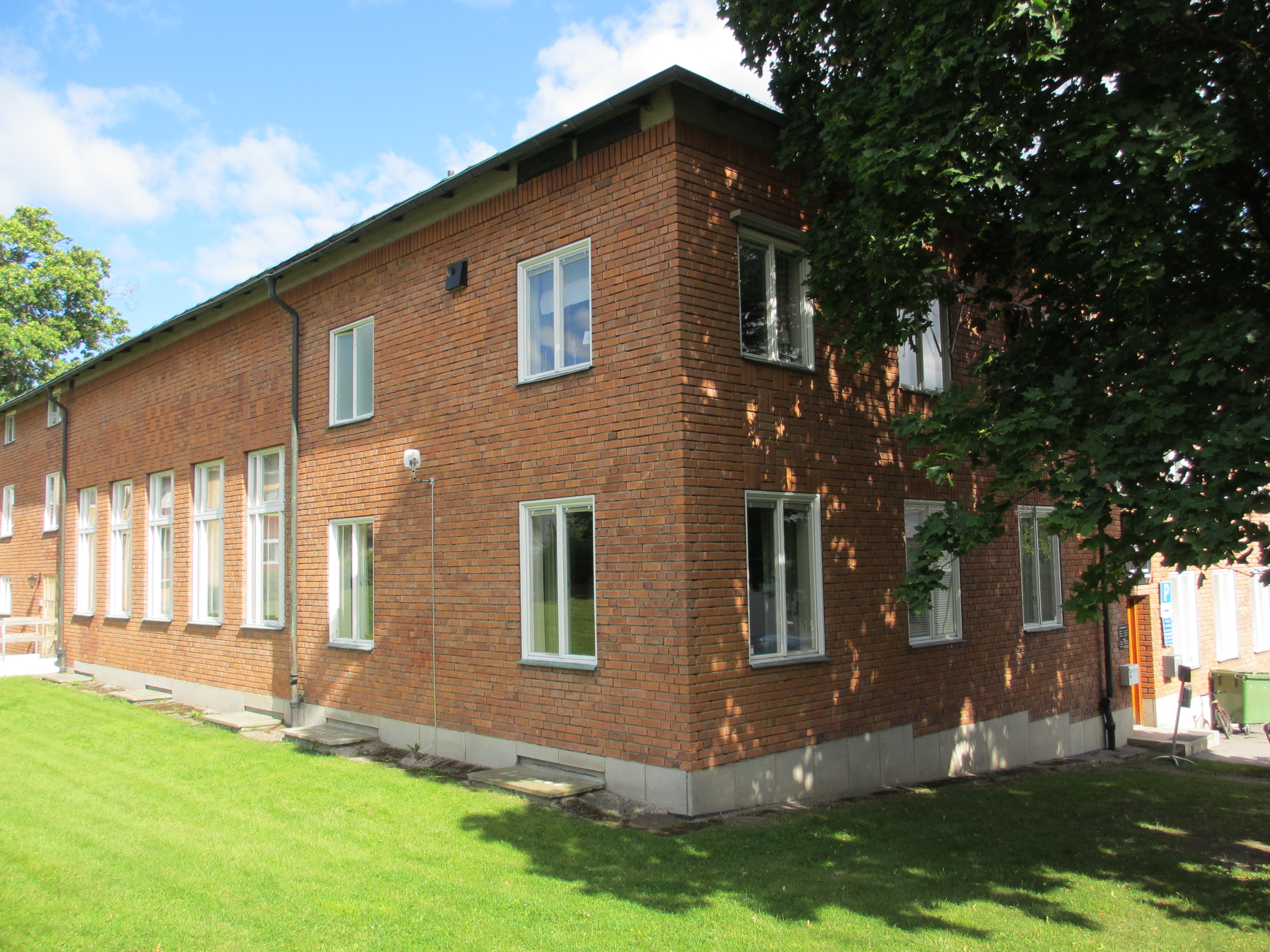
1971 Söderhamn Courthouse Murders
The face she made triggered something in him. On March 1, 1971, as Gunnar Bengtsson watched Cecilia Ekestang enter the deliberation room of the Southeastern Halsingland courthouse in Soderhamn, he claimed she smirked and said something like "Now we're going to take more money from you." Within moments, the 61-year-old farmer had drawn a pistol and opened fire. Four people died in that small room in central Sweden - including both lawyers and the lawspeaker presiding over what should have been a routine property hearing. The shooting was the violent conclusion to a five-year saga that began with haymaking and talk of marriage, spiraled through broken engagements and bitter lawsuits, and ended in a bloodbath that shocked a nation where such violence was almost unheard of.
Summer Fields and Fatal Promises
Gunnar Bengtsson met Cecilia Ekestang in July 1965, cutting hay on his farm in the Swedish countryside. She told him she was interested in buying a neighboring property. Within days, they were discussing marriage. The courtship moved quickly - by November, banns were issued and a wedding date set. When Ekestang's purchase of the farm fell through because she couldn't get an acquisition permit, Bengtsson stepped in to buy it in his own name, with the understanding they would soon be one household anyway. But the relationship soured before they reached the altar. They separated, and suddenly the question of who really paid for that farm became bitterly contested. Ekestang sued her ex-fiance, and the courts - from the assize court through the court of appeal to the Supreme Court - all ruled against Bengtsson, ordering him to return jewelry he had taken as security and pay her legal costs.
Twelve Shots in the Deliberation Room
The crime scene investigation revealed that Bengtsson fired twelve rounds. He shot Ekestang first, then her Stockholm lawyer Ingemar Wahlstedt, then his own lawyer Olof Fagerstrom from Hudiksvall. Lawspeaker Yngve Carlson, 67, made it to the threshold of the corridor before Bengtsson's bullets caught him. Parts of the pistol - a steel spring and muzzle brake - were found on Wahlstedt's body, suggesting he had fought for the gun before being killed. Bengtsson told investigators he did not remember shooting the lawspeaker. The four victims ranged in age from 48 to 67, their lives cut short in what was supposed to be a final negotiation over property rights.
A House Rigged to Kill
The horror did not end at the courthouse. When police arrived at Bengtsson's farm in Vansater two days later to investigate, they triggered an explosion that destroyed the building entirely. The house had been booby-trapped with an ignition device hidden in a cabinet. Three officers - detective Ture Fridh, police assistant Lars Rydberg, and constable Stig Jonasson - escaped unharmed by sheer luck. In May 1971, investigators discovered Bengtsson had also rigged his childhood home in Villsjon with dynamite placed just inside the front door. The man who had seemed a simple farmer nursing romantic wounds revealed a capacity for premeditated violence that stunned even hardened investigators.
Justice and Its Strange Aftermath
Bengtsson's trial began in August 1971 at Soderhamn Town Hall - authorities avoided the courthouse where the killings occurred. He claimed the stress of his legal battles had destroyed his sanity and that lawyers and prosecutors bore responsibility for what happened. The court heard his chilling statement that he routinely carried a pistol, though he claimed no intention of using it. On September 14, 1971, he was convicted of murder and ordered to closed psychiatric care, the court finding he acted under mental illness. But the case refused to fade from public memory. In 1975, defense attorney Henning Sjostrom published a novel clearly based on the murders, sparking accusations of betraying client confidentiality and a fierce public debate. Bengtsson himself sued Sjostrom for defamation in 1976, with actor Ernst-Hugo Jaregard dramatically reading passages aloud in court. Sjostrom was acquitted, but the controversy underscored how deeply the courthouse murders had scarred Swedish society.
From the Air
Located at 61.31N, 17.06E in Soderhamn, a coastal town in Halsingland province, eastern Sweden. The town sits along the Gulf of Bothnia. Visible from cruising altitude, the town center where the historic courthouse stands is near the waterfront. Nearest major airport is Gavle-Sandviken Airport (ESSK) approximately 100 km south. Stockholm Arlanda (ESSA) is roughly 250 km to the south.