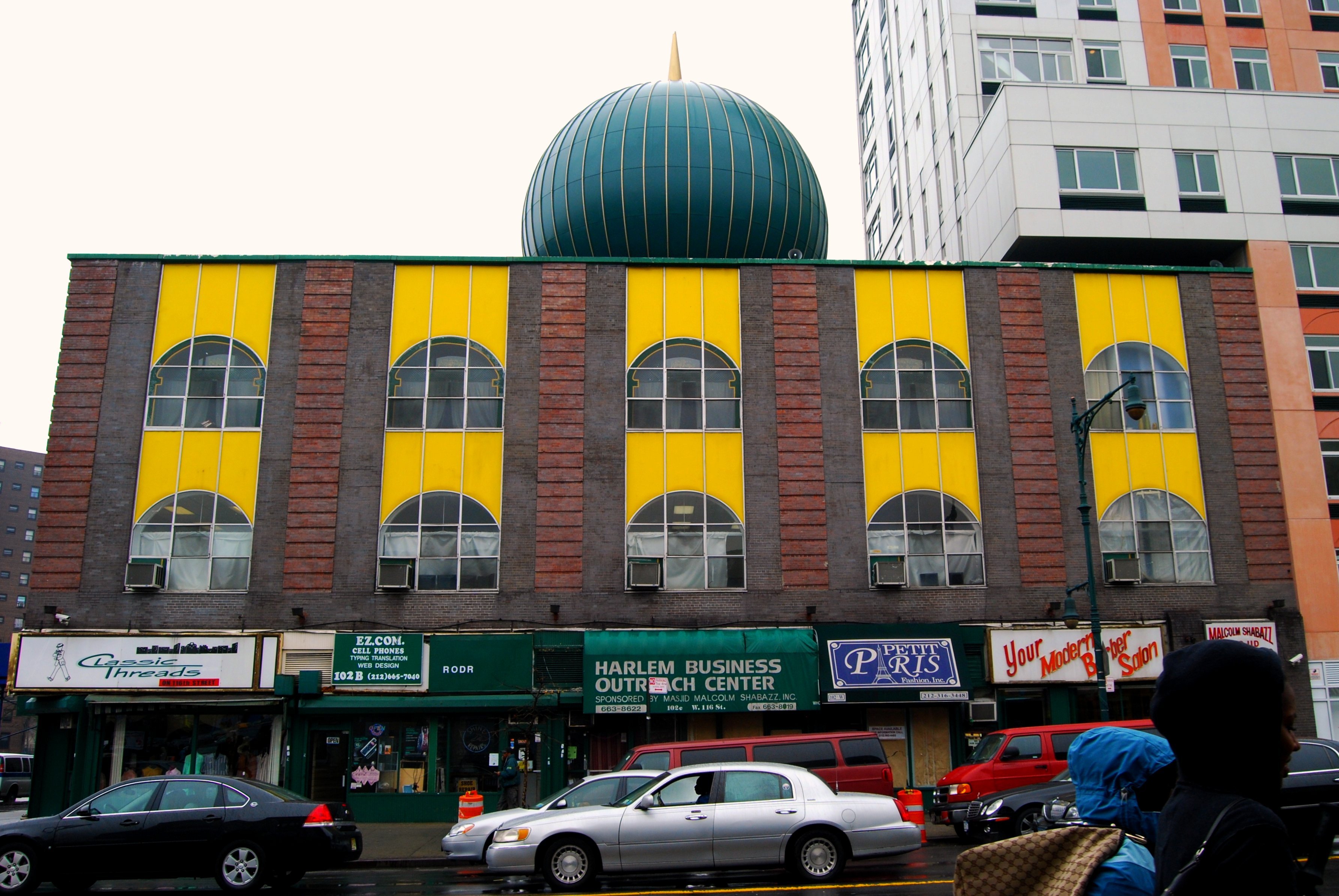
1972 Harlem Mosque Incident
The call came in as a 10-13 - an officer's call for assistance - from a man identifying himself as Detective Thomas. The address was 102 West 116th Street, the Nation of Islam's Mosque No. 7 in Harlem, the same mosque where Malcolm X had once served as minister before his conversion to Sunni Islam. There was no Detective Thomas. There was no emergency. What waited inside on April 14, 1972, would leave one officer dead, a police department humiliated, and a city forced to reckon with the volatile intersection of race, religion, and law enforcement that defined an era.
Into the Trap
Officers Phillip Cardillo and Vito Navarra of the 28th Precinct responded to the bogus call and entered the mosque. Upstairs, they heard scuffling. As they climbed the staircase, fifteen to twenty men intercepted them and forced them back down. Two more officers from the 25th Precinct - Victor Padilla and Ivan Negron - arrived and entered. The four were outnumbered immediately. Navarra escaped as a steel door slammed shut, trapping Cardillo, Padilla, and Negron inside. According to NYPD accounts, the officers were beaten and stripped of their guns. Padilla was blackjacked into semi-consciousness. Negron, fighting to keep his revolver, heard gunshots, turned, and saw a man standing over Cardillo with a gun in hand. Cardillo lay on the floor, shot. He would die from his wounds six days later. Mosque representatives offered a starkly different account: the officers had entered with guns drawn and interrupted prayer despite being asked to leave their weapons outside.
A City Fractures
What happened next compounded the tragedy. After reinforcements arrived and police retook the mosque, officers identified a man named Louis 17X Dupree as having stood over the dying Cardillo with a gun. Dupree was initially arrested. But before he could be taken into custody, Louis Farrakhan and Congressman Charles Rangel arrived at the scene and, according to police accounts, threatened a riot if Dupree was not released. Albert Seedman, the NYPD's chief of detectives and the ranking officer present, called Chief Inspector Michael Codd from the basement requesting reinforcements - two busloads of cadets armed with nightsticks to keep peace outside. Codd refused and hung up. He would not take Seedman's subsequent calls. An angry crowd formed around the police barricade, pelting officers with projectiles. High-ranking officials ordered all officers out of the mosque and sent away all white officers. As the police presence thinned, officers abandoned the scene entirely.
Justice Denied
In the basement, under political pressure, Chief Seedman directed the release of a dozen suspects without identifying them - a decision that crippled the investigation from its earliest hours. Neither Mayor John V. Lindsay nor Police Commissioner Patrick V. Murphy attended Officer Cardillo's funeral, a break with tradition that deepened the wound for his family and fellow officers. The mysterious Detective Thomas who had placed the original 10-13 call was never identified. Lead detective Randy Jurgensen believed the fake call was either a diversion or a trap, possibly set by elements of the Black Liberation Army, which the NYPD had linked to multiple killings of police officers during this period. Two years passed before prosecutors charged Louis 17X Dupree, based on testimony from an informant. The first trial ended in a hung jury. At the second, Dupree was acquitted, largely because ballistic evidence could not be recovered and defense attorneys argued Cardillo had been shot by another officer or himself.
A Retirement and a Confession
Albert Seedman walked back to his car that day through a hail of thrown bricks and decided to retire. At the time, he told everyone his departure had nothing to do with the mosque incident. For forty years he maintained that fiction. Then in 2012, a year before his death, he finally told the truth. His real reason was disgust at Codd's refusal to send reinforcements when officers were under siege. "I loved the police department so much," Seedman said, "that I couldn't drag it through the dirt by saying what those bastards did." The mosque at 116th Street is now known as Malcolm Shabazz Mosque, its green dome visible from the surrounding blocks. The building endures as a place of worship, but for the families of Officer Cardillo and the officers who responded that April morning, it remains the site of an unsolved killing and a betrayal by the very institutions that should have pursued justice.
From the Air
Located at 40.802N, 73.950W on West 116th Street in Harlem, Manhattan. The mosque (now Malcolm Shabazz Mosque) is identifiable by its green dome amid the brownstone blocks of central Harlem. From the air, 116th Street runs east-west between Frederick Douglass Boulevard and Lenox Avenue. Nearby airports include LaGuardia (KLGA, 7 nm northeast) and Teterboro (KTEB, 10 nm northwest). Recommended viewing altitude: 2,000-3,000 feet AGL for neighborhood context.