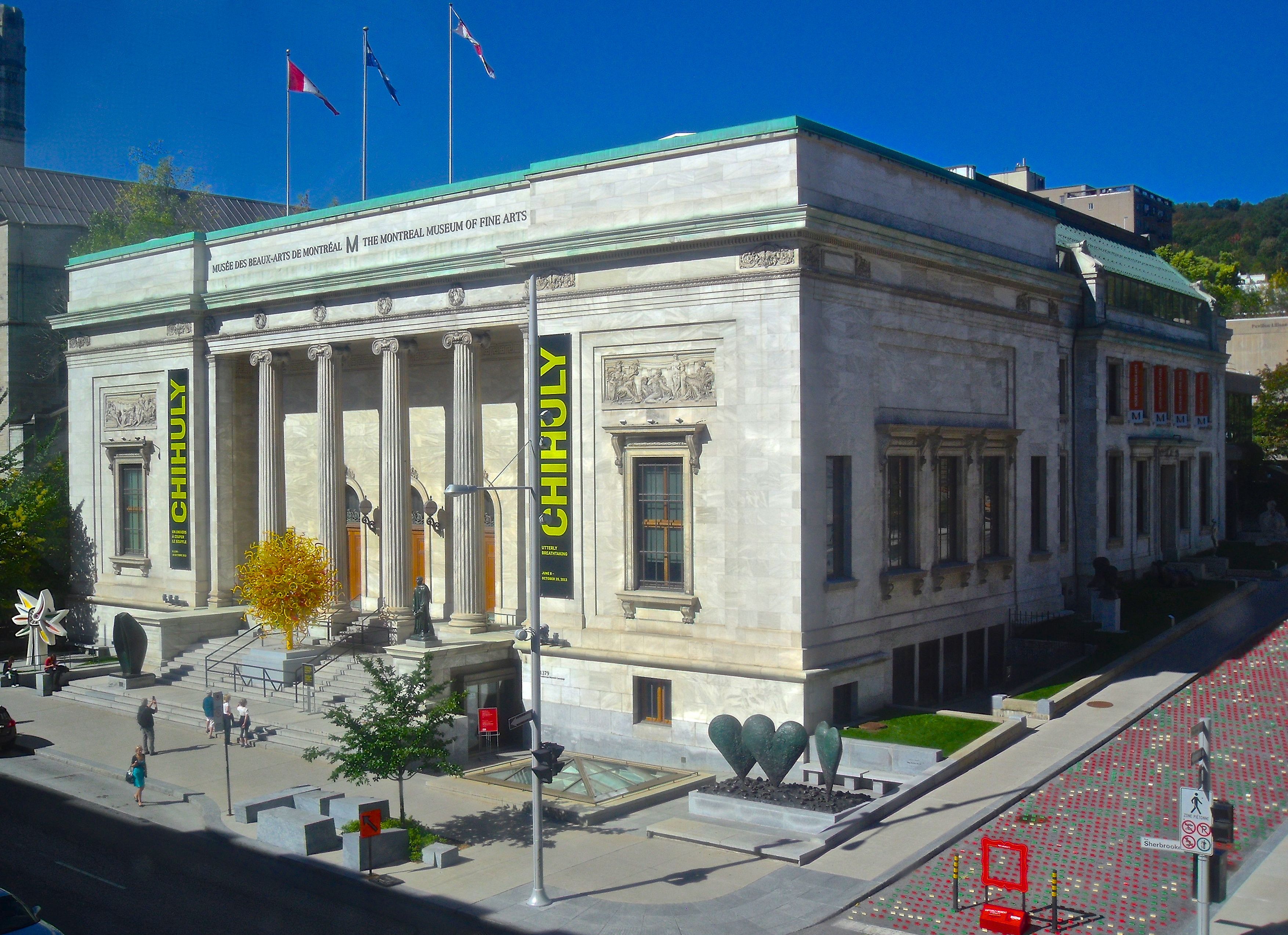
The Skylight Caper: Montreal's Unsolved Art Heist
Nobody noticed the robbery. Montreal had spent that Labour Day weekend of 1972 reeling from one catastrophe after another: the Blue Bird Cafe fire had killed 37 people three days before, the Soviet hockey team had just humiliated Canada 7-3 in the opening game of the Summit Series, and the Munich Olympics massacre would dominate headlines by sunrise. Somewhere between the grief and the shock, three men climbed onto the roof of the Montreal Museum of Fine Arts on Sherbrooke Street, lowered themselves through a skylight that was missing its alarm, tied up three guards, and walked out carrying a Rembrandt landscape, works attributed to Brueghel, Corot, Delacroix, Rubens, and Gainsborough, along with 39 pieces of jewellery and figurines. It was the largest art theft in Canadian history. The paintings have never been recovered. The thieves have never been identified.
A Museum Coming Apart at the Seams
The Montreal Museum of Fine Arts began life in 1860 as the Art Association of Montreal, built on the generosity of the city's wealthy Anglophone elite -- the families of the Golden Square Mile who had made fortunes during Canada's industrial boom. By 1913 they had erected a handsome Beaux-Arts building on Sherbrooke Street. But by the 1960s, the political ground was shifting. Quebec separatism was gathering force, and the Front de liberation du Quebec's campaign of bombings and kidnappings culminated in the October Crisis of 1970, when martial law was declared across the Montreal region. The Anglophone patrons who had sustained the museum for a century began leaving for Toronto. Donations dried up. The building needed renovation, and the museum could barely afford it. When construction crews opened the skylight on the roof for repairs, the alarm was disabled -- and no one had the funds or the urgency to fix it.
Through the Roof
The thieves entered sometime in the early hours of September 4, 1972. They descended from the roof using a ladder and nylon rope, encountered three guards on duty, tied them up, and began a methodical sweep of the galleries. Their choices revealed sophistication: the paintings they selected were small enough to carry but valuable enough to command enormous prices. Half of the works had appeared in Masterpieces from Montreal, a high-profile travelling exhibition that had toured museums across the United States and Canada before Expo 67. The Rembrandt had featured in a 1969 show commemorating the tricentennial of the artist's death. The thieves could have studied every painting they stole from printed catalogues without ever setting foot inside the museum. In their haste to leave, they triggered an alarm at a side entrance, panicked, and fled on foot -- abandoning a panel truck and leaving behind another Rembrandt, an El Greco, a Picasso, and a Tintoretto. They took eighteen paintings and left masterpieces scattered behind them.
The Trail That Led Nowhere
The investigation was hobbled from the start. The museum's director was vacationing far from Montreal over the holiday weekend. The city's police force was already overwhelmed by the Blue Bird fire investigation. Within weeks, the thieves returned one painting -- a Brueghel, later reattributed to another artist -- along with photographs of the remaining works and a ransom demand. A sting operation fell apart. A second negotiation attempt cost the museum CDN$10,000 and produced nothing. Police surveilled five art students from the nearby Ecole des beaux-arts de Montreal for two weeks; they found no connection. Theories proliferated: the Montreal Mafia, Quebec separatists, the Irish-dominated West End Gang, private collectors on Mount Royal. Art-theft specialist Alain Lacoursiere spent decades on the case after joining the SPVM in 1994. He offered an additional million-dollar reward in 1999. It remains unclaimed.
The Man Called Smith
Lacoursiere considers one lead credible. At a 1998 gallery opening, a dealer introduced him to a man identified only as "Smith" -- an art connoisseur who collected classic Bugattis, knew the history of Quebec art intimately, and seemed to take private pleasure in discussing the robbery. Over the years, Smith hinted he knew more than he would say. He died in the late 2010s without ever revealing his secrets. Lacoursiere believes Smith was neither the mastermind nor the keeper of the paintings, but that he was likely one of the three men who entered through that skylight. The detective has also heard the paintings may be in Italy, or that two Montreal men in Nice might be connected, or that the West End Gang's retirees brought them to Costa Rica. None of these leads have produced results.
Vanished into Private Hands
More than fifty years on, the Rembrandt alone has been estimated at $20 million. The police files remain sealed because the case is officially still open. Lacoursiere believes the paintings were sold through small dealers to private collectors who keep them hidden, unable to resell works that appear on every stolen-art registry in the world. During the Quebec Biker War of the 1990s, he discovered that a Hells Angels associate was fencing stolen art to the Italian Mafia at ten cents on the dollar, with forged provenance using the names of deceased Westmount residents. The world of stolen art, it turns out, moves through channels that never touch gallery walls. Whether the eighteen paintings from Sherbrooke Street still hang in someone's private study, or sit in a storage facility in Latin America, or were destroyed long ago to eliminate evidence, no one outside the circle of thieves can say. The museum itself has acknowledged it might not be able to afford to reclaim the works even if they surfaced. The empty spaces on its walls have become, in their own way, part of the collection -- a permanent exhibit of what was taken and never returned.
From the Air
The Montreal Museum of Fine Arts sits at 45.50N, 73.58W on Sherbrooke Street in Montreal's Golden Square Mile. From the air, the museum's Beaux-Arts Hornstein Pavilion is visible along the tree-lined boulevard. Nearby airports include Montreal-Trudeau International (CYUL) approximately 20 km west and Montreal-Saint-Hubert (CYHU) 15 km southeast. Best viewed at 3,000-5,000 feet AGL. The museum is part of the dense cultural corridor along Sherbrooke Street, with Mount Royal rising to the north.