1975 Beirut Bus Massacre
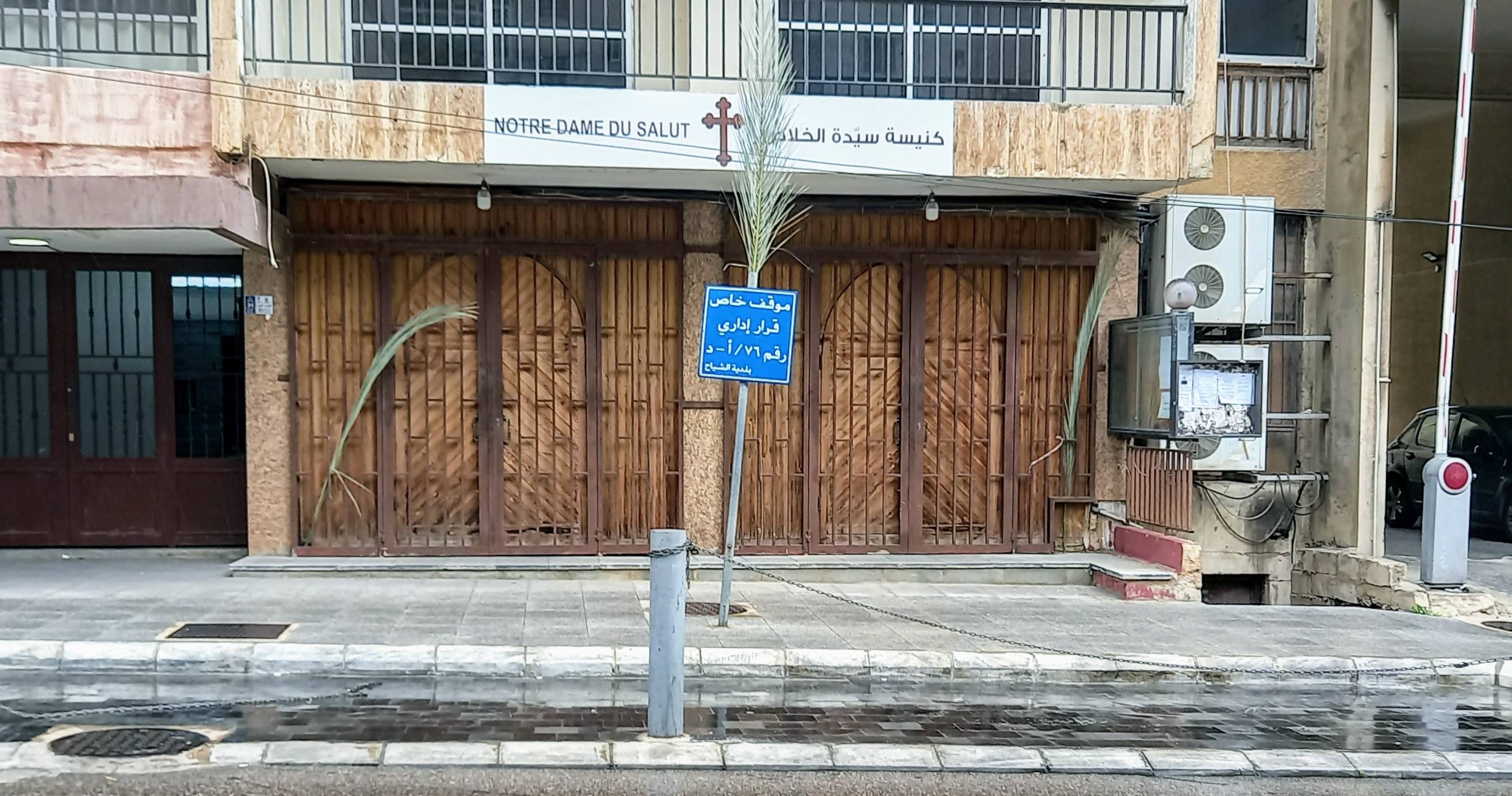
A family was having a child baptized at the Church of Notre Dame de la Delivrance in the Maronite neighborhood of Ain el-Rammaneh on the morning of April 13, 1975. Outside, Phalangist militiamen directed traffic away from the ceremony. A vehicle carrying armed PLO guerrillas, firing rifles into the air in a customary display, refused to be diverted. In the scuffle that followed, the Phalangists shot the Palestinian driver. By nightfall, Lebanon had begun a civil war that would last fifteen years and kill 60,000 people in its first phase alone.
A Baptism Interrupted
The morning violence escalated rapidly. At 10:30 a.m., as the baptism congregation gathered outside the church, two civilian cars plastered with Popular Front for the Liberation of Palestine posters pulled up and opened fire. Four people died in the drive-by shooting, including Joseph Abu Assi, an off-duty Phalangist militant and the father of the baptized child. Three bodyguards of Pierre Gemayel, the powerful leader of the Phalangist Party, were also killed while returning fire. Gemayel himself escaped unharmed. The attackers fled under gunfire from surviving bodyguards, but the damage was already irreversible. Within minutes, armed Phalangist and National Liberal Party militiamen set up roadblocks across the Christian eastern districts of Beirut. In the predominantly Muslim western sectors, Palestinian factions did the same.
The Bus Through Ain el-Rammaneh
Shortly after midday, a bus carrying Palestinian Arab Liberation Front supporters and Lebanese sympathizers passed through Ain el-Rammaneh on its way to the Sabra refugee camp. The passengers were returning from a political rally at Tel el-Zaatar. Believing the church attack had been Palestinian retaliation for the morning's killing, and enraged by the attempt on Gemayel's life, Phalangist militiamen had set an ambush. As the bus entered the narrow alleys, the Phalangists opened fire. Twenty-seven passengers were killed and nineteen wounded, though accounts differ -- sociologist Samir Khalaf reported all 28 aboard were killed, while other sources counted 22 PLO-affiliated dead. What is not in dispute is that the bus carried people who had no role in the morning's church attack, and that many were unarmed civilians.
Three Days, Three Hundred Dead
The bus massacre detonated sectarian tensions that had been building for years. Heavy fighting erupted across Beirut between Phalangist militia and Palestinian guerrillas allied with the leftist Lebanese National Movement. Over 300 people died in the first three days. Prime Minister Rashid al-Sulh dispatched gendarmerie to Ain el-Rammaneh to detain suspects, then pressured Pierre Gemayel to hand over the Phalangist militiamen responsible for the bus attack. Gemayel refused publicly, declaring that his men had acted in self-defense and that no charges could stand. He sent a Phalangist delegation to secure the release of those already detained. The message was clear: the Phalangist Party no longer recognized the authority of the Lebanese government to adjudicate violence between its factions.
Contested Truths
Decades of debate have failed to establish a definitive account of April 13. The Phalangists insisted the bus carried armed ALF reinforcements and that the ambush was a shootout, not a massacre. Most Palestinian accounts described the passengers as civilian families attacked without provocation. PLO official Abu Iyad later suggested the church shooting was not a Palestinian operation at all, but a provocation engineered by the National Liberal Party under former President Camille Chamoun. Critics noted that the cars used in the church attack were conspicuously decorated with PFLP propaganda -- an uncharacteristic tactic for a guerrilla movement that typically avoided such identification. None of these theories was ever substantiated with conclusive evidence.
The Bus as Artifact
The actual bus was recovered and first publicly exhibited in mid-2011, decades after the event. For the 50th anniversary of the civil war's outbreak in 2025, it was displayed at the Nabu Museum -- a physical artifact of the moment Lebanon fractured. The bus is a relic of an event that different communities remember in fundamentally incompatible ways: a justified response to provocation, an unprovoked massacre, or a manufactured crisis designed to trigger a war that powerful factions wanted. What is beyond debate is the consequence. Ceasefires and political talks through international mediation proved fruitless. Sporadic violence escalated into full-scale civil war over the next two years, splitting Lebanon along factional and sectarian lines for a generation.
From the Air
Located at 33.887N, 35.513E in the Ain el-Rammaneh district of East Beirut. The neighborhood sits southeast of Beirut's center, in a densely residential area. The bus route ran from Tel el-Zaatar (northeast Beirut) toward Sabra camp (southwest Beirut), crossing sectarian boundary lines. Nearest airport: Rafic Hariri International Airport (OLBA), approximately 7 km south-southwest. The Church of Notre Dame de la Delivrance remains in the neighborhood.