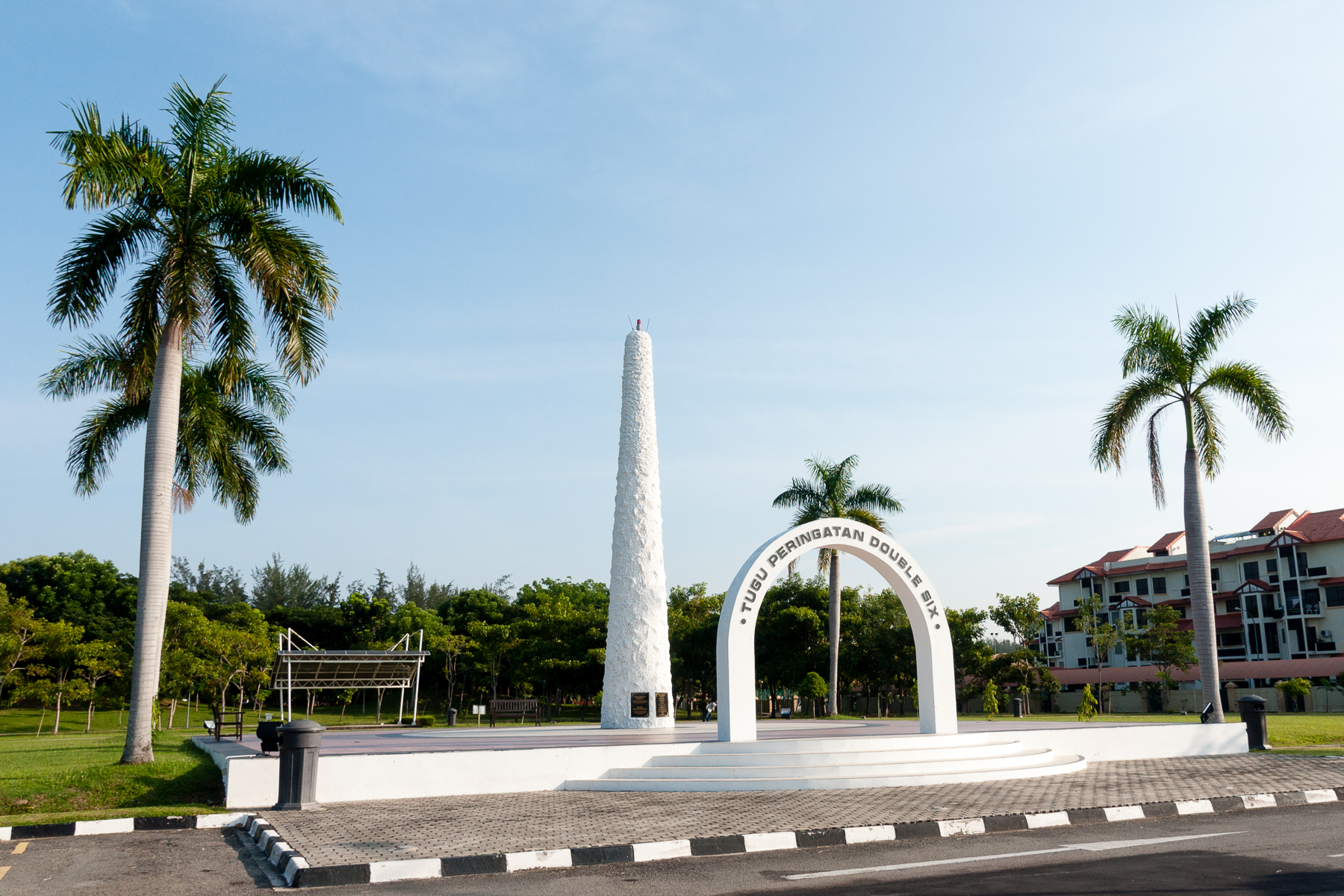
1976 Sabah Air GAF Nomad Crash
It was the fifty-third day. Tun Fuad Stephens had been sworn in as Sabah's fifth chief minister on 15 April 1976, after his BERJAYA party won 28 of 48 seats in state elections, defeating the United Sabah National Organisation and its leader Tun Mustapha. On 6 June -- a date that would give the tragedy its name, the Double Six -- the twin-engine GAF N-22B Nomad carrying Stephens and ten others crashed on approach to Kota Kinabalu Airport. Everyone aboard died. Among them were two of Sabah's most prominent political figures, Stephens and Datuk Peter Mojuntin, along with Stephens' eldest son Johari.
The Night Before at Labuan
The evening of 5 June 1976 had been celebratory. Tun Fuad, his brother Benedict, and other BERJAYA leaders gathered at Labuan Golf Club to host a post-victory reception for Tengku Razaleigh Hamzah, the federal finance minister and chairman of Petronas. The gathering carried political weight beyond social pleasantries. Tun Mustapha, the previous chief minister, had refused to sign a 5% oil royalty agreement with Petronas. Whether Tun Fuad intended to sign remained a matter of fierce dispute. Conrad Mojuntin, brother of Peter Mojuntin, later claimed Tun Fuad would never have agreed to the 5%. Harris Salleh, who succeeded Stephens as chief minister, countered that Fuad "100 percent supported the arrangement by Parliament" and was ready to sign. The good conversation lasted until 6 AM. By the next afternoon, the question of what Fuad would have done became permanently unanswerable.
The Crash
On the afternoon of 6 June, Tun Fuad, Tengku Razaleigh, and other BERJAYA leaders boarded the government-chartered Nomad, a ten-seater Australian-built aircraft owned by Sabah Air. Ishak Atan, Tengku Razaleigh's private secretary, decided at the last moment to stay behind on Fuad's aircraft to prepare documents for a signing ceremony in Kota Kinabalu. That decision cost him his life. Tun Fuad's plane took off first, followed by a second aircraft carrying Harris Salleh. Fuad's plane never reached the airport. Ben Stephens and Police Commissioner Yusof Khan were among the first to arrive at the crash site. The Commissioner cut open the wreckage himself. Eleven people were dead: the chief minister, his son, six state officials, a bodyguard, a private secretary, and the pilot, Captain Ghani Nathan.
Funerals Across Faiths
The state insisted on official funerals for the dead leaders, but the logistics of grief proved complicated. The victims represented Sabah's religious diversity: Tun Fuad, Datuk Salleh Sulong, his son Johari, Datuk Wahid Peter Andu, Dr. Syed Hussin Wafa, Ishak Atan, and Corporal Said Mohammad were Muslim. Datuk Peter Mojuntin and Datuk Darius Binion were Catholic. Datuk Chong Thien Vun was Anglican. The solution was characteristically Sabahan: all the coffins were gathered inside the Kota Kinabalu Community Centre, then carried out in a single file before breaking off in different directions toward their respective cemeteries. In that procession -- Muslim, Catholic, Anglican -- the diversity of the leaders who had died together was honored by a community that understood how to mourn across boundaries of faith.
Decades of Unanswered Questions
The cause of the crash has never been settled to public satisfaction. Suspicions of sabotage surfaced immediately. The investigation report was classified for decades, fueling conspiracy theories that connected the crash to the unresolved oil royalty dispute with the federal government. Harris Salleh, who became chief minister after the tragedy, signed the 5% oil agreement, saying he acted on the attorney-general's recommendations and with the agreement of all his cabinet ministers. Calls for declassification grew over the years. In April 2023, Prime Minister Anwar Ibrahim agreed to release the final reports. The declassified Malaysian report found no evidence of sabotage, fire, or explosion. Australia, which had manufactured the Nomad aircraft, released its own investigation report, which concurred with Malaysia's findings. For the families of the dead and the people of Sabah, the answers came nearly half a century late. Tun Fuad's wife, Rahimah Stephens, was left a widow with four children studying in Australia. His mother, Edith Cope-Stephens, born in 1898, outlived her son by only a few months.
From the Air
Coordinates: 5.96N, 116.06E. The crash site is in the Sembulan area of Kota Kinabalu, near the current Kota Kinabalu International Airport (ICAO: WBKK). The Double Six Monument marks the crash location in the Sembulan neighborhood. The airport runway and the city's coastal waterfront are prominent landmarks from altitude. Mount Kinabalu rises to 4,095 metres to the northeast.