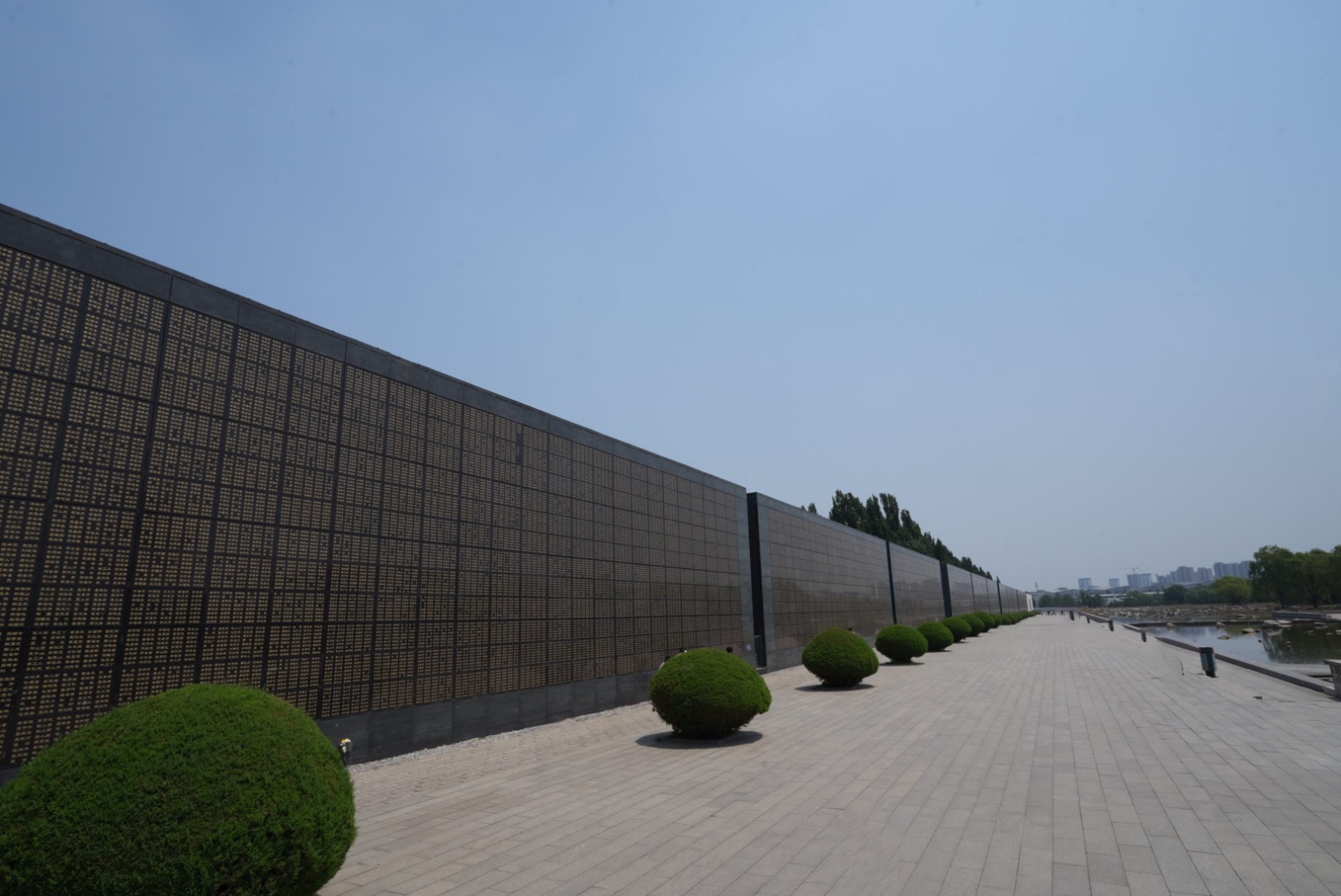
1976 Tangshan Earthquake
The earthquake struck at 3:42 in the morning, when nearly everyone in Tangshan was asleep. Within 23 seconds, a magnitude 7.8 tremor along a fault running directly beneath the city center destroyed 93 percent of the residential buildings in downtown Tangshan, where 730,000 people lived. Many residents initially believed they were under nuclear attack from the Soviet Union. They were not. The ground itself had betrayed them -- and the political system that had promised to predict earthquakes had failed to deliver a warning.
A City Built on a Fault
Tangshan sits at the northern edge of the Beijing-Tianjin-Tangshan Plain, an alluvial lowland where sediments eroded from the Yanshan Mountains have filled the ancient Bohai Sea over thousands of years. Beneath the weak soils lies a thick layer of sedimentary rock -- limestone, sandstone, and massive deposits of coal that made Tangshan an industrial powerhouse. The city grew directly atop a northeast-oriented syncline, a geological fold that brought coal close enough to the surface to mine but also channeled seismic energy with devastating efficiency. The Tangshan fault runs under the city center. It is part of a system of ancient faults reactivated by the slow-motion collision of the Indian plate against the Eurasian plate, forces transmitted across thousands of kilometers to fracture rock beneath a sleeping city.
The Cost in Lives
The officially published death toll was 242,469, with 175,797 severely injured. Historians who cross-checked government files later determined that at least 300,000 people died. The discrepancy was not accidental -- the Chinese government did not publish casualty figures for three years after the disaster. The reasons were political. Just seventeen months before Tangshan, the successful prediction of the 1975 Haicheng earthquake had been celebrated as proof of Chinese earthquake science and, implicitly, of the superiority of the socialist system. The low death toll at Haicheng -- later determined to be 2,041 -- owed more to the time of day and a series of obvious foreshocks than to any scientific breakthrough. At Tangshan, there were no perceptible foreshocks. The earthquake came without warning, in the dead of night, and the gap between what the system had promised and what it delivered was measured in hundreds of thousands of lives.
Politics Beneath the Rubble
The Tangshan earthquake was not merely a natural disaster but a political crisis of the first order. In traditional Chinese belief, natural catastrophes could signify the loss of the Mandate of Heaven -- a ruler's divine right to govern. The Chinese Communist Party was acutely aware of this cultural undercurrent. A magnitude 6.7 earthquake struck southwestern China just three weeks later, deepening the sense of cosmic judgment. Mao Zedong, already gravely ill, died six weeks after Tangshan on September 9, 1976. His death ushered in the downfall of the Gang of Four and brought the Cultural Revolution to an end. The earthquake and the political upheaval that followed became inseparable in Chinese memory -- a hinge point where the ground shifted both literally and figuratively, marking the beginning of a new political era.
The Warning That Almost Was
Whether the Tangshan earthquake could have been predicted remains one of the most debated questions in seismology. Several scientists at the State Seismological Bureau wanted to issue warnings for the region between Beijing and the Bohai Sea. At a week-long national conference on earthquake prediction that convened in Tangshan on July 14 -- two weeks before the earthquake -- seismologist Wang Chengmin reportedly warned of a possible magnitude 5+ earthquake in the Tangshan-Luanxian area between July 22 and August 5. But the Cultural Revolution had politicized science itself, creating an environment where too many predictions, often based on unreliable methods, had generated costly false alarms. A single false alarm in Shaanxi Province that October disrupted the lives of 65 percent of the population for half a year. The tragic irony of Tangshan is that the very system designed to save lives -- mass earthquake prediction campaigns -- had produced so much noise that the signal, when it finally appeared, was lost.
From the Air
Located at 39.66N, 118.40E in Hebei Province. Tangshan is visible from altitude as a large industrial urban area on the North China Plain between Beijing and the Bohai Sea coast. The Tangshan Earthquake Memorial Park marks the epicenter. Nearest airport is Tangshan Sannuhe Airport (ZBTS), approximately 20 km from center. Beijing Capital International Airport (ZBAA) is roughly 180 km west.