1977 Washington, D.C., Attack and Hostage Taking
On the afternoon of March 9, 1977, a man named Hamaas Abdul Khaalis set into motion a plan born from four years of grief and rage. Twelve armed followers of his Hanafi Movement burst into three separate buildings across downtown Washington, D.C. -- the B'nai B'rith headquarters on Rhode Island Avenue, the Islamic Center on Embassy Row, and the District Building just three blocks from the White House. Within hours, 149 people were held at gunpoint while a journalist lay dead and a city councilor named Marion Barry bled from a gunshot wound. For the next 39 hours, the nation's capital held its breath.
A Jazz Drummer's Spiral
The man who orchestrated the siege was born Ernest McGhee in Indiana in 1921. After a discharge from the U.S. Army on grounds of mental instability, he reinvented himself as a jazz drummer in New York City, then converted to Islam and took the name Hamaas Abdul Khaalis. He rose through the ranks of the Nation of Islam to become its national secretary in the early 1950s, only to break away in 1958 and found his own rival organization, the Hanafi Movement. In 1972, Khaalis published an incendiary open letter attacking the Nation of Islam's leadership. The retaliation was devastating -- in 1973, five men broke into his Washington home and murdered five of his children, his nine-day-old grandson, and another man. The killers were convicted, but Khaalis was consumed by a belief that justice had not been served. That consuming anguish would become the engine driving the 1977 siege.
Three Buildings, One Afternoon
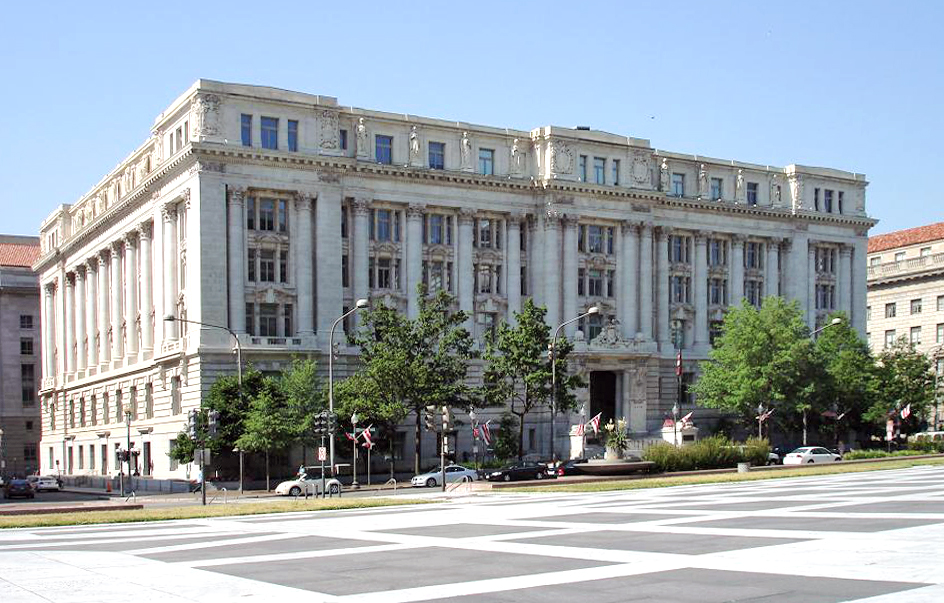
The assault unfolded with coordinated precision. At roughly 11 a.m., seven gunmen stormed the B'nai B'rith headquarters at 1640 Rhode Island Avenue NW, overwhelming staff and seizing over 100 hostages. Less than an hour later, three more entered the Islamic Center of Washington and took eleven people captive. Then, at 2:20 p.m., two Hanafi gunmen pushed into the District Building -- Washington's city hall -- and climbed to the fifth floor in search of high-profile targets. There, reporter Maurice Williams was shot and killed. City councilor Marion Barry took a bullet that lodged near his chest. A police officer was mortally wounded. Khaalis issued a list of demands: hand over the men who murdered his family, surrender the assassins of Malcolm X, and cancel the premiere of the film Mohammad, Messenger of God, which he considered blasphemous.
Patience and Diplomacy
As the standoff stretched through two nights, the primary tactic of law enforcement was patience. L. Douglas Heck and Rudy Giuliani had assembled a counter-terrorism team within the Department of Justice, and intelligence operatives Steve Pieczenik and Robert Blum were brought in to assist. But ultimately, the breakthrough came not from negotiators or tactical teams but from three Muslim ambassadors: Egypt's Ashraf Ghorbal, Pakistan's Sahabzada Yaqub-Khan, and Iran's Ardeshir Zahedi. The three diplomats appealed to Khaalis through shared faith, engaging him in conversations that drew upon Islamic principles and scripture. Time magazine later credited their courageous intervention as the decisive factor in preventing further bloodshed. After 39 hours, the gunmen surrendered and all remaining hostages were released alive.
Scars on a City
The aftermath reshaped Washington in ways both visible and hidden. Marion Barry recovered from his injuries and went on to be elected mayor of the District of Columbia. In 2007, the fifth-floor press room at the Wilson Building was renamed for Maurice Williams, the journalist who lost his life that day. Khaalis was convicted and spent the rest of his days in federal prison, dying at the correctional complex in Butner, North Carolina, on November 13, 2003. Abdul Muzikir, the gunman who killed Williams, received a 70-year sentence and was not released until 2022. The siege entered the cultural memory as well -- filmmaker David Simon drew on his own family's experience, since his father Bernard was among the B'nai B'rith hostages. The elder Simon's dark humor survived the ordeal: upon receiving bologna sandwiches from a nearby hotel, he reportedly quipped, 'Mayonnaise on white bread? I think they're trying to kill us.'
From the Air
Located at 38.895N, 77.031W in downtown Washington, D.C. The three siege locations -- B'nai B'rith headquarters (Rhode Island Ave NW), the Islamic Center (Embassy Row on Massachusetts Ave), and the District Building (Pennsylvania Ave NW near the White House) -- form a triangle visible from altitude across the National Mall area. Nearest airport: KDCA (Ronald Reagan Washington National), approximately 3 nm south. Also nearby: KIAD (Dulles International) to the west and KADW (Joint Base Andrews) to the southeast. Best viewed at 2,000-3,000 ft AGL for downtown context.