The Crash That a Mother Never Learned to Survive
Kazue Doshida was not told her sons were dead for sixteen months. Doctors feared the shock would kill her -- she was already fighting for her life, burned over most of her body when a Marine Corps jet slammed into her home on the evening of September 27, 1977. Her boys, ages one and three, had survived the initial impact. They did not survive the fire. When Doshida finally learned the truth on January 29, 1979, she said only that she wanted to hold them one more time. She never recovered. She died in 1982 at the age of thirty-one, from complications of injuries sustained that evening in Yokohama.
September 27, 1977
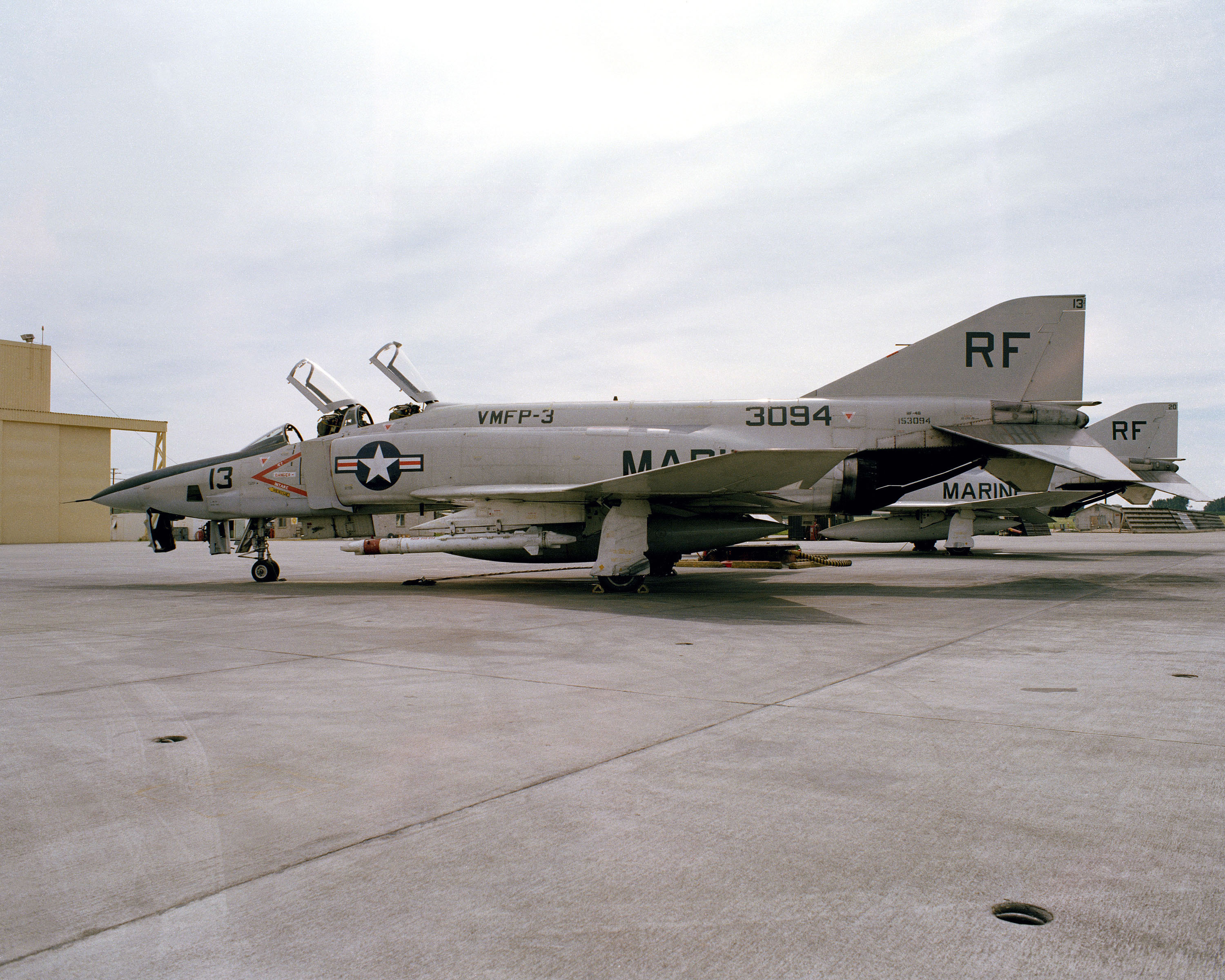
The aircraft was a McDonnell Douglas RF-4B, a reconnaissance variant of the F-4 Phantom, assigned to VMFP-3 and based at Naval Air Facility Atsugi. Bureau number 157344, call sign RF611, was en route to the carrier USS Midway anchored in Sagami Bay when its port engine caught fire. The two-man crew -- Captain J. E. Miller of Mendota, Illinois, and First Lieutenant D. R. Durbin of Natchitoches, Louisiana -- ejected. Both survived without serious injury. The aircraft did not. It plunged into a residential neighborhood near what is now Eda Station, destroying several houses and injuring seven people beyond the Doshida family. The crash site sat in the dense suburban fabric of western Yokohama, where homes crowd close together along narrow streets -- a landscape that offered no buffer between a failing military jet and the families below.
Sixteen Months of Silence
The story of Kazue Doshida became central to the memory of this crash. Her two sons initially survived but died later from severe burns. Doshida herself was so critically injured that her doctors withheld news of the deaths, fearing the emotional shock would destroy what fragile recovery she had achieved. For sixteen months she lay in a hospital, not knowing. When she was finally told on January 29, 1979, her response was quiet devastation: she wanted to hold her children one more time. Doshida lived three more years, but the burns had done irreversible damage. She died in 1982, aged thirty-one, from complications that traced directly back to that September evening. A family of three was erased by a single mechanical failure.
Memory in Stone and Ink
In 1985, a statue was erected in a Yokohama park to honor Kazue Doshida and her sons. The sculpture depicts her holding her two boys -- the embrace she asked for and never received. The memorial became a gathering point for annual remembrances, a place where residents mark the anniversary and advocates press for greater accountability around U.S. military flight operations over populated areas. A year before the statue went up, Toei Animation Studios released an anime titled "Mamma, Poppa Bye Bye," directed by Hiroshi Shitara with a story by Katsumoto Saotome. The animation traced the lives of the two young victims from the early summer of 1977 through the night of the crash, giving faces and voices to children most Japanese knew only as statistics. The film remains one of the few animated works to document a specific military aviation accident.
A Pattern Over Decades
The 1977 Yokohama crash was neither the first nor the last time a U.S. military aircraft fell into a Japanese community. From the 1959 Okinawa F-100 crash to the 1964 Machida F-8 crash, a pattern recurred: American military planes operating from bases on Japanese soil suffered failures over densely populated areas, with civilian casualties borne by the host nation. Each incident reignited debates about the Status of Forces Agreement, flight path restrictions, and the fundamental tension of hosting foreign military installations in one of the most densely populated countries on Earth. The Yokohama crash, with its wrenching human story, became one of the most emotionally resonant of these incidents -- not because of scale, but because of Kazue Doshida, her impossible silence, and the statue that holds what she could not.
From the Air
Located at 35.56°N, 139.55°E in western Yokohama, near present-day Eda Station on the Tokyu Den-en-toshi Line. The crash site lies in the dense suburban belt between central Tokyo and Yokohama. Naval Air Facility Atsugi (RJTA), the base from which the RF-4B departed, is approximately 15 nautical miles to the southwest. The area is characterized by extremely dense residential development with minimal open space. Tokyo International Airport / Haneda (RJTT) lies roughly 15 nautical miles to the east-northeast. Best observed from 3,000-5,000 feet AGL, though the site itself is indistinguishable amid the continuous urban fabric.