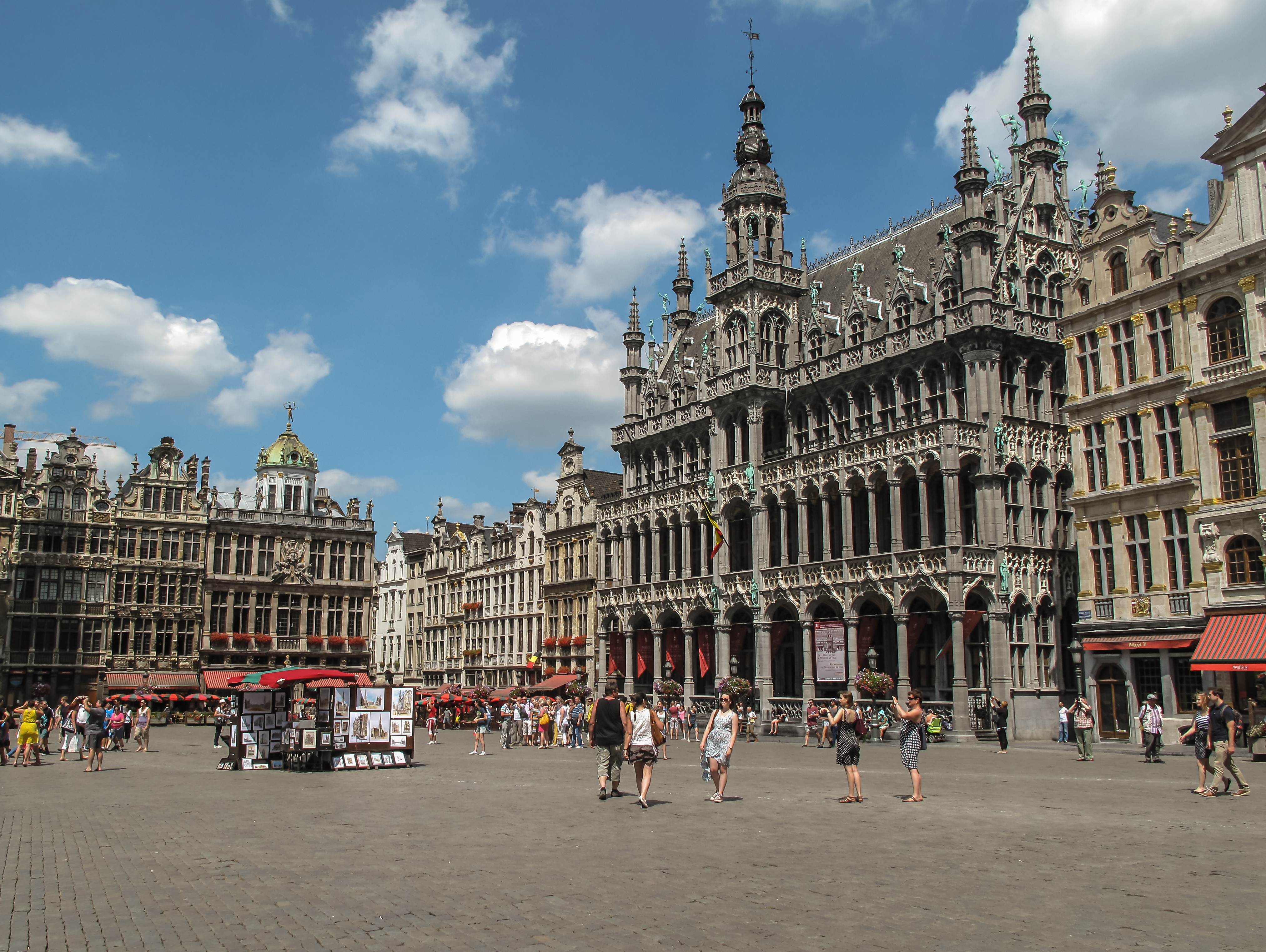
1979 Brussels Bombing
Brussels was celebrating its thousandth anniversary when the bomb exploded. On August 28, 1979, the Grand-Place, the magnificent central square surrounded by gilded guild houses, had been prepared for a concert by the band of the Duke of Edinburgh's Royal Regiment. The stage was set, the audience gathering. Beneath the open-air platform, concealed from view, the Provisional Irish Republican Army had planted an explosive device. When it detonated, it injured seven bandsmen and eleven civilians, shattering the festivities and extending the Troubles far beyond the borders of Ireland and Britain.
The Target
The band of the Duke of Edinburgh's Royal Regiment was based in Osnabruck, West Germany, part of the British Army of the Rhine stationed across Europe since the end of World War II. Military bands represented a soft target: uniformed soldiers engaged in ceremonial duties, their presence announced in advance, their purpose entirely peaceful. The concert in Brussels was meant to be a goodwill gesture, British soldiers entertaining crowds in a friendly European capital. The IRA saw it differently. To them, any British military presence, anywhere, represented legitimate targets in their campaign against British rule in Northern Ireland.
Luck and Timing
The casualties could have been far worse. Of the band's thirty members, only some had reached the stage when the bomb detonated. The rest were stuck in Brussels city traffic, their delay saving them from the blast. Even those present escaped death because they were not on stage at the moment of the explosion; they had stepped away to dress for the performance. The bomb damaged the stage extensively and wounded eighteen people, but the combination of traffic congestion and backstage preparation prevented any fatalities. Brussels city traffic, the eternal frustration of commuters, had inadvertently saved lives.
A Wider Campaign
The Brussels bombing was part of a broader IRA strategy to strike British targets across Europe. The same year, 1979, saw the Warrenpoint ambush in Northern Ireland, which killed eighteen British soldiers, and the assassination of Lord Mountbatten in Ireland. The IRA would later bomb British military facilities in West Germany, including the 1987 Rheindahlen bombing and the 1988 attacks in the Netherlands. By taking the conflict to the continent, the IRA aimed to demonstrate that Britain could not escape the consequences of its presence in Northern Ireland. The message was clear: nowhere was safe.
The Grand-Place
The setting made the attack particularly jarring. The Grand-Place is one of Europe's most celebrated public squares, surrounded by baroque guild houses with golden facades, dominated by the Gothic tower of the city hall. UNESCO has designated it a World Heritage Site. It is a place of celebration, of markets and festivals, of the Belgian identity expressed in architecture. For a millennium, Brussels has gathered in this square. The thousandth anniversary celebration was meant to honor that continuity. Instead, the cobblestones were strewn with debris and the wounded, the festive atmosphere shattered by political violence from a conflict most Belgians barely understood.
The Claim
The IRA claimed responsibility in a telephone call to Brussels city hall, according to Mayor Pierre Van Halteren. There was no ambiguity about who had carried out the attack or why. The bombing generated international condemnation but changed little in the broader trajectory of the Troubles. The conflict would continue for another two decades, claiming over 3,500 lives before the Good Friday Agreement of 1998 brought a fragile peace. Today, the Grand-Place shows no trace of the violence. Tourists photograph the guild houses and sample Belgian chocolate, oblivious to the day when a bomb turned a birthday celebration into a crime scene. The thousand-year-old square has seen too much to dwell on a single afternoon of terror.
From the Air
The Grand-Place is located at 50.85N, 4.35E in the heart of Brussels, Belgium. The square is surrounded by the dense urban core of the Belgian capital and is difficult to distinguish from the air except as part of the historic center's irregular medieval street pattern. Brussels Airport (EBBR) lies 12 km to the northeast. The city center is within the Brussels Airport control zone; overflights require coordination. Best viewed from higher altitudes (5,000+ feet) to appreciate the context of the city layout.