1980 Damascus Titan Missile Explosion
It started with the wrong wrench. On the evening of September 18, 1980, Airman David Powell descended into a Titan II missile silo in the farmland of Van Buren County, Arkansas, to check the pressure on an oxidizer tank. He had brought a ratchet wrench instead of the newly mandated torque wrench. He was already suited up and below ground when he realized the mistake, and rather than climb back out, he continued. What followed over the next several hours was a cascading disaster that ejected a nine-megaton nuclear warhead from its silo, killed one airman, injured 21 others, and became one of the most terrifying "Broken Arrow" incidents of the Cold War.
The Silo in the Pasture
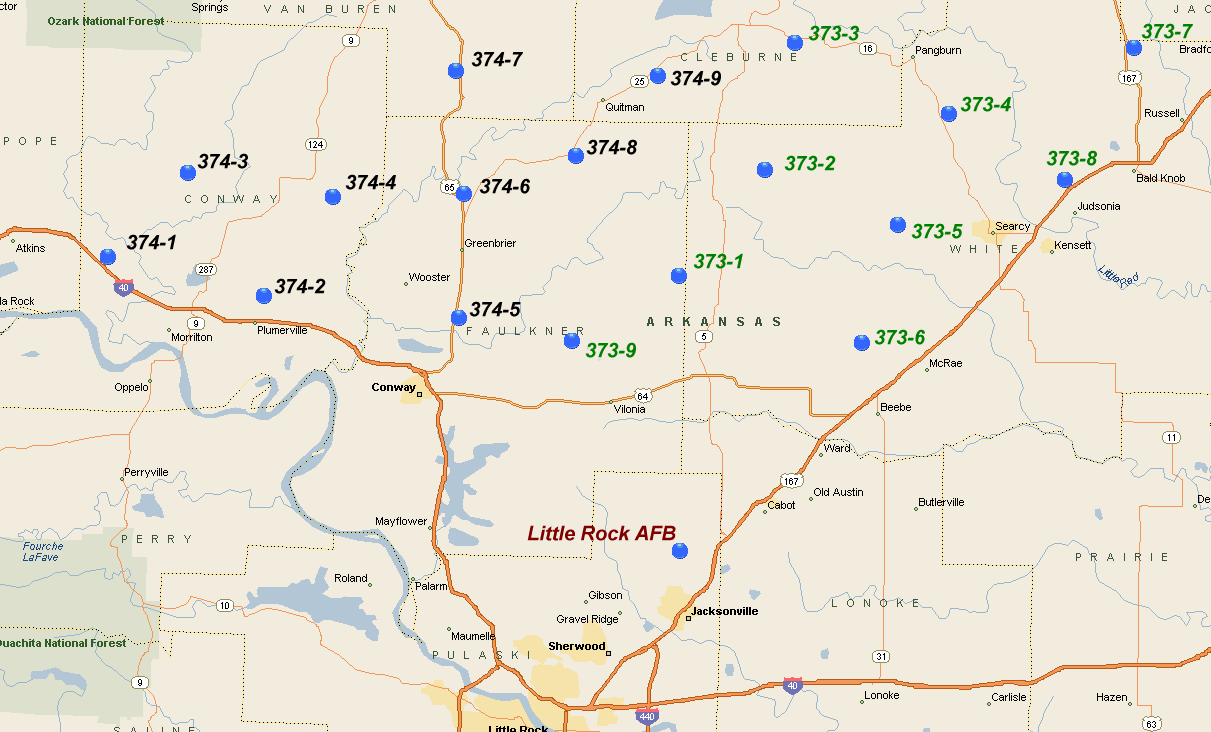
Launch Complex 374-7 sat in Bradley Township, just northeast of the tiny community of Damascus, Arkansas, and roughly north of Little Rock. It was one of eighteen Titan II silos operated by the 308th Strategic Missile Wing out of Little Rock Air Force Base, part of the Strategic Air Command's nuclear deterrent. Each silo contained a Titan II intercontinental ballistic missile carrying a W-53 thermonuclear warhead -- one of the most powerful weapons in the American arsenal. The silos were scattered across rural Arkansas, buried in farmland, their 743-ton steel doors flush with the pastures above. Neighbors drove past them on their way to church.
Eighteen Hours of Dread
The fuel leak began around evening on September 18 when the ratchet wrench -- heavy and unwieldy -- made contact with the missile in a way the procedure had not anticipated. Highly toxic Aerozine 50 fuel began venting from the first-stage tank. The on-site command team evacuated. For nearly six hours, the missile sat leaking volatile hypergolic fuel while officials debated what to do. Early on September 19, a two-man team -- Senior Airmen John "Greg" Devlin and Rex Hukle -- was sent to enter the silo complex. The standard entry methods would not work because the evacuated command crew was not inside to unlock doors electronically. Devlin and Hukle cut through the security fence with bolt cutters, broke through the portal door with a crowbar, and descended into the complex in Rocket Fuel Handler Clothing Outfits, running low on breathing air before they could complete their mission.
The Explosion
Devlin and Hukle were relieved by David Lee Livingston and Jeff Kennedy. Their vapor detectors immediately registered an explosive atmosphere, and they were ordered to evacuate. Then came a fateful reversal: the team was ordered to reenter and turn on an exhaust fan. Livingston went back in. Shortly thereafter, at around 3:00 a.m. on September 19, the hypergolic fuel ignited -- likely sparked by arcing in the exhaust fan. The explosion catapulted the 743-ton silo door into the air and ejected the second stage and warhead from the silo. Once clear, the second stage detonated. The W-53 thermonuclear warhead landed in a field a short distance from the complex's entry gate. Its safety features held. There was no nuclear detonation and no release of radioactive material. Livingston was killed. Twenty-one others were injured.
The Aftermath and the Reckoning
President Jimmy Carter went on television to reassure the people of Arkansas. Governor Bill Clinton reported that Air Force officials had told him no nuclear explosion could have occurred inside the silo. At daybreak, the Air Force retrieved the warhead and returned it to the Pantex weapons assembly plant in Texas. The launch complex was never repaired. Debris was cleared from the surrounding area, and the site was buried under gravel, soil, and concrete rubble. The land returned to private ownership -- a mound in a pasture marking where one of the most powerful weapons ever built had been hurled into the night sky by accident.
Command and Control
The Damascus incident faded from public memory for decades until journalist Eric Schlosser published Command and Control: Nuclear Weapons, the Damascus Accident, and the Illusion of Safety in 2013. The book examined this explosion alongside other Broken Arrow incidents during the Cold War, arguing that the American nuclear arsenal was far more accident-prone than the public had been led to believe. Director Robert Kenner adapted the book into a documentary film, broadcast on PBS's American Experience series in 2017. Jeff Plumb's firsthand account of the incident was featured that same year on This American Life. The story of the Damascus accident endures as a parable about the gap between the precision we demand from nuclear weapons systems and the human fallibility that operates them.
From the Air
The Damascus Titan missile explosion site is located at approximately 35.245N, 92.235W in rural Van Buren County, Arkansas, northeast of the town of Damascus and north of Little Rock. The former Launch Complex 374-7 site is now buried under a mound of gravel and debris on private land. It is not marked or accessible, but the rural farmland setting is characteristic of the scattered Titan II silo locations across central Arkansas. Nearby airports include Little Rock Air Force Base/Clinton National Airport (KLIT) about 50 miles south. Best viewed from 3,000-5,000 feet AGL to see the rural setting in context.