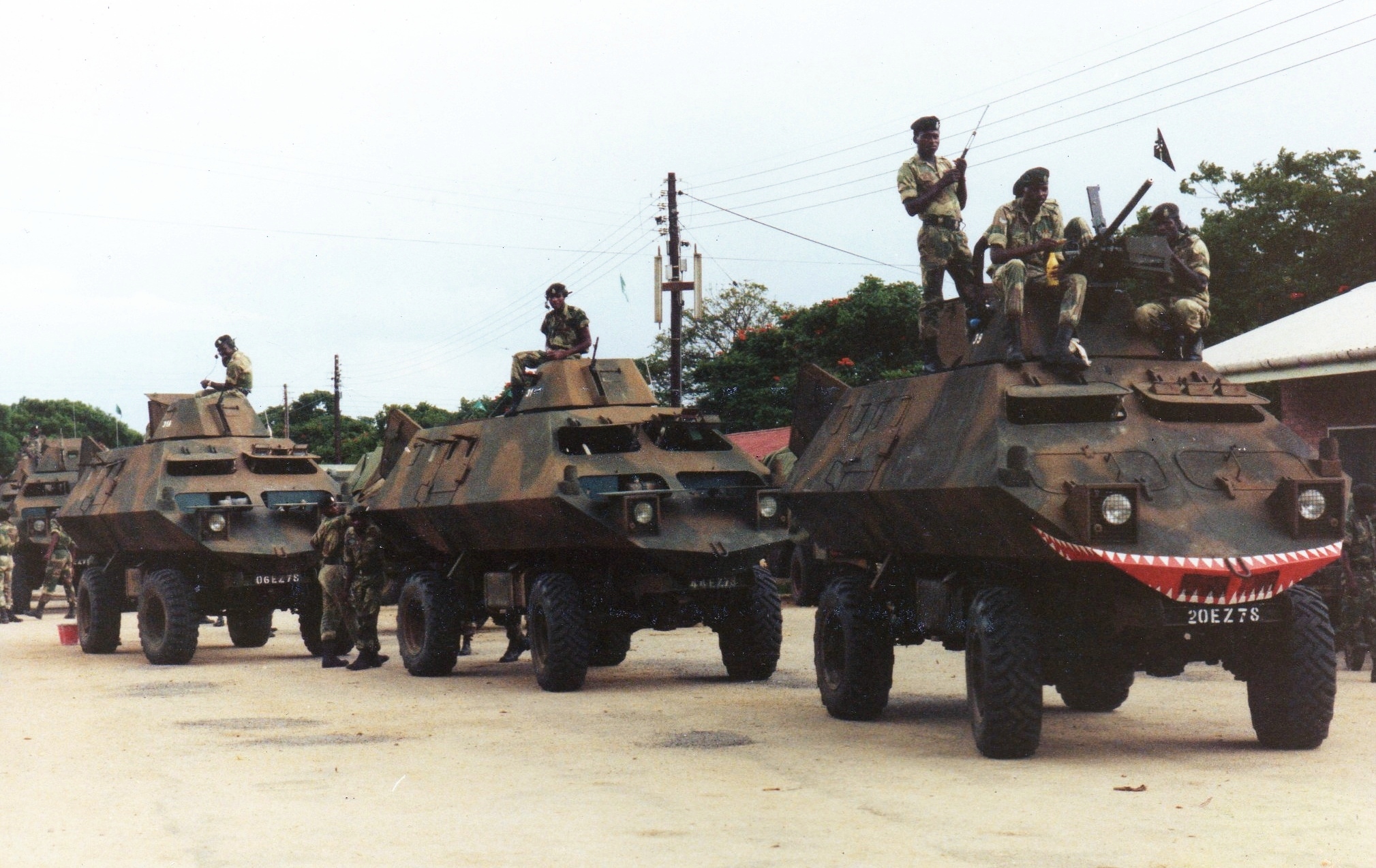
1981 Entumbane Uprising
Zimbabwe was barely a year old when its war came home. On the evening of 11 February 1981, rifle, machine gun, and mortar fire erupted across Entumbane, a township on the western outskirts of Bulawayo, as fighters from the country's two rival guerrilla armies turned their weapons on each other -- and on the regular army caught between them. The four days that followed tested whether the newly independent nation could hold together, and the answer carried a terrible cost. At least 260 people died. The deeper wounds would take far longer to count.
Two Armies, One Country
The roots of the violence lay in the liberation war itself. Two nationalist movements had fought to end white minority rule in Rhodesia, but they had never been allies in anything more than name. The Zimbabwe African National Union (ZANU), largely Shona and backed by China, fielded ZANLA guerrillas. The Zimbabwe African People's Union (ZAPU), predominantly Ndebele and supported by the Soviet bloc, fielded ZIPRA. Their leaders -- Robert Mugabe of ZANU and Joshua Nkomo of ZAPU -- shared the goal of majority rule but little else. When independence came in April 1980, both guerrilla forces were supposed to integrate into a new Zimbabwe National Army. In practice, thousands of armed fighters from both sides were housed in assembly camps around the country, still organized along factional lines, still distrustful, and still armed. In Entumbane, ZANLA and ZIPRA camps sat directly next to each other, each holding roughly 1,500 guerrillas. The arrangement was a match next to fuel.
Four Days in February
Fighting between ZANLA and ZIPRA members had already broken out at a nearby integrated army battalion at Ntabazinduna, northeast of Bulawayo, when the Entumbane camps exploded around 8 p.m. on 11 February. Both guerrilla factions attacked each other and the local Rhodesian African Rifles headquarters simultaneously. Lieutenant Lionel Dyck, commanding a small detachment at a position dubbed 'the Alamo,' reported that he was surrounded and could not withdraw. Within an hour, Lieutenant-Colonel Mick McKenna had mobilized the rest of the 1st Battalion, RAR at an airfield near Brady Barracks. When ZIPRA armoured personnel carriers began moving on Bulawayo from Essexvale to the southeast, Sergeant Stephen Devine led four Eland 90 armoured cars to intercept them. At an intersection on the city's outskirts, Devine struck a ZIPRA BTR-152, killing all 20 combatants inside with a single high-explosive anti-tank round. By the evening of 12 February, ZIPRA had ceased attacks and their armoured group at Essexvale surrendered. The Zimbabwe National Army suffered no fatal casualties among its regular troops.
The Weight of the Dead
The official death toll was 260 people. Historians believe the true number was higher. Most of the dead were guerrilla fighters from both factions, but civilians in Entumbane and surrounding areas were caught in crossfire from weapons designed for bush warfare, not suburban streets. The people of this township -- families who had survived the liberation war and dared to hope that independence meant peace -- found themselves sheltering from mortar rounds in their own homes. Each casualty was someone's neighbor, someone's child, someone who had believed the war was over. The uprising carried a bitter irony that many observers noted: Mugabe's ZANU-PF government was ultimately saved from the ZIPRA rebellion by white-officered, formerly Rhodesian troops -- the very army that had fought against both liberation movements during the Bush War.
A Shadow Over What Followed
The 1981 Entumbane uprising was the Rhodesian African Rifles' last battle. The regiment was soon disbanded as the government accelerated military integration. But the political consequences ran far deeper. Mugabe and ZANU-PF used the uprising -- and ZIPRA's armoured advance from Essexvale -- as evidence that ZAPU was plotting insurrection. The narrative of Ndebele disloyalty, whether justified or manufactured, became a pretext for what followed. In 1983, Mugabe deployed the North Korean-trained Fifth Brigade into Matabeleland and the Midlands in an operation known as Gukurahundi. Over the next four years, an estimated 20,000 civilians -- overwhelmingly Ndebele -- were killed. The Entumbane uprising did not cause Gukurahundi, but it provided the political cover under which that campaign was launched. Understanding what happened in Bulawayo in February 1981 means understanding the first chapter of a much longer and darker story.
From the Air
Located at 20.17S, 28.58E, in the western suburbs of Bulawayo, Zimbabwe. The Entumbane township lies on the city's western outskirts. Nearest major airport is Joshua Mqabuko Nkomo International Airport (FVBU). Bulawayo's grid of wide boulevards and surrounding townships are visible from moderate altitude. The road southeast toward Esigodini (formerly Essexvale) traces the route of the ZIPRA armoured advance.