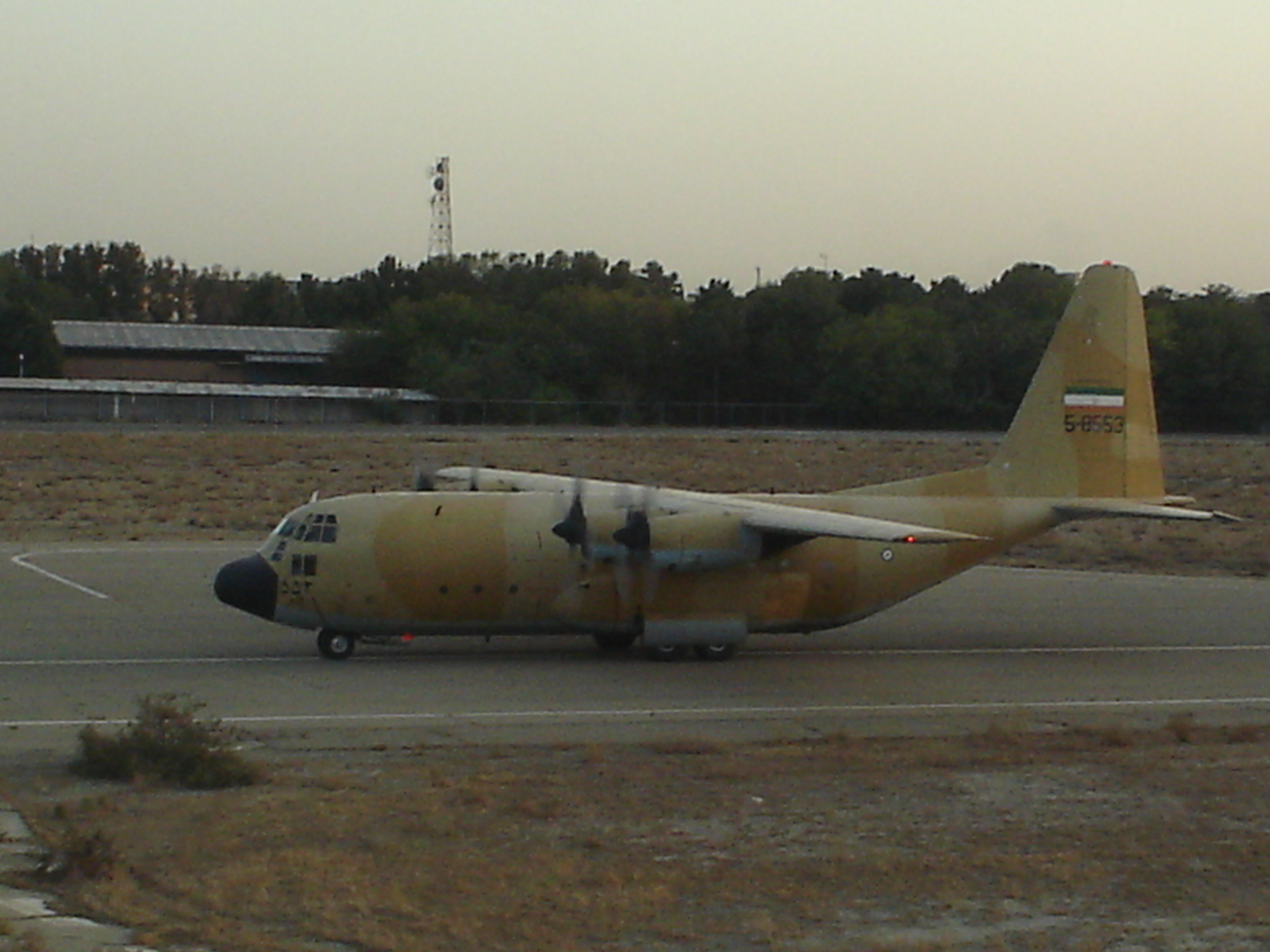
1981 Iranian Air Force C-130 Crash
The Iran-Iraq War was thirteen months old. Iranian forces had just completed Operation Samen-ol-A'emeh, a three-day offensive from September 27 to 29, 1981, designed to break the Siege of Abadan. The operation succeeded. Now the commanders needed to report their gains to Tehran. Several of Iran's most senior military leaders boarded a single Lockheed C-130 Hercules at Ahvaz, in Khuzestan province. None of them would arrive.
One Plane, Four Generals
The passenger manifest read like a directory of Iran's wartime leadership. Javad Fakoori, former defense minister and air force commander. Mousa Namjoo, the sitting defense minister. Valiollah Fallahi, chief of staff of the army. Mohammad Jahanara, commander of the Islamic Revolutionary Guard Corps. These four men, collectively responsible for directing Iran's defense in the largest conventional war of the late twentieth century, were all aboard the same aircraft. At 7:00 p.m. local time on September 29, 1981, the C-130 crashed into a firing range near Kahrizak, south of Tehran.
The Toll
Everyone aboard died. The initial reports counted 80 casualties, though the article also references 60 people on board, a discrepancy never fully resolved in the available sources. What was undeniable was the scale of the loss to Iran's command structure. In a single event, the country lost its defense minister, its army chief of staff, and the commander of the Revolutionary Guard. This was not a frontline battle death. It was a transport flight returning from an inspection tour, the kind of routine movement that happens in every war, carrying people whose deaths would reshape a nation's chain of command.
Silence Where Answers Should Be
No official explanation was ever provided for the crash. A single source attributed it to a "technical fault." That vagueness has invited decades of speculation. The Iran-Iraq War was a conflict marked by sabotage, internal political rivalries, and the fog of a revolutionary state still consolidating power. Whether the crash was mechanical failure, pilot error, hostile action, or something else entirely remains unknown. The absence of an official investigation, or at least a publicly released one, has left the event suspended in ambiguity, a catastrophic loss without a definitive cause.
War Without Its Commanders
The crash forced Iran to rebuild its military leadership in the middle of an active war. The Iran-Iraq conflict would continue for seven more years, until 1988, claiming hundreds of thousands of lives on both sides. The men who died near Kahrizak were the architects of Iran's early war strategy, the commanders who had just engineered the breaking of the Siege of Abadan. Their replacements inherited a war that their predecessors had helped shape but would never see concluded. The firing range where the C-130 went down lies south of Tehran, an unremarkable patch of ground that absorbed one of the most consequential aviation disasters of the Iran-Iraq War.
From the Air
The crash site is near Kahrizak, located at approximately 35.70N, 51.40E, south of Tehran. The area includes military firing ranges south of the city. Mehrabad International Airport (OIII), from which the aircraft was likely attempting to approach, is approximately 15 km to the northwest. Imam Khomeini International Airport (OIIE) is about 40 km to the south-southwest. The flight path from Ahvaz (OIAW) to Tehran runs roughly northeast across Khuzestan and central Iran.