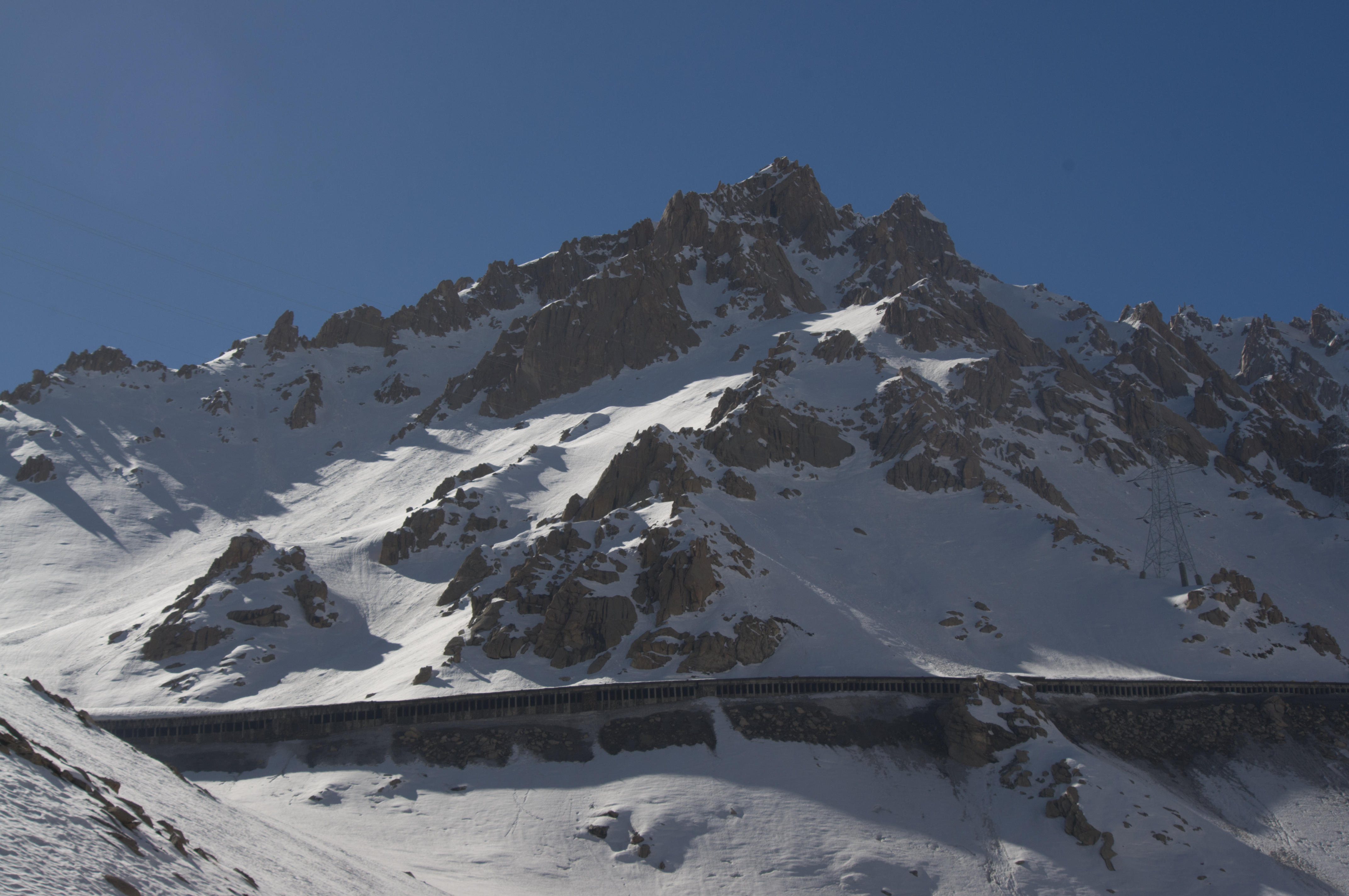
1982 Salang Tunnel Fire
Neither government ever confirmed it happened. No official investigation was published, no memorial erected, no anniversary observed. Yet on November 3, 1982, something terrible occurred inside the Salang Tunnel -- a 2.67-kilometer concrete tube bored through the Hindu Kush at 3,400 meters above sea level -- and the scale of the catastrophe depends entirely on whom you believe. Soviet military records describe a traffic jam between two convoys. Western diplomats describe an inferno that consumed hundreds, possibly thousands, of lives. The truth, whatever it is, remains buried in the same mountain that swallowed the smoke.
The Tunnel That Held a War Together
By 1982, the Salang Tunnel was the most strategically vital piece of infrastructure in Afghanistan. Completed by Soviet engineers in 1964, it allowed vehicles to bypass the Salang Pass -- a treacherous route over the Hindu Kush at 3,878 meters -- cutting travel time between Kabul and the northern provinces from 72 hours to 10. When the Soviet Union invaded Afghanistan in 1979, the tunnel became the primary artery for moving troops and supplies south from the Soviet border. Convoys rolled through it constantly: fuel tankers, armored vehicles, supply trucks, and the civilian traffic that shared this narrow passage. The tunnel was only about seven meters wide, poorly ventilated, and already dangerous. In February 1980, carbon monoxide buildup from idling vehicles had killed 16 Soviet soldiers trapped inside during a traffic stoppage. The mountain was patient, and it had already demonstrated what it could do.
What Happened on November 3
The facts are scarce and contradictory, which is itself part of the story. According to Soviet Army records, two military convoys -- numbered 2211 and 2212 -- collided inside the tunnel, causing a traffic jam. No fire. No explosion. That was the official account, and neither the Soviet nor Afghan governments acknowledged anything worse. But Western diplomats stationed in Kabul told a different version: a collision involving a fuel tanker ignited a fire that spread through a military convoy trapped inside the tunnel's narrow bore. With ventilation inadequate and vehicles packed bumper to bumper, the tunnel filled with toxic smoke. People died from flames, from the searing heat, and above all from asphyxiation -- soldiers and civilians alike, unable to escape in either direction. The Soviet Army had no incentive to reveal massive losses during wartime, and Afghan insurgent groups denied any involvement in what they called an explosion. The silence from both sides only deepened the mystery.
A Death Toll Written in Doubt
Initial Western media reports placed the death toll as high as 2,700, which would have made the Salang Tunnel fire the deadliest road accident in recorded history and one of the most lethal fires of modern times. Western diplomats estimated that as many as 700 Soviet soldiers and between 400 and 2,000 Afghan civilians perished. The official Soviet and Afghan figure, disclosed much later, counted between 168 and 176 dead -- soldiers and civilians combined. The gap between these numbers is not a rounding error. It represents fundamentally different accounts of what occurred: a traffic accident versus a catastrophe, an inconvenience versus an atrocity of negligence. The truth likely falls somewhere in this vast space, but the wartime fog that descended on the Salang Tunnel in November 1982 has never fully lifted. No independent investigation was ever conducted, and the physical evidence was cleared by military crews who answered to the same command structure that controlled the narrative.
A Mountain That Never Forgets
The Salang Tunnel did not stop claiming lives after 1982. Avalanches in 2010 killed 175 people and buried miles of the approach road. A fuel tanker explosion in December 2022 killed at least 31 more. The tunnel itself was blown up in 1997 by forces loyal to Ahmad Shah Massoud, attempting to block the Taliban's advance, and rebuilt by Russian engineers in 2002. Through decades of war, collapse, and reconstruction, the tunnel has remained Afghanistan's most critical and most perilous corridor -- a passage that the country cannot live without and that people die trying to use. The 1982 fire sits at the center of this history as its most devastating single event, even if its full dimensions remain unknown. For the families of those who entered the tunnel that November day and never emerged, the official silence has been its own kind of cruelty.
From the Air
Located at 35.32N, 69.03E in the Hindu Kush mountains of northern Parwan Province, Afghanistan. The tunnel entrance sits at approximately 3,400 meters (11,150 feet) elevation. Approach with caution due to extreme terrain -- peaks surrounding the Salang Pass exceed 4,000 meters. The tunnel is not visible from above, but the winding approach roads carved into the mountainsides are identifiable. Nearest major airport is Kabul International (OAKB), approximately 100 km to the south. Bagram Airfield (OAIX) is closer at roughly 60 km south. Weather conditions are severe in winter with heavy snowfall and avalanche risk.