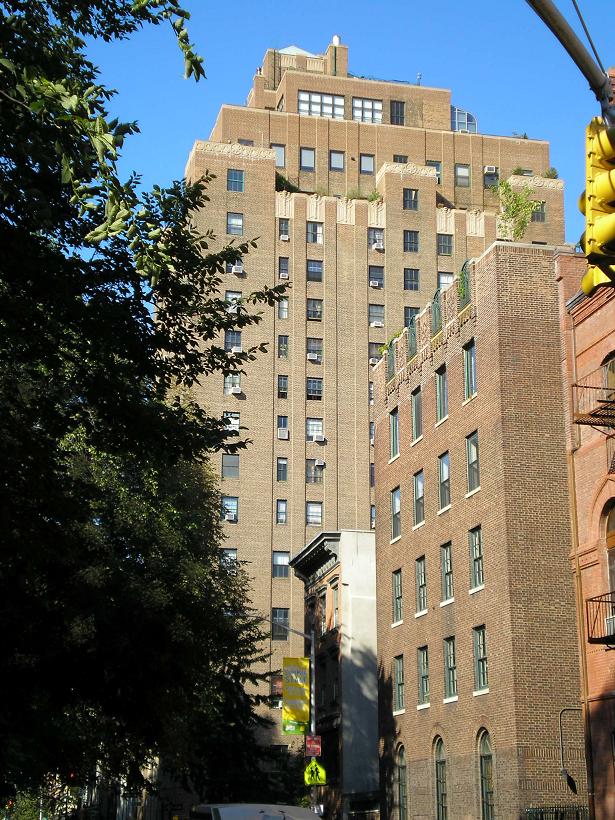
1988 Tompkins Square Park Riot
The deputy chief in charge of the precinct left the scene in the middle of the riot to use the bathroom at the station house, several blocks away. That detail, buried in the NYPD's own internal report, captures the Tompkins Square Park riot of August 1988 better than any headline. What began as a protest against a 1 a.m. curfew in a park that had become home to drug dealers, homeless encampments, and the punk squatter culture of Alphabet City became a night of police violence so indiscriminate that the New York Times titled its editorial 'Yes, a Police Riot.' Officers struck bystanders with nightsticks. They kicked people lying on the ground. They broke a photographer's hand. And when it was over, the neighborhood that had been bitterly divided over what to do about the park was suddenly, furiously united — against the police.
Tent City on Avenue B
By 1988, Tompkins Square Park had become something between a public commons and an open-air shelter. Tent cities dotted the grounds. Drug dealing was open. The park's history as a site of protest stretched back to 1874, when police had attacked unemployed workers during a labor demonstration, and the symbolism was not lost on the squatters and activists who claimed it as their own. The surrounding neighborhood was split. The Avenue A Block Association, representing local businesses, wanted a curfew. Friends of Tompkins Square Park and organizers on the poorer east side opposed one. Manhattan Community Board 3 tried to find middle ground. The Parks Department ultimately imposed a 1 a.m. closing — the first curfew for a park that had been open around the clock. Banners appeared reading 'Gentrification is Class War.' A protest rally on July 31 ended with clashes. Another was called for August 6.
Nightsticks and Helicopters
The August 6 rally drew somewhere between 150 and 700 people, depending on who was counting. At some point after 11:30 p.m., police charged the crowd. What followed lasted until six in the morning. Officers swung nightsticks at demonstrators, bystanders, and journalists without apparent distinction. A travel promoter named Mr. Fish, trying to hail a taxi on Avenue A, was struck on the head — 'I was just standing there watching,' he said. 'The next thing I remember is seeing the stick.' A police helicopter hovering overhead attracted larger crowds rather than dispersing them. Rooftops that officers had failed to secure became launching platforms for bottles and debris. The fighting paused briefly, then resumed. Mayor Ed Koch rescinded the curfew the next day. Video footage of officers kicking prone, defenseless people played across every news channel in the city.
The Commander Who Went to the Bathroom
Over 100 complaints of police brutality were filed. Commissioner Benjamin Ward's internal report was unusually blunt: the police operation was 'not well planned, staffed, supervised or executed... which culminated in a riot.' Deputy Chief Thomas J. Darcy, who had left the scene mid-riot for the station house bathroom and never returned, was forced into retirement. Two officers faced charges — Karen Connelly for striking a civilian with her nightstick, and Philip O'Reilly for injuring a Times photographer's hand. An administrative judge recommended Connelly's termination. The charges against O'Reilly were dismissed. The helicopter, the unsecured rooftops, the absent commander — each failure compounded the next. Ward's willingness to call it what it was earned rare praise from the Times, which noted that the commissioner's candor confirmed what the video already showed.
The Park After the Riot
The neighborhood's reaction was its own kind of revelation. 'The streets were full of people who I see coming out of their houses every morning with briefcases,' said community board member Phil Van Aver. 'People who work on Wall Street, standing in the street screaming Kill the pigs.' The riot did not solve the park's problems — the tent city persisted, and the arguments over gentrification, homelessness, and public space continued for years. But it permanently altered how the East Village understood its relationship with the police. Jonathan Larson set the riot scene of his musical Rent in the same neighborhood, drawing directly from the events of August 1988. Leftover Crack began playing annual anniversary concerts in the park in 2004, a tradition that has itself produced arrests and mosh-pit brawls. Tompkins Square today is a landscaped, fenced park with a dog run and a farmers' market. The tent city is gone. The questions it raised — about who owns public space, and what force is acceptable to reclaim it — have not gone anywhere.
From the Air
Coordinates: 40.7264°N, 73.9818°W. Tompkins Square Park is a rectangular green space in Manhattan's East Village / Alphabet City, bounded by Avenues A and B and East 7th and 10th Streets. Visible from altitude as a distinct green rectangle in the dense Lower East Side grid. Nearest airports: KLGA (LaGuardia, 12 km NE), KJFK (JFK, 22 km SE). Best viewed at 2,000-4,000 ft AGL following the East Village south from 14th Street.