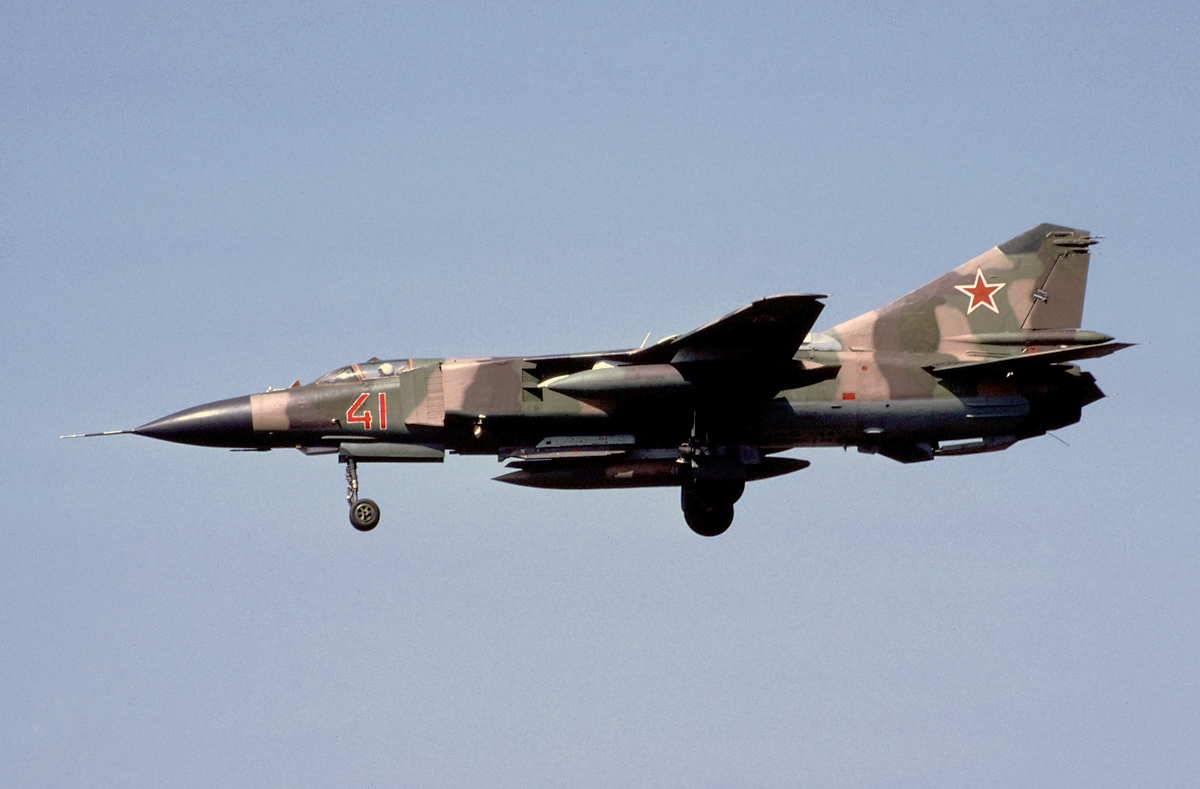
1989 Belgium MiG-23 Crash
On the morning of July 4, 1989, Wim Delaere was sleeping in at his family home in Bellegem, Belgium. The eighteen-year-old computer science student had been celebrating the end of his university exams the night before. His mother and brother were shopping for groceries in nearby Kortrijk. His father was at work in Ypres. At 10:30 am, a Soviet MiG-23M fighter jet that had been flying without a pilot for over an hour crashed through the roof of 273 Doorniksesteenweg, killing Wim instantly. No one in Belgium knew the plane was coming.
The Ghost Flight
The incident began as a routine training flight from Bagicz Airbase near Kolobrzeg, Poland. Colonel Nikolai Skuridin was piloting the MiG-23M when the afterburner failed during takeoff, causing partial power loss. As the aircraft descended, Skuridin made the decision to eject. He landed safely. But the engine kept running. The unmanned aircraft climbed back into stable flight, its autopilot locked on a westerly heading, and continued across the sky. The MiG crossed Polish airspace into East Germany, then over the border into West Germany, flying on as if guided by an invisible hand. It would travel approximately 900 kilometers before running out of fuel.
Scramble Across Europe
As the pilotless jet crossed into NATO airspace, military commands across Western Europe scrambled to respond. A pair of F-15s from the 32nd Tactical Fighter Squadron, stationed at Soesterberg Air Base in the Netherlands, intercepted the MiG over West Germany. The American pilots reported the bizarre news: the cockpit was empty. With the aircraft potentially heading toward the United Kingdom, a live-armed Phantom FGR2 from 56 Squadron was scrambled from RAF Wattisham in Suffolk with orders to shoot down the MiG if it crossed the English Channel. The escorting F-15s were instructed to destroy the aircraft, but as they prepared to fire, the MiG began a slow turn to the south as its fuel ran out. The French Air Force put its fighters on alert.
A Random Tragedy
The MiG-23 crossed into Dutch airspace, then continued into Belgium, descending slowly as its fuel tanks emptied. It came down just a few kilometers from the French border, crashing into a residential street in the town of Bellegem. Of all the places the aircraft could have fallen in its 900-kilometer journey across Europe, it struck the one house where a young man lay sleeping. Wim Delaere became the only casualty of one of the Cold War's strangest incidents. His death was entirely random, the result of forces set in motion over a thousand kilometers away by an engine malfunction and a decision to eject.
Diplomatic Fallout
The Belgian government lodged a formal protest with the Soviet Union. Foreign Minister Mark Eyskens expressed particular concern about the lack of warning during the flight and what he called 'notable slowness' on the Soviet side in disclosing whether the jet was carrying nuclear or toxic weapons. The incident laid bare the gaps in Cold War communication, even as the Berlin Wall was months away from falling. The Soviet Union eventually paid Belgium $685,000 in compensation, a sum that could never account for the life of a young man who simply happened to be asleep in the wrong house on a summer morning.
From the Air
The crash site is located at 50.759N, 3.311E in Bellegem, a village near Kortrijk in West Flanders, Belgium. The location is approximately 5km from the French border. The MiG-23's final trajectory brought it from the northeast on a slowly descending path as it ran out of fuel. Kortrijk-Wevelgem Airport (EBKT) is just 5km to the south. The flat Flanders landscape meant the aircraft descended gradually until impact. Modern aviation charts show this as controlled airspace under Brussels approach control.