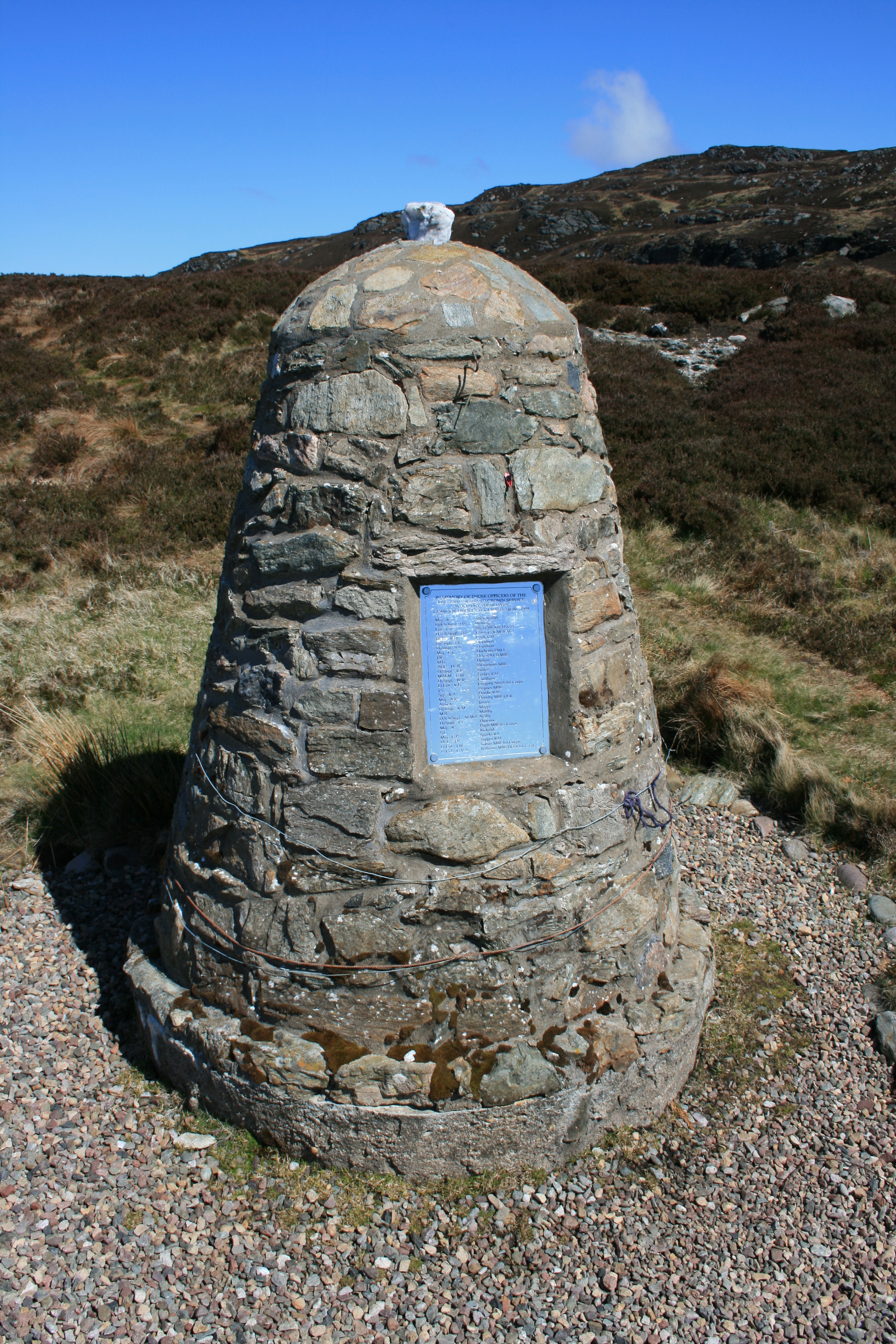
1994 Mull of Kintyre Chinook Crash
The Chinook designated ZD576 had a troubled history. In the six weeks before 2 June 1994, its engines had been replaced multiple times due to problems with the new FADEC digital control system. A dislocated mounting bracket had restricted its collective lever -- serious enough to trigger a fleet-wide warning. Emergency power lights had flashed repeatedly. Two days before the flight that would kill everyone on board, the helicopter was dispatched to RAF Aldergrove outside Belfast as a replacement for two older Chinooks that had been withdrawn. It carried no flight data recorder and no cockpit voice recorder. On the evening of 2 June, it flew into the Mull of Kintyre in dense fog, killing all 29 people aboard.
The Passengers
What made this crash catastrophic beyond its death toll was the identity of the passengers. The 25 people in the rear of the helicopter represented almost the entire senior echelon of the United Kingdom's Northern Ireland intelligence apparatus. Six were from MI5, the Security Service. Ten were from the Royal Ulster Constabulary's Special Branch -- assistant chief constables, detective chief superintendents, detective superintendents, detective inspectors. Nine were from British Army Intelligence Corps and attached units -- lieutenant colonels, colonels, majors. They were flying from Aldergrove to attend a conference at Fort George near Inverness. Air Chief Marshal Sir William Wratten called it "the largest peacetime tragedy the RAF had suffered." The loss of so many intelligence officers in a single stroke was, as one commentator noted, a huge blow to the government's campaign against the IRA.
The Pilots Who Were Blamed
Flight Lieutenants Jonathan Tapper, 28, and Richard Cook, 30, were both UK Special Forces pilots -- highly trained, well regarded, with no reputation for recklessness. They had already completed a trooping flight that day and had been on flight duty for over nine hours. The weather en route to Inverness was forecast to be clear except around the Mull of Kintyre, where fog had closed in. Around 18:00, the helicopter struck a hillside at approximately 810 feet above sea level -- 1,600 feet below the minimum safe altitude for the area. In 1995, an RAF board of inquiry concluded that the cause could not be definitively established. But two senior reviewing officers overturned that finding, declaring both pilots guilty of gross negligence for flying too fast and too low in fog. It was a verdict that would haunt the RAF for nearly two decades.
Seventeen Years of Injustice
The negligence verdict proved bitterly controversial. The pilots' families and a growing coalition of supporters -- including former Prime Minister John Major and former Defence Secretary Malcolm Rifkind -- campaigned for a new inquiry. A fatal accident inquiry in 1996, a House of Commons Defence Select Committee report in 2000, and a Public Accounts Committee report all either left the question of blame open or directly challenged the original conclusion. A House of Lords inquiry in 2001 found the negligence verdict "unjustified." Yet the Ministry of Defence refused to reverse it. In January 2010, an internal MOD document emerged revealing that nine months before the crash, the engine software had been described as "positively dangerous" because it could cause both engines to fail. The aircraft's navigation and communications systems had been declared unfit for aircrew reliance. Knowledge of this had been withheld from the pilots. The RAF had made a false declaration of compliance with regulations in order to issue the aircraft its authority to fly.
Cleared, At Last
On 13 July 2011, Defence Secretary Liam Fox announced that an independent review had cleared the pilots of gross negligence. The government accepted that the helicopter's navigation and communications systems were mandated as not to be relied upon, and that the RAF had issued a false declaration of airworthiness. The reviewing officers, the 2011 report found, had "failed to take account of the high calibre of two Special Forces pilots who had no reputation for recklessness." It had taken seventeen years for Jonathan Tapper and Richard Cook to be exonerated. The Ministry of Defence later confirmed that the false declaration of compliance did not constitute "wrongdoing" -- a bureaucratic distinction that offered little comfort to the families of twenty-nine people who died aboard an aircraft that should never have been cleared to fly.
The Hillside
A memorial stands on the Mull of Kintyre at the crash site, on the grassy slope where ZD576 came down in the fog. The Mull is a remote headland at the southwestern tip of the Kintyre peninsula, closer to Northern Ireland than to Glasgow. On clear days the Antrim coast is visible across the water. On the evening of 2 June 1994, visibility at ground level was as low as ten to one hundred metres. The helicopter had no black box, no voice recorder, and navigation systems that it had been officially told not to trust. What actually happened in the cockpit -- whether pilot fatigue, a navigational error in zero visibility, or an engine malfunction covered up by the absence of recording equipment -- will never be known with certainty. What is known is that twenty-nine people are dead, and for seventeen of those years, two of them were publicly blamed for something the evidence could not support.
From the Air
Located at 55.31N, 5.79W on the Mull of Kintyre, the southwestern tip of the Kintyre peninsula in Argyll and Bute, Scotland. The crash site is on a hillside at approximately 810 feet above sea level. The terrain rises to about 1,400 feet at the highest point of the Mull. The Antrim coast of Northern Ireland is visible across the North Channel in clear conditions. Nearest airports are Campbeltown (EGEC) approximately 15 km northeast and Glasgow (EGPF) approximately 130 km to the east. The area is exposed to Atlantic weather and fog is frequent. Fly with respect -- this is a site of military tragedy.