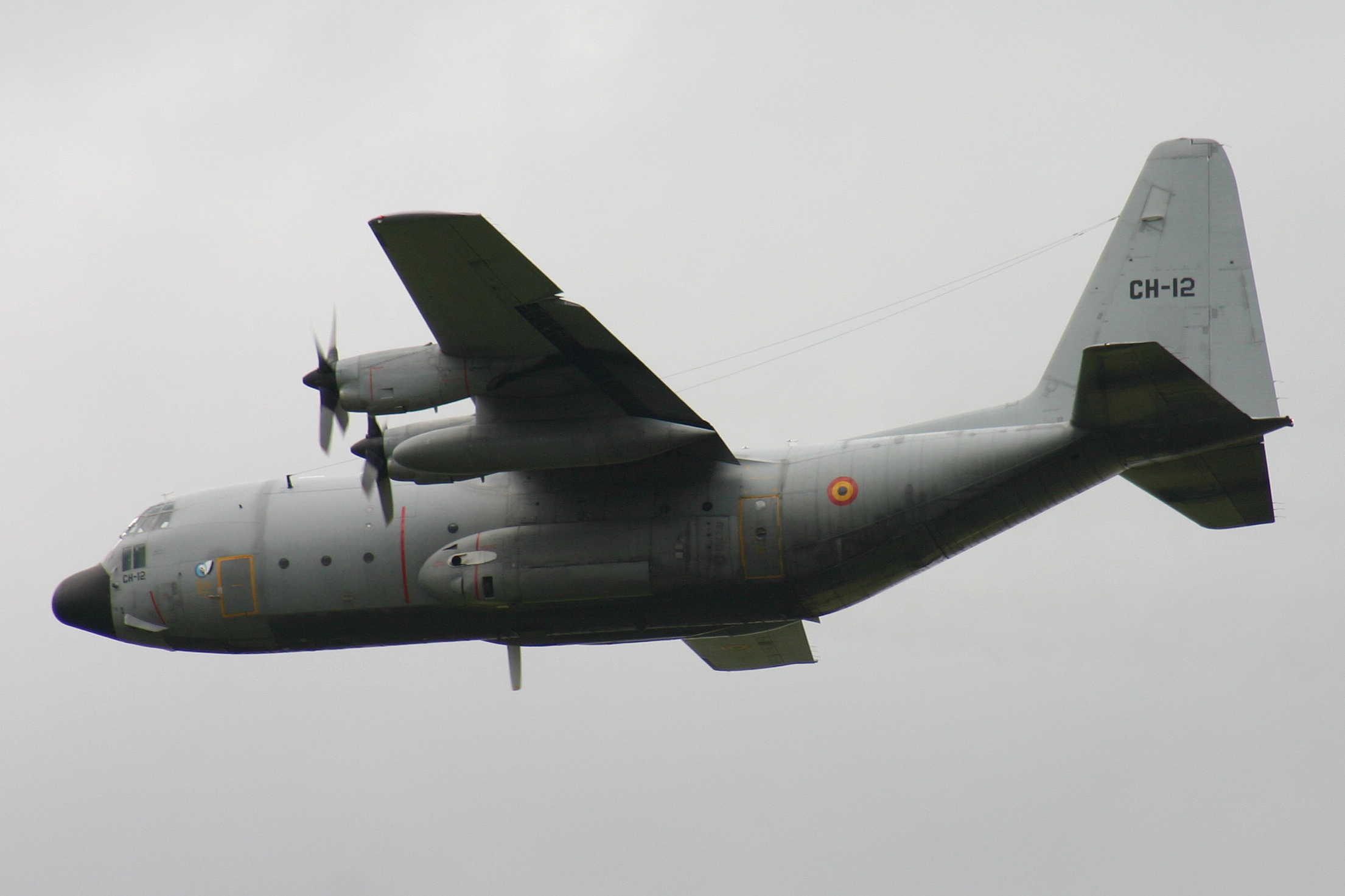
1996 Belgian Air Force Hercules Accident
At 6:02 pm on July 15, 1996, a Belgian Air Force C-130 Hercules was coming in to land at Eindhoven Airport when it flew through a flock of common starlings. The birds were ingested into the two left engines, and within seconds the massive aircraft went out of control. It overshot the runway, lost power, and crashed into the ground. Fire engulfed the cockpit and forward fuselage. Of the 41 people aboard, 32 died in those first moments. Two more would die from their injuries. Most of the dead were young members of the Royal Netherlands Army Fanfarekorps, military band musicians with their whole lives ahead of them.
Thirty Minutes
The fire that broke out after the crash destroyed the cockpit and forward fuselage where most of the passengers were seated. But the deadliest factor was not the impact or the flames. The Eindhoven airfield fire service responded to the crash, but they did not know the transport aircraft was carrying passengers. Military cargo flights were common at the base, and nothing had indicated this was different. Thirty minutes passed before the fire crews realized they were dealing with a mass casualty event. By then, most of the survivors who might have been saved had died in the post-crash fire. The aircraft had been carrying four Belgian crew members and 37 Dutch soldiers, all young musicians returning from a performance.
A Common Enemy
The investigation determined that the cause of the accident was the ingestion of common starlings into the two left engines during the landing approach. Bird strikes are a known hazard in aviation, but starlings are particularly dangerous because they flock in enormous, dense groups. The Lockheed C-130 Hercules is a rugged aircraft, designed to operate in combat conditions, but losing two engines on the same side during a low-altitude landing approach left the crew with no options. The incident became known as the Hercules disaster in both the Netherlands and Belgium, a shared tragedy for two nations that had entrusted their young soldiers to the same flight.
Consequences
In the aftermath of the disaster, three Royal Netherlands Air Force officers were relieved of their duties: the commander of the Eindhoven airbase, the officer responsible for air traffic control, and the officer commanding the fire department. The investigation laid bare the systemic failures that had cost lives after the initial crash. The fire service had followed their standard procedures, but those procedures did not account for the possibility that a military transport might be carrying passengers. Communication failures, assumptions, and protocols that had never been tested against this scenario all contributed to the final death toll. The disaster led to changes in how military airfields handle emergency response and how passenger information is communicated to ground crews.
Memory
The 34 who died in the Hercules disaster were young people, musicians who had joined the military to play instruments, not to fight. The Fanfarekorps was a proud tradition in the Royal Netherlands Army, and its members were returning from what should have been a routine trip. Instead, their families received the worst possible news. In the years since, the disaster has been commemorated as a reminder of how quickly tragedy can strike, and how the smallest creatures, a flock of starlings searching for their evening roost, can bring down a machine designed to survive war. The site at Eindhoven Airport remains a place of remembrance for Dutch and Belgian families alike.
From the Air
Eindhoven Airport (EHEH) is located at 51.45N, 5.37E in North Brabant, Netherlands. The airport serves both civilian and military traffic. The crash site was near the main runway complex. Approach from the northwest provides views of the airport layout and surrounding flat terrain. The area is characterized by mixed agricultural and suburban land use typical of southern Netherlands. Bird strike hazards remain a concern at airfields in the region due to the proximity of wetlands and agricultural areas that attract large flocks.