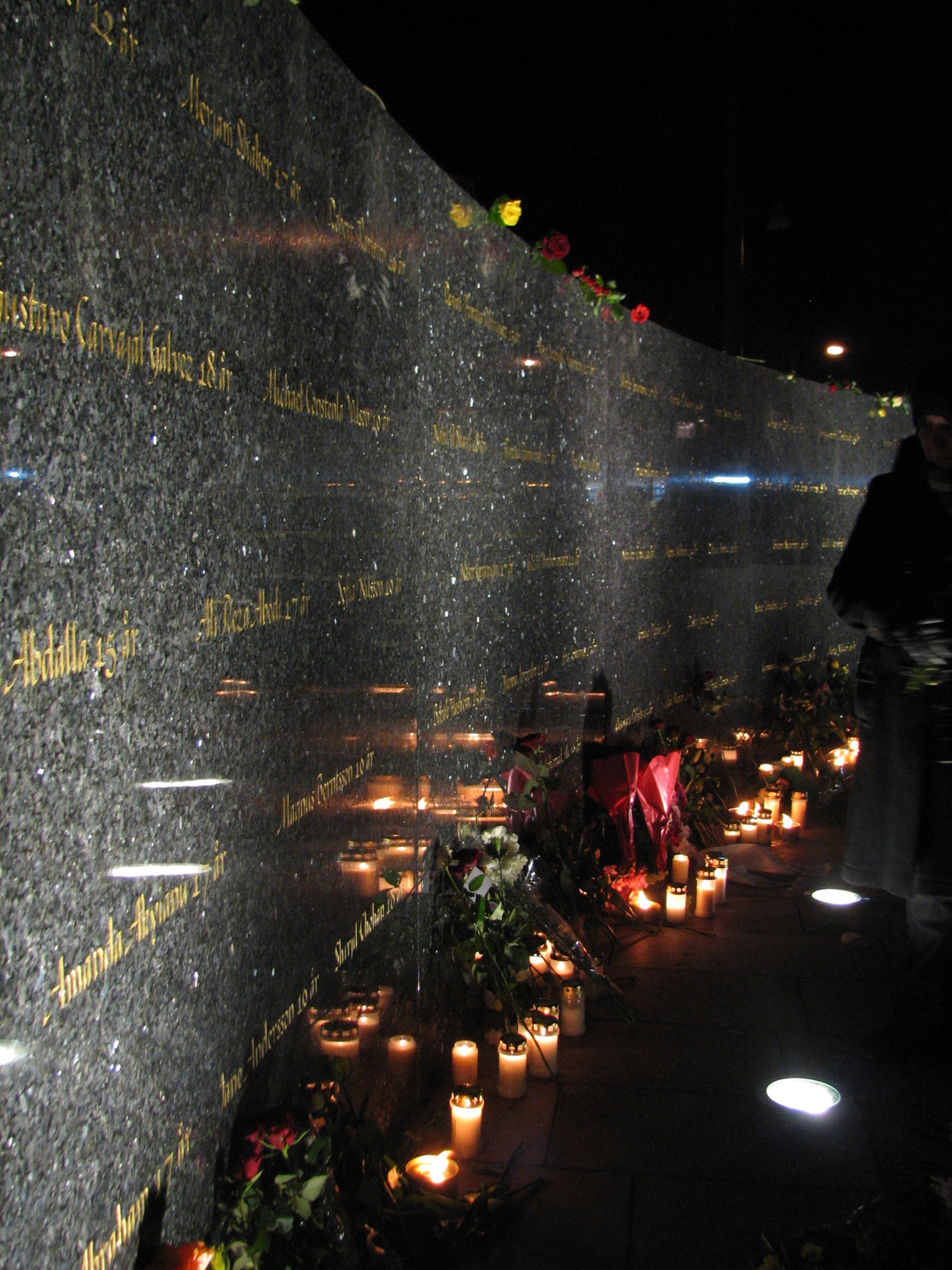
1998 Gothenburg Discotheque Fire
The first emergency call came at 23:42 on October 29, 1998. Through the background noise of panic, an operator strained to understand what the caller was trying to say. On the third floor of a building on Hisingen island in Gothenburg, 375 young people, mostly teenagers from immigrant families, had gathered to celebrate Halloween at a disco organized by the local Macedonian community. The building was rated for 150 occupants. Within minutes, fire would trap them between a blocked emergency exit and windows that dropped four stories to the ground below.
Four Minutes to Chaos
The fire started in the stairway that served as the club's emergency exit, instantly blocking the route that should have led to safety. At 23:45, three minutes after that first garbled call, a major call-out went from a fire station on Hisingen. Four minutes later, the first rescue team arrived to find scenes that would haunt Gothenburg for decades. Young people faced an impossible choice: navigate through flames down the only remaining staircase or jump from windows high above the ground. Many jumped. Many were injured. Firefighters with breathing apparatus pulled 60 people to safety, 40 led down the stairs, 20 carried out through windows. But 63 teenagers and young adults, aged twelve to twenty-five, never came home.
A Reward That Came Too Late
The investigation stretched through 1999 with agonizing slowness. Police questioned over 1,400 people. Two suspects were arrested in June and released. In December, authorities offered 3 million kronor for information, and investigators made televised appeals for leads. The breakthrough came in January 2000 when three suspects were taken into custody, followed by a fourth in February. The four teenagers, aged seventeen to nineteen, had been denied free entry to the disco after an argument. Their response was to set a fire in the stairwell. The reward money, it turned out, had been offered after police had already identified them.
Justice in a Different System
Swedish law in 1998 handled young offenders differently than most countries. The ringleader, Shoresh Kaveh, received eight years, the maximum allowed for someone aged eighteen to twenty. Two accomplices, Housein Arsani and Mohammad Mohammadamini, received six years, later raised to seven on appeal. The fourth, Meysam Mohammadyeh, was a minor at the time and spent three years in juvenile care. Legal scholar Christian Diesen later suggested Mohammadyeh may have been swept into events beyond his control. The case was prosecuted by Thomas Bodstrom, who would later become Sweden's Minister for Justice. By international standards, the sentences seemed light. By Swedish standards of the era, they were near the maximum possible.
What Grief Built
The families of victims formed BOA, an association for relatives of fire victims that turned private grief into public purpose. When a similar discotheque fire killed fourteen young people in Volendam, Netherlands, on New Year's Eve 2001, BOA reached out to the Dutch families. When the 2004 tsunami devastated coastal communities around the Indian Ocean, killing many Swedish tourists, BOA offered support born from experience with sudden, senseless loss. The Gothenburg fire department, survivors, and families now work together to educate young people about how quickly a small fire can grow, how easily safety standards can be overlooked, how an evening's celebration can become a lifetime of remembrance.
From the Air
The fire occurred at 57.72N, 11.95E on Hisingen island, the large island that forms the northern portion of urban Gothenburg and is connected by multiple bridges. Hisingen is immediately recognizable from the air as the industrial and residential area north of the Gota alv river. Gothenburg Landvetter Airport (ESGG) lies 25km to the east. The city center lies south of the river, while Hisingen's western reaches extend toward the archipelago. This is Sweden's second-largest urban area, a major port city where the river meets the Kattegat strait.