1998 Winter Olympics: Nagano's Moment on the World Stage
Seiji Ozawa raised his baton, and five orchestras on five continents played Beethoven's Ode to Joy simultaneously. It was the morning of February 7, 1998, and for the first time in history, a live musical performance linked Beijing, Berlin, Cape Town, New York City, and Sydney with a stadium in the Japanese Alps. The crowd at Nagano Olympic Stadium joined in, 50,000 voices adding to a global chorus. Then figure skater Midori Ito -- the first Asian woman to win a World Championship and a silver medalist at the 1992 Games -- lit the Olympic cauldron. Nagano had waited decades for this moment. The city had tried for the 1940 Winter Olympics, then the 1972 Games, losing both bids to Sapporo. On its third attempt, Nagano beat Salt Lake City by just four votes.
The Bullet Train Bet
Hosting the Games required solving a fundamental problem: Nagano sits deep in the Japanese Alps, and getting there took hours. The Japanese government's answer was audacious -- extend the Shinkansen bullet train network. The Nagano Shinkansen, now called the Hokuriku Shinkansen, opened five months before the opening ceremony. It cut the journey from Tokyo to Nagano from several hours down to 79 minutes for 221 kilometers, with 63.4 kilometers of the new track running through tunnels bored beneath the mountains. Two new highways -- the Nagano Expressway and the Joshin-etsu Expressway -- further opened the region. The total cost of the Games reached an estimated $15.25 billion, making them among the most expensive Winter Olympics ever, with the Shinkansen extension accounting for the largest share. But the infrastructure remained long after the athletes went home, permanently connecting Nagano to the rest of Japan.
Firsts on Ice and Snow
Nagano 1998 introduced three sports to the Olympic program: snowboarding, curling, and women's ice hockey. For the first time, NHL players competed in the men's ice hockey tournament, and the mid-season break that allowed their participation became a defining feature of these Games. The Czech Republic -- led by Dominik Hasek in goal -- defeated Russia 1-0 in the gold medal game, with the lone goal scored with twelve minutes remaining. In the women's tournament, the United States defeated Canada 3-1 for the inaugural gold medal before 8,626 fans at Big Hat arena. Canadian Ross Rebagliati won the first-ever snowboarding giant slalom gold, was then disqualified for testing positive for marijuana, and had his medal restored by the Court of Arbitration for Sport -- the first athlete in Olympic history disqualified and reinstated for cannabis. American Tara Lipinski, at 15 years and 255 days old, became the youngest individual gold medalist in Winter Olympics history in figure skating.
Records in the Mountain Air
Germany dominated the medal table with 29 medals, including 12 gold, with German women winning 22 of those 29. Norway finished second with 25 medals, powered by cross-country skier Bjorn Daehlie, who won four medals including three gold, bringing his career Olympic total to 12 medals -- eight of them gold -- a Winter Olympics record. Russian Larisa Lazutina won five medals, including all three gold in women's cross-country skiing. The Dutch rewrote speed skating history at the M-Wave arena, Japan's first indoor long-track venue, winning half of the ten events and claiming 11 medals overall. Gianni Romme set world records in both the 5,000m and 10,000m. Host Japan had its best Winter Olympics ever, winning five gold medals -- including ski jumper Kazuyoshi Funaki's two golds and a silver. In the team ski jump, Masahiko Harada redeemed a disastrous first-round jump of just 79.5 meters with a heroic 137-meter second jump to help Japan win gold.
A City Transformed
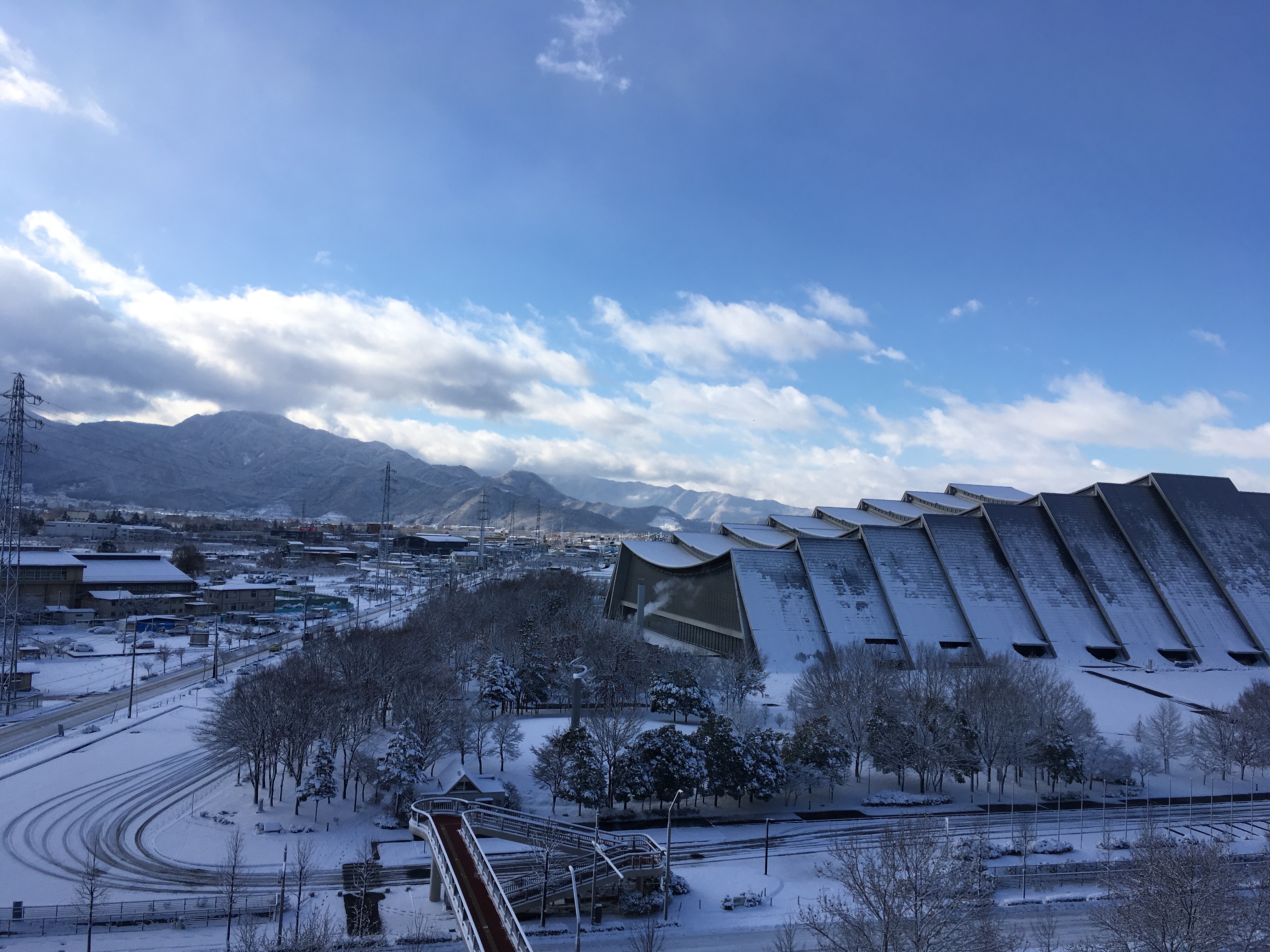
Fourteen venues spread across Nagano Prefecture hosted the competitions, from the Big Hat arena in central Nagano to the ski slopes of Hakuba village 50 kilometers west and the curling sheets of Karuizawa 80 kilometers to the southwest. The M-Wave speed skating venue, shaped like an M to echo the surrounding mountains, cost 34.8 billion yen and remains an iconic structure. The Spiral bobsled track in Iizuna became the first artificially refrigerated sliding track in Asia. More than 10,000 members of the media covered the Games, broadcast to 160 countries and an estimated 10.7 billion viewers. The American network CBS paid $375 million for U.S. broadcasting rights -- these remain the last Olympic Games not broadcast by NBC in the United States. When the closing ceremony ended with the Japanese word 'Sayonara' and a fireworks display, Nagano had transformed from a temple town into a modern winter sports destination, permanently linked to the world by the bullet train that the Olympics brought to its doorstep.
From the Air
Located at 36.65N, 138.18E in the Nagano Basin, central Honshu, Japan. The Olympic venues were spread across Nagano Prefecture: Hakuba village (ski jumping, alpine, cross-country) lies 50 km west; Yamanouchi/Shiga Kogen (snowboarding, giant slalom) 30 km northeast; Nozawa Onsen (biathlon) 50 km north; Karuizawa (curling) 80 km southwest; and Iizuna (bobsled, luge, freestyle) 12 km northwest. The M-Wave arena is visible approximately 5 km from Nagano Station. Nearest major airport is Matsumoto Airport (RJAF), approximately 77 km south. Best viewed at 10,000-15,000 feet AGL to see the full spread of venue locations across the Japanese Alps.