2000 Marana V-22 Crash
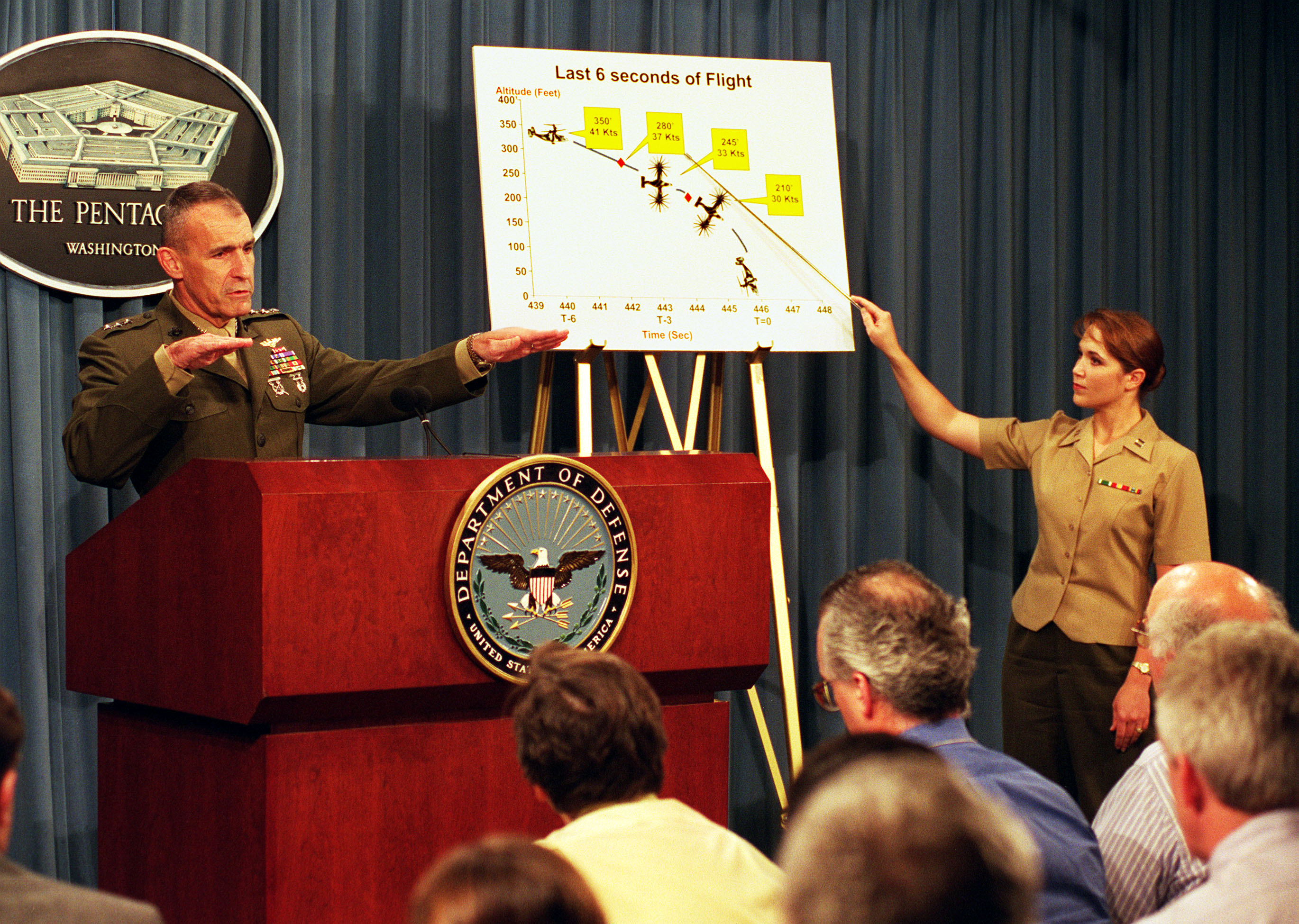
Nighthawk 72 was descending too fast. The pilots knew it, could see they were 2,000 feet above their required altitude, but in the darkness over Marana Regional Airport there was no room to correct. The V-22 Osprey, a revolutionary aircraft that could fly like a plane and land like a helicopter, suddenly rolled onto its back and slammed into the desert floor nose-first. Nineteen Marines died in seconds. The date was April 8, 2000, and the crash would ignite a sixteen-year battle over blame, technology, and the reputations of two pilots who could no longer speak for themselves.
A Machine Between Worlds
The V-22 Osprey represented a dream that had tantalized military planners for decades: an aircraft that combined the vertical takeoff capability of a helicopter with the speed and range of a fixed-wing plane. Its massive tilting rotors could point upward for hovering and landing, then rotate forward for conventional flight. The Marine Corps saw the Osprey as the future of assault transport, capable of deploying troops faster and farther than any helicopter. But that future had been delayed by a troubled development history marked by crashes, cost overruns, and persistent questions about the aircraft's safety. By the spring of 2000, the program was finally approaching operational readiness, with night training exercises designed to prove the aircraft could handle the demanding conditions of real combat operations.
Falling Through the Dark
Four V-22s flew in formation that April night, two conducting the exercise and two observing. Major Brooks Gruber and Lieutenant Colonel John Brow commanded Nighthawk 72. As they approached the landing site, the pilots discovered they had misjudged their descent and were far too high. They reduced power to correct, but the aircraft was now falling at 2,000 feet per minute, more than twice the prescribed rate of 800 feet per minute. At that speed, the Osprey entered a condition called vortex ring state: the rotors essentially descended into their own turbulent downwash, losing the lift they needed to fly. The aircraft rolled violently, flipped inverted, and struck the ground. A second V-22 made a hard landing but its crew survived. The nineteen aboard Nighthawk 72 had no such fortune.
The Blame Game
The investigation that followed became as controversial as the crash itself. After two months, the Marine Corps Judge Advocate General released findings that absolved the aircraft of mechanical failure and attributed the crash to the high descent rate and pilot error. For the families of Major Gruber and Lieutenant Colonel Brow, this verdict was devastating. The pilots had been blamed for their own deaths, their reputations stained, their judgment questioned. But the story was more complicated. The V-22 flight manual's guidance on descent rates had not adequately addressed the aircraft's susceptibility to vortex ring state. The pilots had been operating within what they believed were acceptable parameters. For sixteen years, the families fought to clear the pilots' names.
Vindication and Legacy
In 2016, Deputy Defense Secretary Robert Work finally ended the debate, officially vindicating the pilots. The determination acknowledged that Gruber and Brow had not been solely responsible for the tragedy. The crash had revealed dangerous gaps in understanding of the Osprey's flight characteristics, gaps that the military had since addressed through redesign and improved training. The immediate aftermath of the Marana crash had included a two-month flight moratorium and a critical report from the Department of Defense stating the Osprey was not operationally suitable. Yet the program survived. Secretary of Defense William Cohen's review panel recommended continuing development despite the safety concerns. Eight months after Marana, another Osprey crashed near Jacksonville, North Carolina, killing four more Marines. Still the program continued, and the V-22 finally entered operational service in 2007. Today, Ospreys fly missions around the world, their troubled history a reminder of the costs of pushing technology to its limits.
From the Air
Located at 32.4096N, 111.2184W at Marana Regional Airport (KAVQ), approximately 25 miles northwest of Tucson, Arizona. The airport features a 6,901-foot runway and serves as a general aviation facility with nearby military training areas. Davis-Monthan Air Force Base (KDMA) lies 30 miles southeast. The crash site is on airport property in the Sonoran Desert landscape. Best observed from standard pattern altitude. Annual memorial services are held at the airport on the anniversary of the crash.