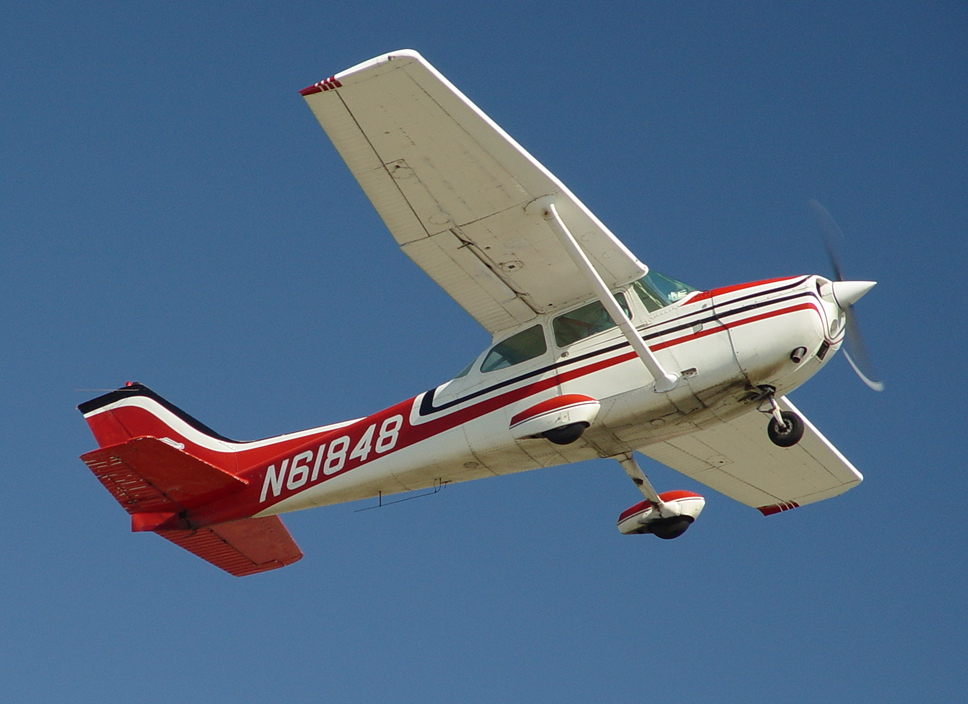
The Day a Stolen Cessna Hit a Tampa Skyscraper
At 5:00 p.m. on January 5, 2002, a flight instructor at a small Florida airfield walked away from a Cessna 172, leaving his 15-year-old student to perform a routine preflight inspection. The student started the engine and took off without permission. Forty-two minutes later, the stolen aircraft struck the Bank of America Tower in downtown Tampa between the 28th and 29th floors. The pilot, Charles J. Bishop, was killed on impact. No one else was injured. It was barely four months after September 11, and a nation still reeling from that morning watched a small plane hit a skyscraper on live television - again.
Four Months After September 11
The timing made the crash electric with dread. America was still fortifying airports, still debating cockpit doors, still processing the images of aircraft hitting buildings. When news broke that a small plane had struck a Tampa high-rise, the immediate assumption was another coordinated attack. Air traffic controllers had scrambled the moment Bishop took off unauthorized, alerting the United States Coast Guard and MacDill Air Force Base, which sat just across Tampa Bay. A Coast Guard helicopter intercepted the Cessna and issued repeated warnings. Bishop ignored them all. The 42-story Bank of America Tower absorbed the impact between its upper floors, and the small Cessna's fuel load caused a fire confined to a single office. The building sustained damage to one room. The nation exhaled - but the questions were just beginning.
A Suicide Note in the Wreckage
Investigators recovered a handwritten note from the crash debris. In it, Bishop expressed support for Osama bin Laden, framed the September 11 attacks as justified responses to actions against Palestinians and Iraqis, and claimed to be acting on behalf of Al Qaeda. He also wrote that he had turned down help from the organization. Despite the inflammatory language, officials found no evidence of any connection between the teenager and any terrorist group. Terrorism was ruled out as a motive. Authorities concluded that the crash was an apparent suicide by a disturbed adolescent who had latched onto the September 11 narrative to give his act larger meaning. President George W. Bush was briefed on the incident, alongside reports of two unrelated crashes that same day.
The Aftermath and a Mother's Lawsuit
Bishop's mother filed a $70 million lawsuit against Roche Laboratories, the manufacturer of Accutane (isotretinoin), an acne medication the teenager had been using. The lawsuit claimed the drug's side effects - depression and suicidal ideation - had driven her son's actions. The case dragged on for five years before Bishop's mother dropped the suit on June 26, 2007, stating she was physically and emotionally unable to continue. The broader scientific question of whether isotretinoin causes suicidal behavior remains debated, with studies producing mixed conclusions. What is clear is that a 15-year-old found himself alone in a running aircraft with the keys to a decision no child should face.
Locking the Barn Door
The FAA issued a security notice the day after the crash, addressing aircraft security protocols and regulations for underage student pilots. The Experimental Aircraft Association and other general aviation organizations called for tighter security at flight schools and around small aircraft. The fundamental vulnerability was stark: general aviation operated on trust. Student pilots were routinely left alone with aircraft during preflight procedures. There were no cockpit locks, no ignition keys in many small planes, and minimal supervision requirements. Authorities characterized the incident as an 'abuse of trust' rather than a security breach - a distinction that offered little comfort. The crash demonstrated that the post-September 11 security apparatus, focused on commercial aviation, had left a vast network of small airfields essentially unguarded.
The Tower Still Stands
The Bank of America Tower (now known as Bank of America Plaza) remains one of the tallest buildings on the Tampa skyline, its 42 stories visible from miles across the bay. The impact point between the 28th and 29th floors was repaired; no structural compromise occurred. The building that a Boeing would have devastated absorbed a Cessna 172 like a body absorbing a wasp sting - painful, visible, but survivable. The crash changed how the general aviation community thinks about access and supervision, but Tampa itself moved on quickly. The incident occupies an uneasy space in memory: too small to be a national tragedy, too deliberate to be an accident, too close to September 11 to be anything but haunted by it.
From the Air
Located at 27.95N, 82.46W in downtown Tampa, Florida. The Bank of America Plaza (formerly Bank of America Tower) is the prominent 42-story high-rise in Tampa's downtown core, visible from most approaches. The crash site was between the 28th and 29th floors on the building's exterior. MacDill Air Force Base (KMCF) sits on the peninsula 7nm south across Tampa Bay - the base was alerted immediately during the 2002 incident. Tampa International Airport (KTPA) is 5nm west. Albert Whitted Airport (KSPG) in St. Petersburg is 15nm southwest across the bay. Peter O. Knight Airport (KTPF) sits on Davis Islands just 3nm south of downtown. General aviation pilots should note the Tampa Class B airspace surrounding the downtown core. The tower is most visible at 3,000-5,000 feet AGL on approach from the west or south.