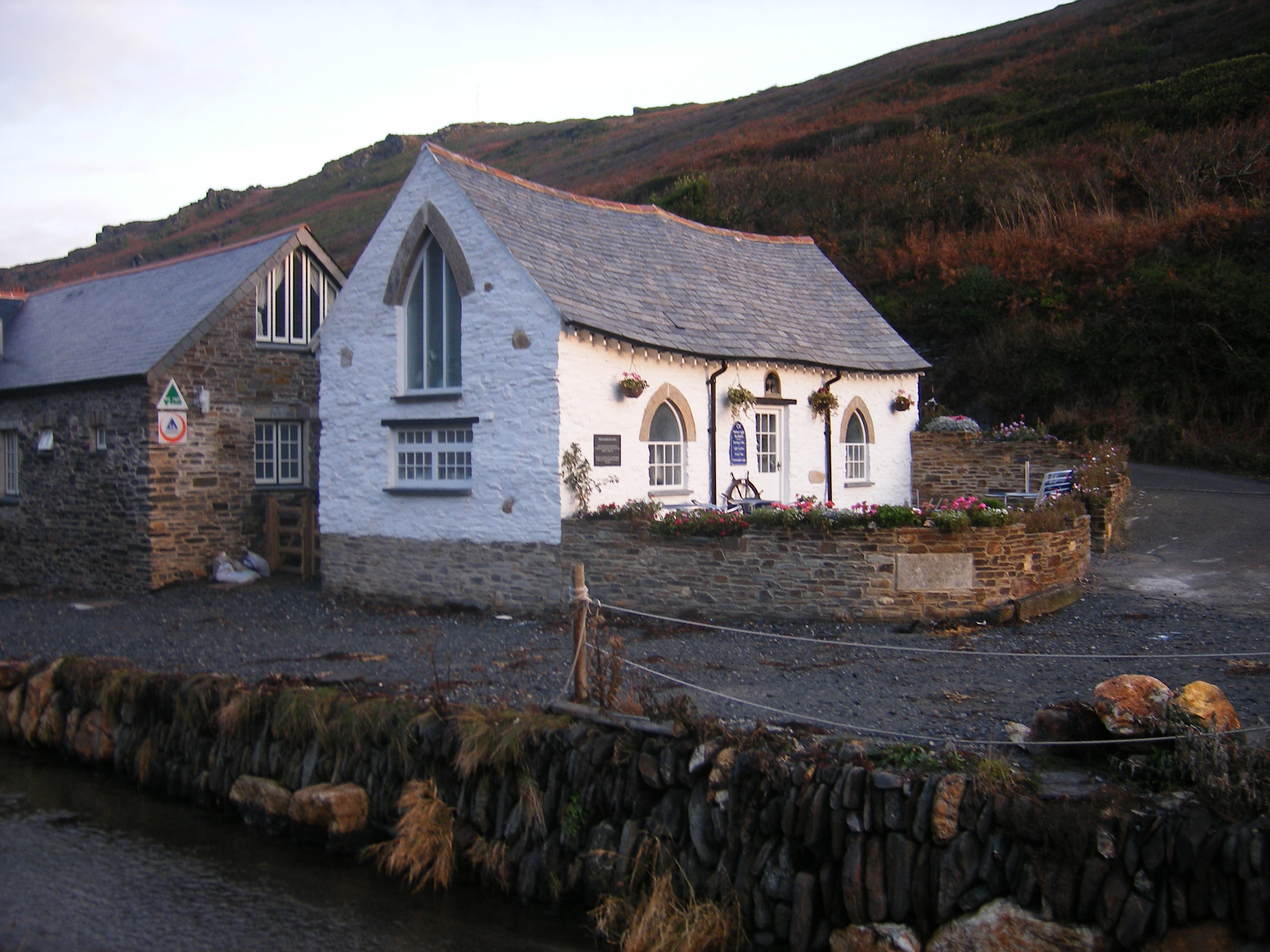
2004 Boscastle Flood
It started with a clear blue sky. On the morning of 16 August 2004, visitors browsed the shops of Boscastle, a small Cornish village where the River Valency carves a steep-sided valley down to the harbour. By midday, a 'great black wedge of cloud' -- a seven-mile deep wall of cumulonimbus -- had appeared over the hills above the village and simply refused to move. What happened over the next eight hours would produce one of the most extreme flood events in British history, and the largest peacetime helicopter rescue operation the country had ever seen.
When the Sky Stood Still
The meteorology was a cruel coincidence of forces. Westerly winds still carrying moisture from the remnants of Hurricane Alex collided with the Cornish peninsula from both sides, converging over the high ground and forcing clouds up to 40,000 feet. The result was a stationary thunderstorm that dumped rain on a remarkably small area with extraordinary intensity. By 1:15pm, the downpour was torrential. At Lesnewth, just two and a half miles up the valley, nearly an inch of rain fell in fifteen minutes. Boscastle itself recorded 89 millimeters in a single hour. The rainfall was so localized that four of the ten nearest rain gauges showed less than 3 millimeters for the entire day. The valley above Boscastle was being drenched while places a few miles away remained essentially dry.
The River Becomes a Weapon
River levels rose two meters in a single hour. By 3:30pm the Valency was level with its banks. Fifteen minutes later it had burst through. By four o'clock, cars from the visitors' car park were being swept downstream like toys. The force of thousands of tons of water carrying rocks and debris began demolishing buildings. A three-meter wave -- created when water pooled behind debris trapped under a bridge, then released in a single surge as the bridge collapsed -- roared down the main street. The first lifeboat to arrive, from Port Isaac, encountered a wall of water pushing roughly fifty cars ahead of it toward the sea. The Valency was no longer a river. It was a fifty-yard-wide, fifteen-foot-deep torrent moving at over four meters per second, more than enough to cause severe structural damage. An estimated twenty million cubic meters of water flowed through the village. The peak flow reached about 140 cubic meters per second between 5pm and 6pm. Statisticians calculated the probability of such a flood in any given year at roughly 1 in 400.
Rescue from the Rooftops
People were trapped everywhere -- in buildings being battered by the current, in cars, clinging to trees. Emergency staff at Cornwall County Council received over 100 calls by mid-afternoon, rising to 170 by early evening. Seven Westland Sea King helicopters scrambled from RAF Chivenor, Royal Naval Air Station Culdrose, RAF St Mawgan near Newquay, and the Coastguard station at Portland in Dorset. Working from mid-afternoon until 2:30 in the morning, the crews winched approximately 150 people from rooftops, treetops, and the wreckage of vehicles. The operation became one of the largest peacetime helicopter rescues in British history. When it was over, not a single person had died. Seventy-nine cars, five caravans, six buildings, and several boats had been washed into the sea. Around 100 homes and businesses were destroyed. Four bridges were gone. The next day, Falmouth Coastguards broadcast warnings to shipping because refrigerators, cars, and other debris were floating in the waters between Boscastle and Hartland Point.
Building Back from the Mud
The disaster made worldwide headlines within hours. Prince Charles visited two days later. But for the residents of Boscastle, the flood was not a single event -- it was the beginning of a four-year reconstruction. The river channel was widened and lowered to increase capacity. A new overflow culvert was constructed. The car park was raised and extended. The old stone lower bridge, under which fourteen cars had become jammed during the flood creating a catastrophic dam, was eventually replaced with a reinforced concrete structure. The National Trust opened a visitor centre in a converted harbour restaurant. Slowly, most shops and businesses reopened. Then on 21 June 2007, Boscastle flooded again -- not as severely, but enough to test the new defenses. Thirty millimeters of rain fell in an hour on already saturated ground. This time, the widened river channel held. The new storm culvert reached full capacity but did not overflow. The Environment Agency's flood defenses worked as designed. Boscastle had learned its lesson, and the valley had been reshaped to accommodate the fury it had always been capable of unleashing.
From the Air
Located at 50.69N, 4.70W on the north coast of Cornwall. The steep-sided Valency valley is clearly visible from the air, meeting the sea at Boscastle's small harbour. Nearest airports: Newquay Cornwall (EGHQ) 20 miles southwest, Exeter (EGTE) 55 miles east. Best viewed at 1,500-2,500 feet to appreciate the narrow valley funneling water toward the village.