2004 Madrid Train Bombings
Spaniards call it 11-M, using the same shorthand format that Americans use for September 11. On the morning of March 11, 2004 -- three days before Spain's general elections -- ten bombs exploded on four commuter trains in Madrid's Cercanias network during the peak of rush hour. In the space of minutes, 193 people were killed and approximately 2,500 were injured. It was the deadliest terrorist attack in Spanish history and the worst in Europe since the 1988 bombing of Pan Am Flight 103 over Lockerbie, Scotland. The attackers were radical Islamists who opposed Spain's involvement in the 2003 US-led invasion of Iraq.
Seven-Thirty in the Morning
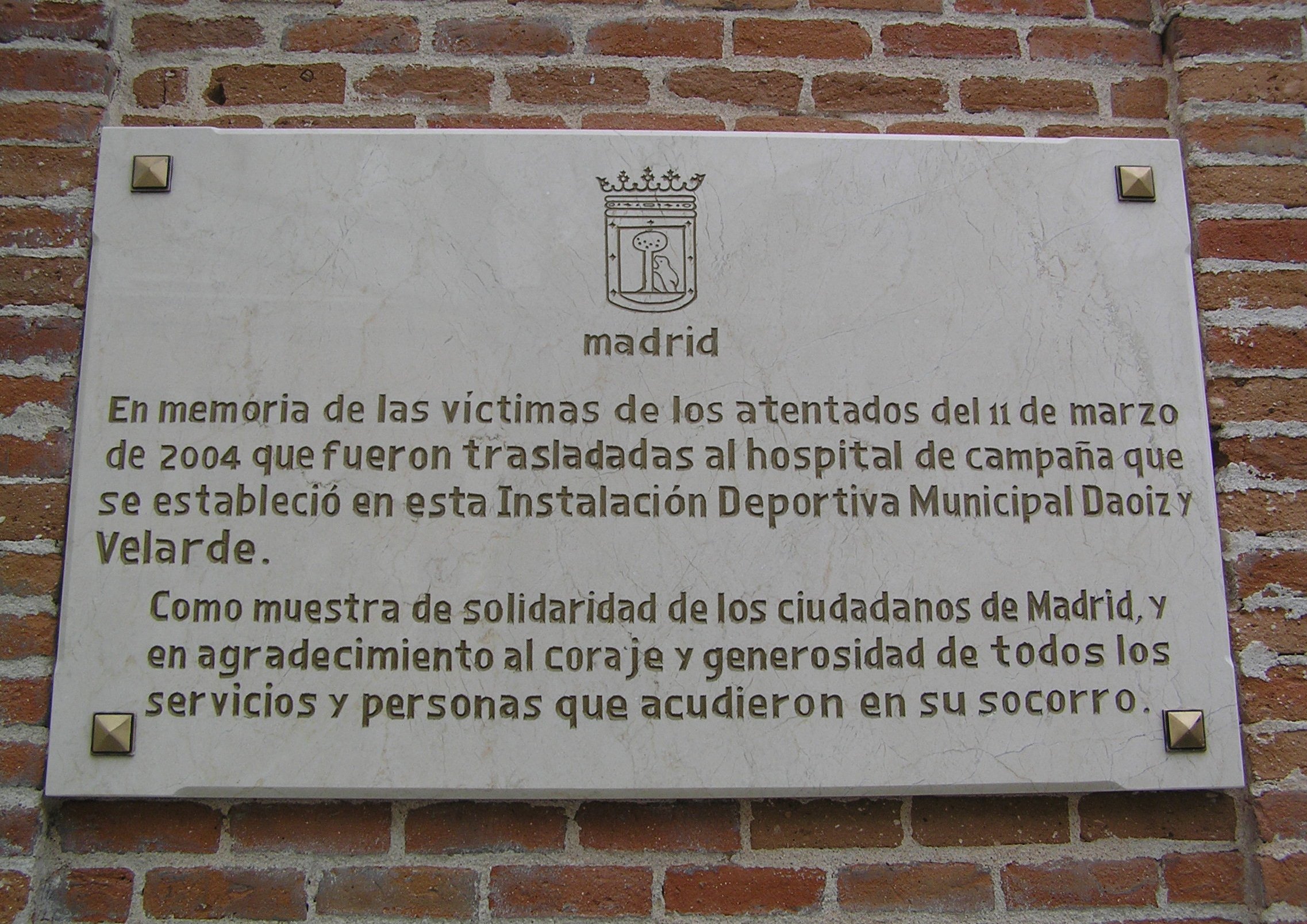
The bombs were concealed in backpacks and placed aboard four commuter trains heading into central Madrid. The explosions struck between 7:37 and 7:39 a.m. at three stations -- Atocha, El Pozo del Tio Raimundo, and Santa Eugenia -- tearing apart carriages packed with working people beginning their day. The trains carried students, office workers, laborers, immigrants -- the cross-section of a modern European capital in motion. The carnage was concentrated in enclosed metal carriages where the blast pressure and shrapnel had nowhere to dissipate. Emergency services were overwhelmed. Hospitals across Madrid activated mass casualty protocols. Makeshift triage centers appeared at the stations themselves, where survivors helped the wounded alongside paramedics who arrived to scenes of destruction that veterans compared to a war zone.
The Political Earthquake
The bombings detonated in the middle of an election campaign, and the political fallout was almost as explosive as the bombs themselves. The ruling Popular Party, led by Prime Minister Jose Maria Aznar, initially blamed the Basque separatist group ETA -- an attribution that, if true, would have reinforced the government's hard-line security stance. But evidence quickly pointed to a jihadist cell inspired by al-Qaeda, linking the attack to Spain's participation in the Iraq War, a policy that most Spaniards opposed. The government's perceived attempt to control the narrative, insisting on the ETA theory even as contradictory evidence mounted, produced a backlash. Three days after the bombings, on election day, Spanish voters turned the Popular Party out of power in favor of the Socialist Party led by Jose Luis Rodriguez Zapatero, who had pledged to withdraw Spanish troops from Iraq.
The Attackers and the Aftermath
The investigation identified a cell of North African radicals operating in Spain, some with connections to broader jihadist networks. On April 3, 2004, police tracked several suspects to an apartment in the Madrid suburb of Leganes. When officers moved to enter, the suspects detonated explosives, killing themselves and a police officer in what became known as the Leganes explosion. The trial of those captured alive was one of the largest terrorism proceedings in European history. Twenty-one defendants were ultimately tried, and several received lengthy prison sentences. The investigation also exposed significant failures in intelligence sharing and surveillance -- the cell had been operating in Spain for months, and some members had prior connections to other terrorist plots. Spain withdrew its troops from Iraq in May 2004, fulfilling Zapatero's campaign promise.
A City's Grief, Carved in Glass
Madrid's response to 11-M echoed the city's response to the Atocha massacre twenty-seven years earlier: grief expressed through collective public mourning rather than retaliatory violence. Millions took to the streets in demonstrations across Spain. A memorial was built at Atocha station -- a cylindrical glass tower that glows from within, its interior walls inscribed with messages left by mourners in the days after the attack. The memorial sits just meters from the platform where the first bombs detonated. It is a quiet space in one of Europe's busiest train stations, a place where commuters pass daily on their way to work, the routine of ordinary life flowing around a monument to its fragility. The 193 victims came from 17 different countries, reflecting the diverse workforce that keeps a modern capital running -- and the indiscriminate nature of the violence that struck it.
From the Air
Located at 40.407N, 3.690W. Madrid's Atocha station, the epicenter of the attacks, is a large rail complex identifiable from the air in south-central Madrid, near the Retiro Park. El Pozo and Santa Eugenia stations are located to the southeast along the commuter rail corridors. Recommended viewing altitude 3,000-5,000 ft AGL. Nearest airport: Madrid-Barajas (LEMD), approximately 14 km northeast. The rail network radiating out from Atocha is visible from altitude, providing spatial context for the coordinated nature of the attacks.