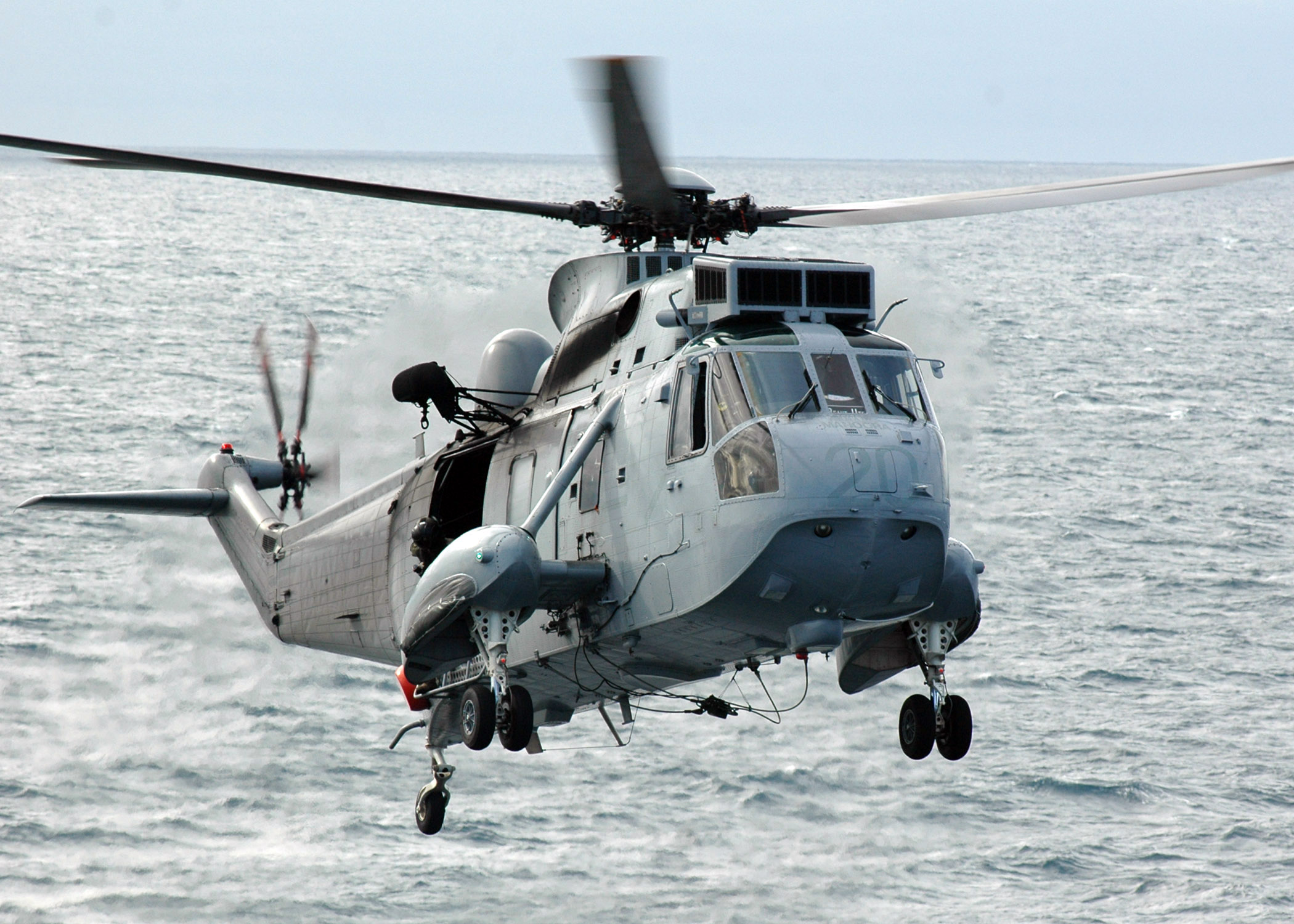
2005 Nias Island Sea King Crash
They had come to help. On the afternoon of 2 April 2005, a Royal Australian Navy Sea King helicopter with the call sign "Shark 02" was descending toward a sports field near the village of Tuindrao on the Indonesian island of Nias. The eleven personnel aboard -- seven Navy and four Air Force members -- were delivering humanitarian aid to communities devastated by a massive earthquake five days earlier. At approximately 4 pm local time, the helicopter's flight controls failed. Shark 02 crashed on approach. Nine of the eleven people on board were killed. The investigation that followed would reveal that the crash was not caused by the earthquake, the terrain, or enemy action. It was caused by maintenance errors made 57 days before the aircraft ever left Australia.
An Island Already Broken
Nias had been struck twice in three months. The catastrophic Indian Ocean tsunami of 26 December 2004 killed 122 people on the island and left hundreds homeless. Then on 28 March 2005, a magnitude 8.6 earthquake -- one of the ten most powerful ever recorded worldwide -- hit Nias directly. At least 800 people died, hundreds of buildings collapsed, and thousands more were displaced. The Australian Defence Force dispatched assets to assist with the international relief effort, including Sea King helicopters from 817 Squadron aboard HMAS Kanimbla. Shark 02 was one of these aircraft, flying supply runs to remote communities cut off by the destruction. The crew was doing exactly what military humanitarian missions are meant to do: reaching people that no one else could reach, in conditions that no one else would fly in.
Fifty-Seven Days Before
The Defence Board of Inquiry, appointed on 28 April 2005 and made public in June 2007, traced the crash to a specific mechanical failure: the separation of a fore-and-aft bellcrank from the pitch control linkages in the aircraft's mixing unit. Without functional pitch control, the pilots had no way to arrest the helicopter's descent. But the bellcrank failure was itself a symptom of something larger. The board found systematic errors and deficiencies in the maintenance program run by 817 Squadron, identifying a culture of poor maintenance practices that preceded the mission. The critical maintenance activity that led to the control failure had occurred 57 days before the crash -- long before Shark 02 deployed to Indonesia. Perhaps the most devastating finding was that the crash itself was survivable. Deficiencies in the seating, restraint systems, and cabin configuration contributed to the deaths of seven occupants who appeared to have survived the initial impact. They made it through the crash, but the aircraft was not configured to protect them afterward.
Honors Across Two Nations
The arrival of the nine bodies at Sydney Airport on 5 April 2005 became an event of national mourning. The Governor-General, the Prime Minister, the Chief of Defence Force, and the Indonesian President Susilo Bambang Yudhoyono stood together as the caskets were received. Yudhoyono placed Indonesia's Medal of Valour -- the nation's highest honor -- on each casket. A National Service of Thanksgiving was held on 15 April in the Great Hall of Australian Parliament House in Canberra, attended by families, colleagues, and political leaders from both countries. On Nias itself, four Indonesian men -- Benar Giawa, Adiziduhu Harefa, Motani Harefa, and Seti Eli Ndruru -- had pulled the two survivors from the wreckage, carried them to safety, and administered first aid. In 2009, all four received Australia's Bravery Medal at the Australian Embassy in Jakarta. The bond forged by the crash ran both ways: Australians had come to help Indonesians, and Indonesians had saved Australians.
The Courage of Shane Warburton
Two people walked away from Shark 02, though neither walked easily. Leading Seaman Shane Warburton, himself seriously injured, pulled a fellow crew member from the burning wreckage. On 17 March 2008, he was awarded the Star of Courage, Australia's second-highest bravery decoration. The award's significance went beyond individual heroism. Because the crash occurred during a humanitarian operation rather than a military engagement, existing Australian honors did not easily apply. The government responded by expanding the eligibility criteria for the Humanitarian Overseas Service Medal, ensuring that all personnel who served in the Indonesian relief mission -- including the nine who died and the two who survived -- could be formally recognized. The crash of Shark 02 changed how Australia honors sacrifice in peacetime service.
What Remains on the Hill
Memorials to the Shark 02 crew are scattered across Australia. A memorial at Russell Offices in Canberra was established in September 2005. A plaque in Lawrence Hargrave Reserve in Sydney's Potts Point was dedicated in June 2006. At HMAS Albatross, the naval air station in Nowra where many of the crew had been based, a memorial was renovated in April 2014 with the help of the victims' families. Even a surf lifesaving boat in Perth carries the name of one of the fallen. But the most enduring legacy may be the Board of Inquiry's recommendations, all of which were implemented by October 2008. The maintenance failures that killed nine people on a hillside in Nias led to reforms that would protect every Australian military aviator who followed them into service.
From the Air
The crash site is near the village of Tuindrao in the Amandraya region of Nias Island, approximately 1.10N, 97.53E. The terrain is hilly with limited flat areas suitable for helicopter landings. Nearest airport is Binaka Airport (ICAO: WIMB) near Gunungsitoli. The island's mountainous interior rises to 800 meters, and conditions can include tropical humidity and reduced visibility. Nias lies approximately 125 km off the western coast of Sumatra.