The Noto Quake of 2007: When the Ground Broke Its Silence
For 116 years, the residents of Toyama Prefecture had lived with a comforting delusion: earthquakes did not happen here. The last damaging tremor to rattle this stretch of the Sea of Japan coast had been the great 1891 Mino-Owari earthquake, so distant in memory that the belief had hardened into local folklore. Then, at 9:41 a.m. on March 25, 2007, the Noto Peninsula proved them wrong. A magnitude 6.9 earthquake ruptured a fault 21 kilometers long and 14 kilometers wide beneath the seafloor, shifting the earth 1.4 meters and shaking the coastal city of Wajima with an intensity that nearly reached the maximum on Japan's shindo scale. It was the first time Ishikawa Prefecture had ever recorded shaking of shindo 6-minus or above. The ground's long silence had ended.
The Killer Pulse
Scientists would later identify the shaking pattern as a phenomenon they called the "killer pulse" -- seismic waves oscillating at a frequency of one to two seconds, the same lethal rhythm that had toppled buildings in the 1995 Great Hanshin earthquake and the 1994 Northridge earthquake in California. This particular frequency devastates two-story structures, and as the pulse waves traveled outward from the epicenter at a depth of just 11 kilometers, they amplified as they reached the softer alluvial plains near the coast. In Wajima, the shaking reached a peak ground acceleration of 1,304 centimeters per second squared -- 1.33 times the force of gravity. People across Honshu felt the tremor: from Oshamanbe in Hokkaido to the north, Hiroshima to the west, and Nahari on the southern coast of Shikoku.
A Stone Lantern Falls
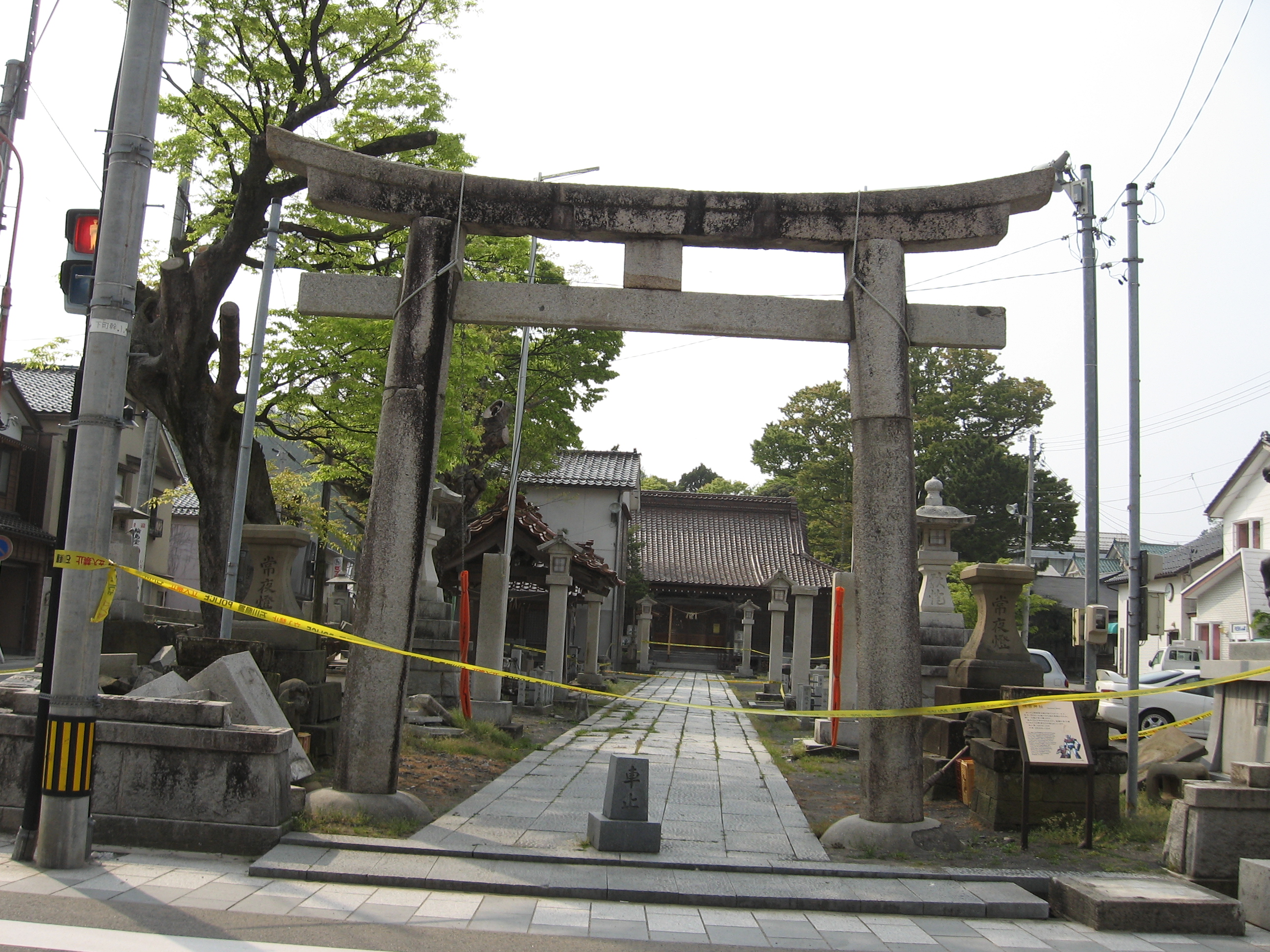
One death came from the earthquake. In Wajima, a 52-year-old woman was struck by a collapsing toro -- a traditional Japanese stone lantern -- the heavy granite crushing her beneath an ornament that had likely stood in quiet beauty for decades. At least 356 other people were injured across the peninsula. The damage spread in concentric rings: 22 cracks split the runway at Noto Airport, though crews repaired it by the following day. Sections of the Noto Toll Road collapsed, stranding motorists who abandoned their vehicles and fled on foot; full repairs took until November. An estimated 110,000 homes lost power. Some 13,250 had no water. Soil liquefaction buckled the coastline near the epicenter and the port of Himi. At least 1,000 people in Wajima were evacuated to temporary shelters as aftershocks rippled through the peninsula.
Mobilization at Speed
Japan's disaster response machinery engaged within minutes. Four minutes after the quake, an emergency meeting convened at the Prime Minister's Official Residence in Tokyo. By 10:45, Ishikawa Prefecture had launched its own emergency session, summoning 375 firefighters from seven prefectures stretching from Toyama to Tokyo to Hyogo. Governor Masanori Tanimoto called in 30 soldiers from the Japan Ground Self-Defense Force, with helicopters scrambled from bases in Wajima and Komatsu. Ground, maritime, and air forces all converged on the Noto Peninsula to assess damage. Government inspection teams under Kensei Mizote were dispatched to the epicenter area, arriving the same day. The response was textbook -- swift, coordinated, and scaled to the disaster.
Five Hundred Aftershocks and a Rumor
More than 500 perceptible aftershocks followed the mainshock, keeping residents on edge for weeks. The 25 track ballasts displaced on the Noto Line were a reminder that the peninsula's infrastructure remained fragile. But perhaps the most telling consequence arrived six months later, not as a tremor but as a whisper. Among teenagers in Toyama Prefecture -- the generation that had grown up believing their home was immune to earthquakes -- a rumor began circulating that a massive quake was coming for Toyama. The fear was irrational but understandable: a century of geological quiet had been their inheritance, and now it felt like a debt coming due. The Noto Peninsula would shake again, in 2023 and then catastrophically on New Year's Day 2024, proving that the teenagers' anxiety, if not their specific prediction, was justified.
From the Air
Epicenter located at 37.30N, 136.50E, off the west coast of the Noto Peninsula in the Sea of Japan. Noto Airport (RJNW) lies approximately 25 nautical miles east-northeast of the epicenter at the center of the peninsula. Komatsu Airport (RJNK) is approximately 50 nautical miles to the south-southwest. From altitude, the Noto Peninsula extends northward like a crooked finger into the Sea of Japan, with the cities of Wajima and Nanao visible along its coastline. Best viewed at 10,000-15,000 feet to appreciate the peninsula's geographic isolation and the proximity of the fault line to coastal communities.