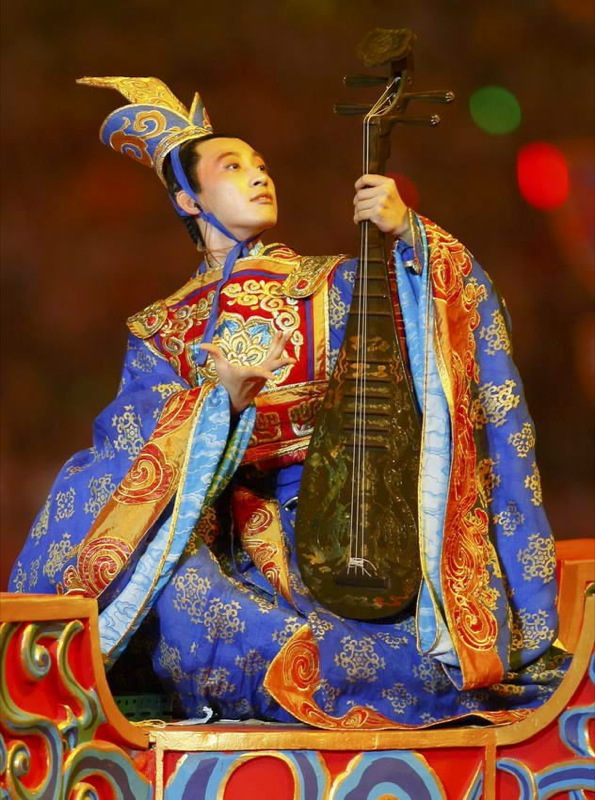
2008 Summer Olympics Opening Ceremony
At exactly 8:00 PM on the eighth day of the eighth month of 2008, 2,008 drummers struck their fou drums in unison inside the Bird's Nest, counting down the seconds with synchronized strikes that shook the stadium floor. The number eight, associated with prosperity and confidence in Chinese culture, governed everything about the ceremony's timing. What followed over the next four hours was a performance that critics called the greatest Olympic opening ceremony ever staged -- and one that the Chinese government had seeded the clouds above Beijing to guarantee would not be rained out.
Brilliant Civilization
The artistic segment was divided into two halves. 'Brilliant Civilization' traced China's contributions to the world through a series of vast set pieces. A giant scroll unrolled across the stadium floor as performers painted a landscape in real time using their bodies. The invention of paper, printing, gunpowder, and the compass -- China's Four Great Inventions -- were dramatized at a scale that matched their historical impact. In the most technically ambitious sequence, 897 performers emerged from below trap doors, each representing a single piece of movable type in a massive printing block. The blocks rose and fell in synchronized waves, forming Chinese characters and then transforming into the Great Wall. The sequence ended with the characters for 'harmony' -- a single concept expressed by nearly a thousand people moving as one.
The Director's Paradox
Zhang Yimou, the ceremony's chief director, occupied an unusual position. His international reputation had been built partly on films like 'To Live' and 'Raise the Red Lantern,' both of which were banned in China for their critical portrayals of Communist-era policies. Now the same director was staging the nation's largest propaganda spectacle. The creative team he assembled included Chinese-French composer Chen Qigang, British stagecraft designer Mark Fisher, Japanese designer Eiko Ishioka, and Cai Guoqiang, the artist famous for his explosive artworks. The ceremony's deliberate omission of the Communist revolution from its historical narrative was widely noted: it leapt from imperial civilization to modern China with the intervening decades left unaddressed.
Spectacle and Controversy
The ceremony was not without controversy. Over 1,000 rockets filled with silver iodide were deployed around Beijing to seed clouds and prevent rainfall, assisted by three aircraft. A nine-year-old girl appeared to sing 'Ode to the Motherland' but was lip-syncing to a recording by seven-year-old Yang Peiyi, who was deemed insufficiently photogenic by the ceremony's organizers. Digital firework footprints that appeared to march across the Beijing skyline toward the stadium were later revealed to be computer-generated imagery inserted into the television broadcast. Critics noted the ceremony's militarism -- the precision of thousands of performers moving in lockstep -- and its historical selectivity. Others called it spellbinding. In 2014, Zhang Yimou and the ceremony were collectively awarded a Peabody Award.
The World Was Watching
An estimated worldwide television audience of over a billion people watched the ceremony, making it one of the most-viewed live events in broadcasting history. The 91,000-capacity stadium was full. The ceremony lasted four hours and included the traditional Olympic protocols -- the parade of nations, the lighting of the cauldron -- woven into Zhang's artistic framework. The opening ceremony became the defining image of the 2008 Games and, for many international viewers, their most vivid encounter with Chinese culture. Whether it was a celebration of civilization or a display of state power depended on the viewer. Zhang had managed to make it both, simultaneously.
From the Air
Located at 39.99N, 116.39E at the Beijing National Stadium (Bird's Nest) in the Olympic Green, northern Beijing. The stadium is one of the most distinctive structures visible from altitude in northern Beijing. Nearest airports are Beijing Daxing International (ZBAD) and Beijing Capital International (ZBAA).