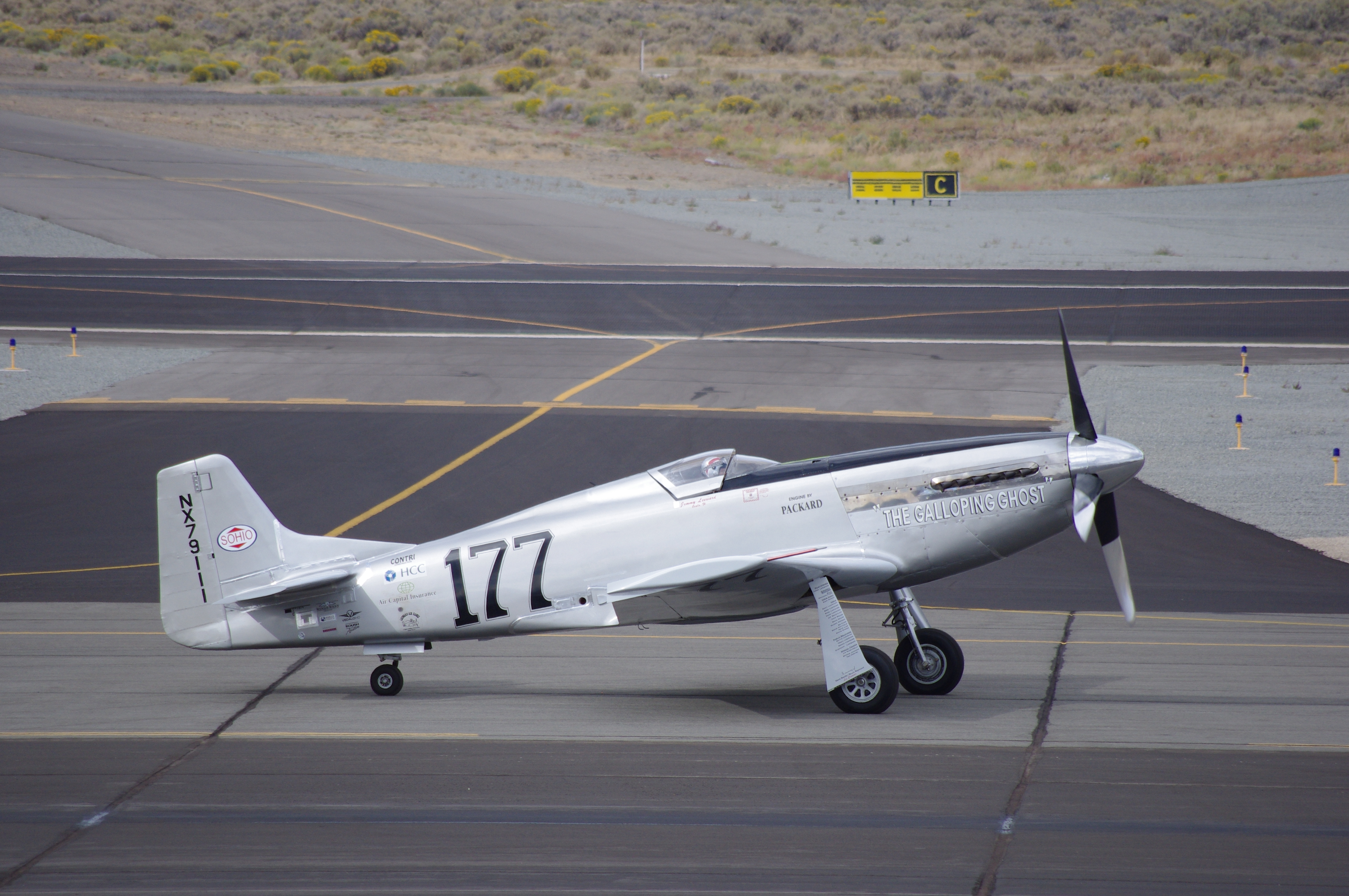
2011 Reno Air Races Crash
The Galloping Ghost had just rounded pylon number 8 when something went wrong. It was September 16, 2011, and pilot Jimmy Leeward was in third place, pushing his heavily modified P-51D Mustang faster than he had ever flown it before. Then the aircraft pitched up violently, rolled inverted, and dove. Spectators in the box seats never had a chance. The plane struck the apron in front of the grandstands at over 400 miles per hour, killing Leeward and ten people on the ground. Sixty-nine others were injured. It became the third-deadliest airshow disaster in American history.
A Ghost Returns
The Galloping Ghost was no ordinary P-51 Mustang. The former Air Force fighter, serial number 44-15651, had been racing under various names since the 1960s. As Miss Candace, it crashed during the 1970 Reno races after an engine failure, the elongated racing propeller clipping the runway. The plane was rebuilt and raced again as Jeannie in 1981. After years of retirement, Leeward brought it back in 2010 with radical modifications. The underbelly radiator was gone, replaced by a boil-off cooling system. The canopy had been shrunk to the size of a Formula One racer's. The wings were clipped even shorter. Leeward described the oil system as similar to the Space Shuttle's. These changes reduced drag and increased speed, but they also reduced stability. The modifications were neither tested nor documented to aviation standards.
The Missing Tab
A photograph taken moments before impact captured something crucial: part of the left elevator trim tab was missing. The National Transportation Safety Board spent nearly a year piecing together what happened. They found debris scattered across two acres, examined hundreds of spectator photos and videos, and attempted to extract data from a damaged onboard memory card. The investigation revealed extreme stress on the airframe, visible buckling of the fuselage, and gaps appearing between the fuselage and canopy during flight. High-resolution photos showed the plane was literally coming apart in the air. Leeward had pushed the Ghost to speeds faster than ever before that day.
Single-Use Locknuts
The NTSB's August 2012 report identified the probable cause: reused single-use locknuts in the left elevator trim tab system had loosened over time. This led to a fatigue crack in an attachment screw. When the screw failed, the trim tab began to flutter violently. The flutter caused the trim tab link assembly to fail completely. Normally, a pilot might recover from losing one trim tab. But investigators discovered that the right trim tab had been fixed in place as part of the modifications. With only one operational trim tab and no redundancy, the loss of the left tab made the aircraft uncontrollable. The sudden pitch-up subjected Leeward to 17 g-forces, likely rendering him unconscious instantly. The plane was already diving before he could have reacted.
Lessons in Metal and Bone
The NTSB issued seven safety recommendations for future air races. Course design should place spectators farther from the race pylons. Pre-race inspections should be more rigorous. Modifications to race aircraft needed better documentation and testing. The FAA should provide clearer guidance on experimental aircraft. Pilots needed better awareness of g-force risks. Ramp safety protocols required review. The 1998 loss of a trim tab on another modified Mustang, Voodoo Chile, had offered a warning. That pilot, Bob Hannah, lost consciousness when the plane pitched up but regained control after climbing to 9,000 feet. The Galloping Ghost had no such margin. In 1999, yet another modified P-51, Miss Ashley II, broke apart from rudder flutter, killing its pilot. The pattern was there to see. Modified warbirds, pushed to extremes, sometimes break.
From the Air
The crash occurred at Reno-Stead Airport (KRTS), located at 39.660N, 119.878W, approximately 10 miles north of downtown Reno. The airport hosts the annual National Championship Air Races on its 9,000-foot runway. The accident site was in front of the main grandstands near pylon 8. Pilots flying over the area will note the distinctive pylon course layout visible during race season. KRTS elevation is 5,050 feet MSL. The Sierra Nevada mountains rise to the west, and the Reno metropolitan area spreads to the south.