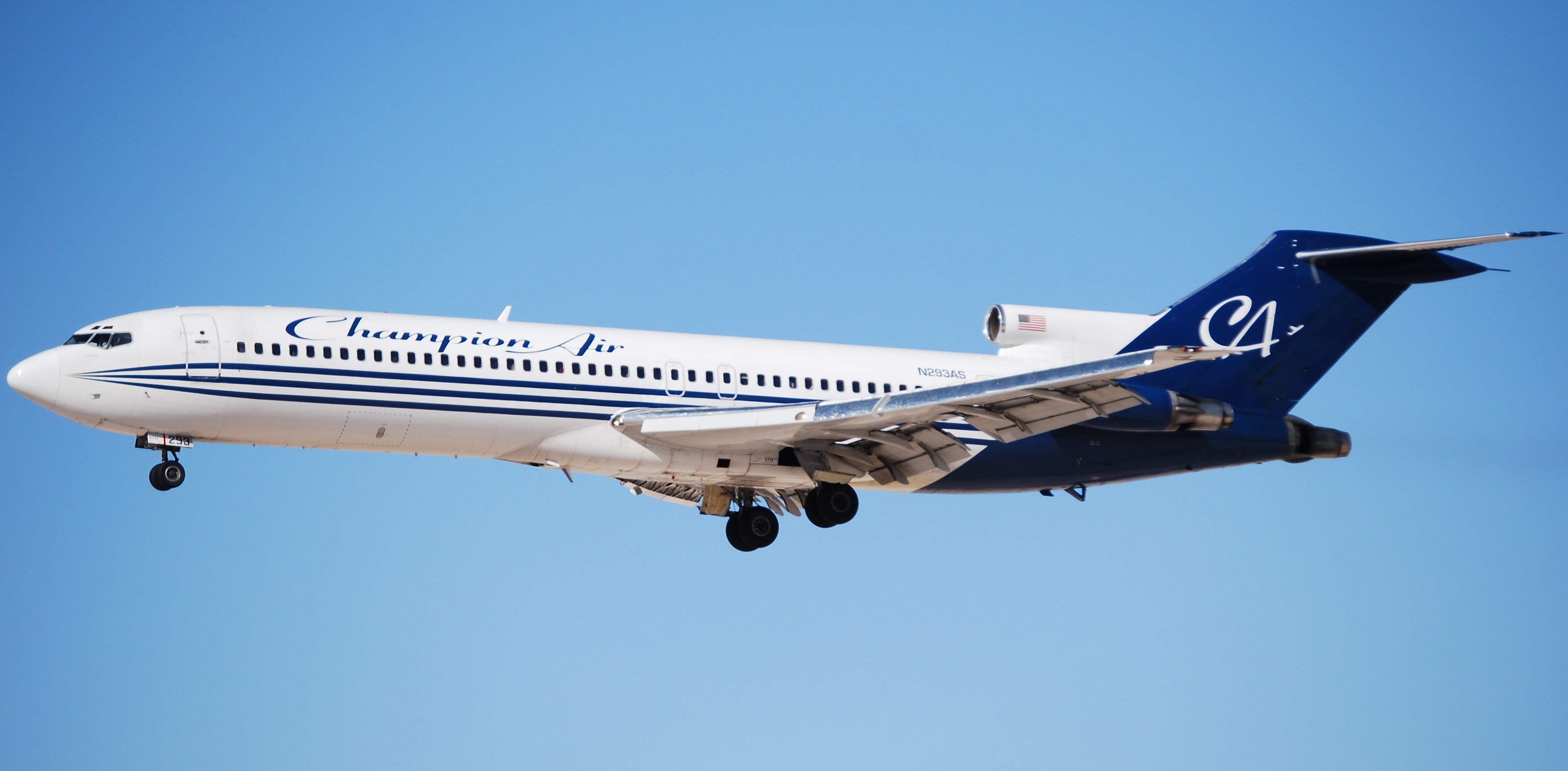
2012 Boeing 727 Crash Experiment
Captain Jim Bob Slocum was the last human aboard. Three minutes before impact, he jumped through the 727's rear ventral airstair, his parachute deploying over the Sonoran Desert of Baja California as the jetliner continued toward its appointment with the ground. From the chase plane - a Cessna Skymaster - former Navy pilot Chip Shanle took over by remote control, guiding the Boeing 727-200 toward a crash site that authorities in the United States had refused to permit. On April 27, 2012, the aircraft hit the desert floor, breaking apart exactly as its scientific instruments were designed to record.
An Airplane's Strange Journey
Registration XB-MNP had lived several lives before becoming the most famous crash test subject in aviation history. The 727-200 first flew for Singapore Airlines, then passed through various owners until AvAtlantic leased it to Bob Dole's 1996 presidential campaign - the future senator's own Air Force One. Eventually the aircraft landed with Broken Wing LLC of Webster Groves, Missouri, the company that planned and executed the experiment. When US authorities refused permission, Broken Wing exported the jet to Mexico, where federal permits and careful coordination with the Mexican military made the impossible possible.
The Flight
The aircraft departed Mexicali International Airport with three flight crew and three support jumpers, each equipped with parachutes for the planned bailout. Crash test dummies occupied passenger seats throughout the cabin, wired with sensors to measure impact forces. The flight progressed toward the Sonoran Desert, and one by one, the human occupants leaped from the ventral airstair - the same exit DB Cooper famously used in 1971. Mexican authorities had stipulated human pilots for the portion over populated areas; only in the empty desert did remote control take over. Shanle flew the final approach from the chase plane, watching his instruments as the 727 descended toward ground contact.
What the Crash Revealed
Upon impact, the Boeing 727 broke into several sections. The cockpit tore completely from the fuselage. The main landing gear collapsed. Inside, the scientific instruments recorded exactly what happened to the crash dummies - and by extension, what would happen to humans. The conclusions were sobering: passengers at the front of the aircraft would face the highest fatality risk. Those near the wings would suffer serious but survivable injuries, likely broken ankles. Passengers in the tail section would have walked away with minimal injury. The brace position protected against head and spinal injuries but increased forces on legs. Most disturbingly, the aircraft's wiring and cosmetic panels collapsed into the passenger compartment, creating debris hazards and evacuation obstacles.
The Wreckage Remains
The Discovery Channel, Dragonfly Film and Television Productions, ProSieben, and Channel 4 turned the experiment into television specials that aired worldwide in October 2012. The crash site itself became an unexpected landmark. Most of the large surviving sections - including the detached cockpit and nose - were moved to a field south of Mexicali along Federal Highway 5, where they sat for over a decade as a roadside curiosity. Satellite imagery from 2024 shows the aircraft has been largely scrapped, leaving only the bottom fuselage portion. What began as a scientific experiment became a television event, then a tourist attraction, and finally returned to scrap - the natural lifecycle of aircraft, compressed into twelve extraordinary years.
From the Air
Coordinates: 32.36N, 115.66W. The crash site is in the Sonoran Desert of Baja California, Mexico, south of Mexicali. The remnants were relocated to a field adjacent to Mexican Federal Highway 5. Nearest airports: Mexicali International (MMML) to the north, and Yuma International (KYUM) across the border in Arizona. The terrain is flat desert with excellent visibility. Note this is Mexican airspace - verify current flight requirements for border crossing.