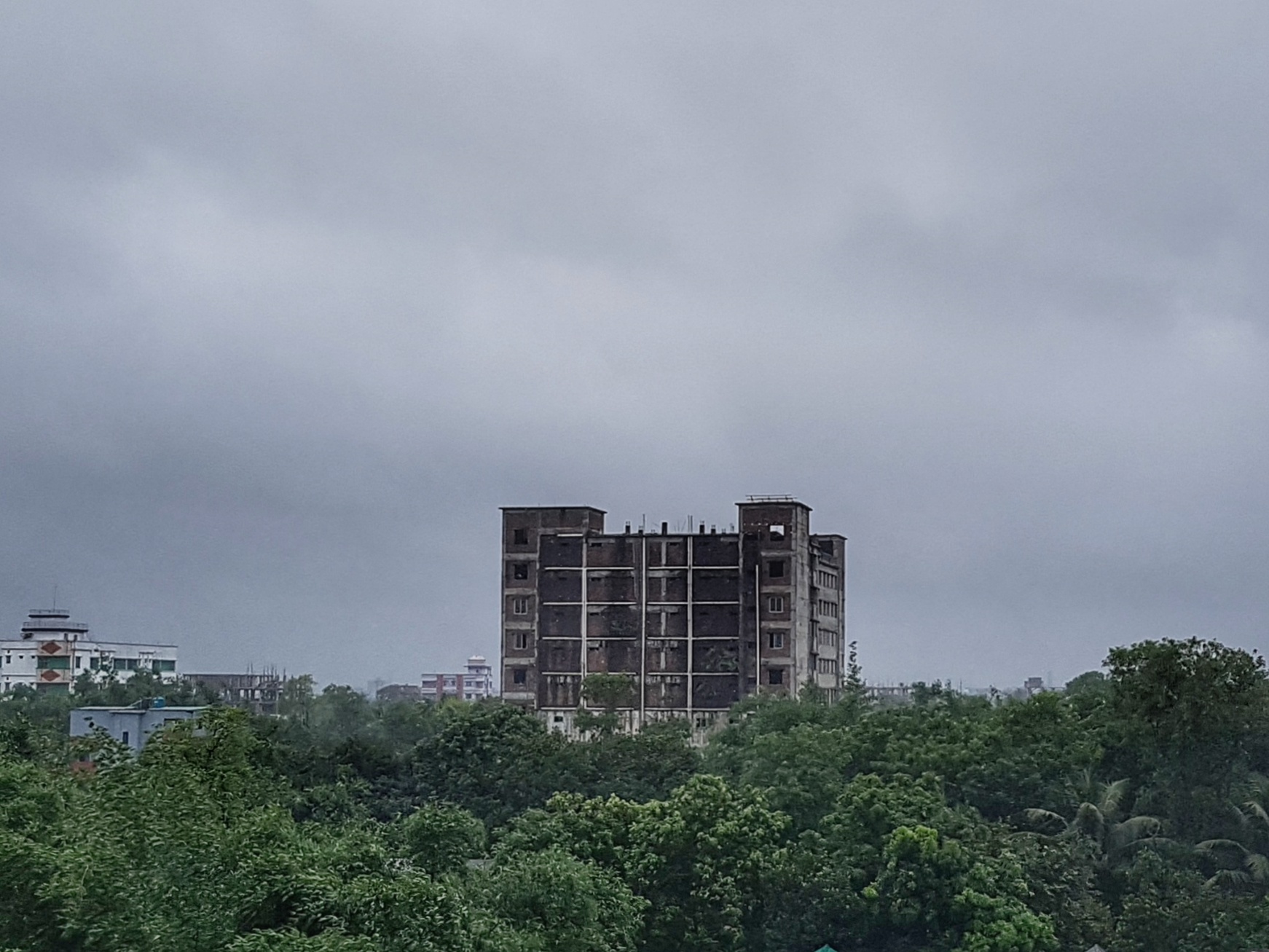
2012 Dhaka Garment Factory Fire
"The fire alarm had just gone out of order. Go back to work." Those were the words Mohammad Ripu heard from his factory manager on the night of November 24, 2012, moments before the Tazreen Fashion factory in Ashulia erupted in flames. Ripu survived by jumping from the second floor. At least 117 of his coworkers did not survive at all. The fire at this nine-story garment factory on the outskirts of Dhaka became the deadliest industrial blaze in Bangladesh's history, and it would force the world to confront an uncomfortable question: what is the true cost of a cheap T-shirt?
Stitched into the Supply Chain
When it opened in 2009, Tazreen Fashion employed 1,630 workers producing T-shirts, polo shirts, and jackets for some of the world's largest brands. The client list included the US Marines, Dutch retailer C&A, Hong Kong-based Li & Fung, and the American retail giant Walmart. Bangladesh's garment industry had grown into a colossus by offering what global brands wanted most: low costs. Workers earned wages so modest that the $1,250 compensation later offered to each victim's family represented roughly two years of pay. The economics were simple and brutal. When proposals surfaced to have retailers contribute more per garment to fund factory safety upgrades, Walmart's director of ethical sourcing rejected them outright, calling the necessary improvements to electrical and fire safety "not financially feasible for the brands." The New York Times later reported that Walmart had played a significant role in blocking these reforms.
Flames on the Ground Floor
The fire started on the ground floor, likely sparked by exposed wiring, and raced upward through the nine-story building. Workers on upper floors found themselves trapped. The factory lacked adequate emergency exits, a deficiency that fire department operations manager Mohammad Mahbub would later describe as catastrophic given that the blaze originated in the ground-floor warehouse and climbed fast. But the missing exits were not the only barrier to escape. Three factory supervisors were arrested four days later on charges of criminal negligence, accused by police of having padlocked the exits and physically prevented workers from leaving the building. Some who reached the roof were eventually rescued. Others, like Ripu, leaped from windows and survived with injuries. Over 200 workers were hurt. The 117 confirmed dead had been caught between locked doors and rising fire, killed by smoke and flame in a building designed to keep them at their machines.
Accountability on Trial
In the aftermath, Bangladesh's Prime Minister Sheikh Hasina expressed shock and declared November 27 a national day of mourning, with flags flown at half-mast. Yet the government's own investigation drew criticism when it concluded the fire was an act of "sabotage" without identifying any perpetrator or motive. Thirteen months passed before police filed an arrest warrant for Delwar Hossain, the owner and managing director of Tazreen Fashions Ltd. He was eventually charged with death by negligence, the first time in Bangladesh's history that a factory owner faced formal criminal charges over worker deaths. Academic Saydia Gulrukh, who helped push the case forward, acknowledged that international pressure had been decisive. Without the global spotlight, the prosecution might never have materialized.
The Price of a Dollar Shirt
Garment workers poured into the streets of Ashulia in protest, blocking a major highway for three days. Two hundred factories shut their doors in solidarity. When companies whose clothing had been manufactured at Tazreen gathered in Geneva in May 2013 to discuss victim compensation, Walmart and Sears declined to send representatives. Walmart did pledge $1.6 million to the Institute for Sustainable Communities for a safety academy in Bangladesh, but Worker Rights Consortium executive director Scott Nova called the sum woefully inadequate, noting that many factories still lacked even basic fire escapes. By November 2013, three safety regulation groups had agreed to pursue unified workplace safety standards. Over 24 US companies signed a pact to fund factory inspections. But the reforms came too late for the workers of Rana Plaza, an eight-story building in nearby Savar that collapsed on April 24, 2013, killing over 1,100 people and injuring approximately 2,500 more. The Tazreen fire had been a warning. Rana Plaza was the consequence of ignoring it.
What the Ashes Revealed
The Tazreen fire exposed a system in which the relentless pressure to cut costs had made worker safety an afterthought. The factory's fire certification had expired. Emergency exits were padlocked. Alarms were dismissed as malfunctions. These were not isolated failures but symptoms of an industry where brands competed on price and factories competed to fulfill orders at whatever cost. The workers who died in Ashulia were overwhelmingly young women from rural Bangladesh who had migrated to Dhaka's garment districts for wages that, however meager, exceeded what subsistence farming could provide. Their deaths forced a global reckoning with the supply chains that connect a factory floor in Bangladesh to a retail shelf in New York or Amsterdam. The reforms that followed, imperfect and incomplete, marked the beginning of a conversation that continues: who bears responsibility when the people who make our clothing cannot safely survive their workday?
From the Air
Located at 23.93N, 90.31E in the Ashulia district on the northwestern outskirts of Dhaka, Bangladesh. Best viewed from 3,000-5,000 ft AGL. The industrial area of Ashulia is visible as a dense cluster of factory buildings along the Dhaka-Tangail highway. Nearest major airport is Hazrat Shahjalal International Airport (VGHS) in Dhaka, approximately 20 km southeast. The site sits within the flat, heavily developed Dhaka metropolitan fringe where garment factories dominate the landscape.