2012 Virginia Beach F/A-18 Crash
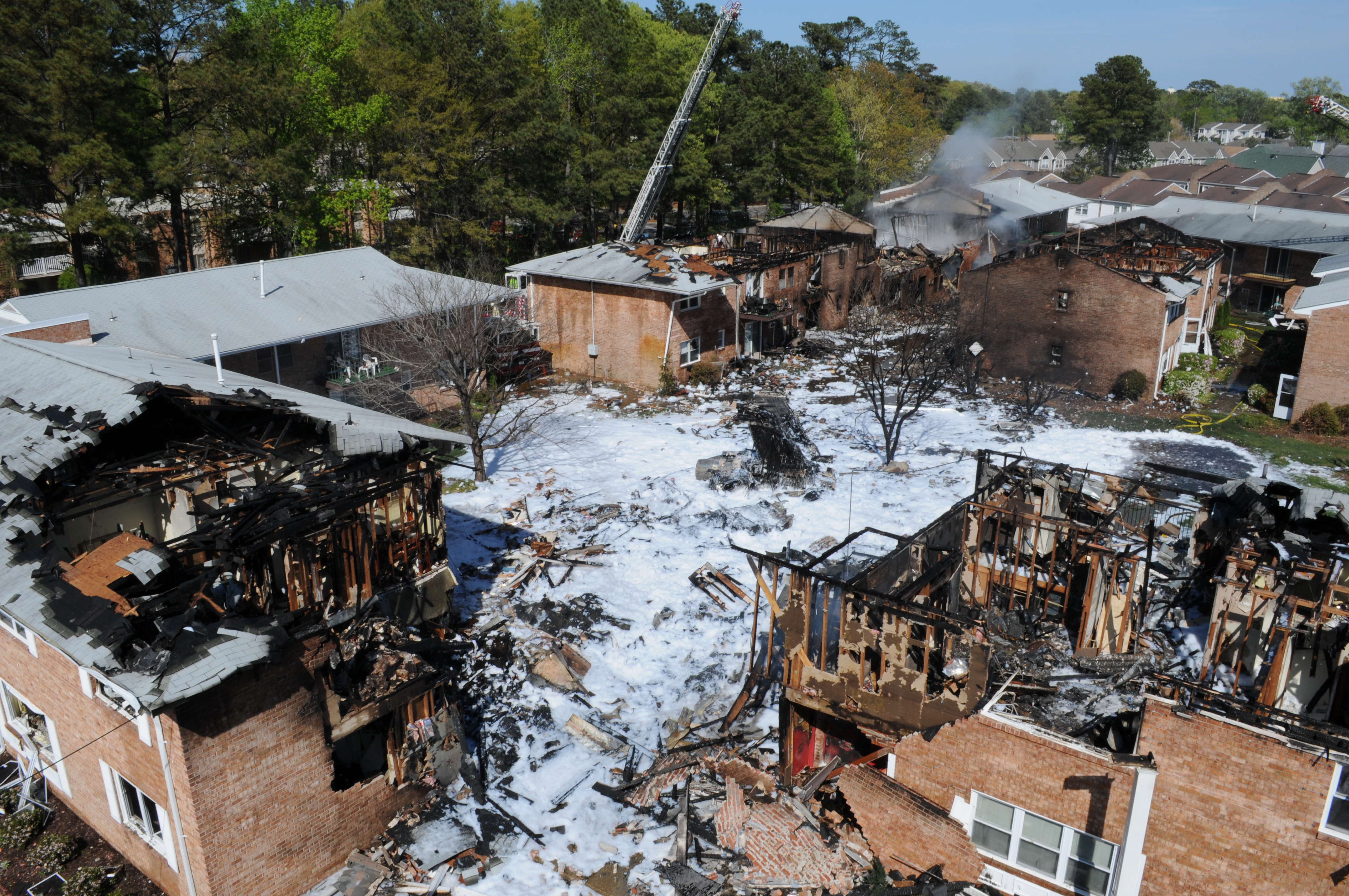
Seventy seconds. That is the entire duration of the flight that would put Virginia Beach on national news and test the nerve of two Navy aviators to the absolute limit. At 12:05 p.m. on April 6, 2012, an F/A-18D Hornet thundered down Runway 05R at Naval Air Station Oceana on what should have been a routine training exercise. Within moments, both engines failed in sequence -- a combination of malfunctions so unlikely it had never happened before in the history of the aircraft. What followed was not a crash so much as a controlled act of sacrifice, as two pilots rode a dying jet past a school and into an apartment complex, ejecting only after they had exhausted every option to steer it away from the densest pockets of people below.
Two Engines, Two Failures
The Hornet, Bureau Number 163452, was assigned to Strike Fighter Squadron VFA-106, the Navy's East Coast fleet replacement squadron based at Oceana. Seconds after the twin-engine fighter lifted off on a heading of 053 degrees, the right engine failed. The crew immediately firewalled the left engine, demanding maximum thrust from the one powerplant they had left. Then it, too, quit. A fuel leak had sent fuel into the right engine's intake, igniting a fire. The crew shut it down by the book. But as the pilot pushed the left engine harder, its afterburner refused to light -- an entirely separate, unrelated failure. Rear Admiral Ted Branch would later state plainly: "We have never had this kind of unrelated dual engine mishap in the F-18. It's the first time it's ever happened with this aircraft." In an instant, a scheduled training hop had become a no-engine glider over one of Virginia's most densely populated cities.
The Last Possible Second
With no thrust and altitude bleeding away, the crew began dumping fuel -- not to restart the engines, but to lighten the aircraft and reduce the fireball they knew was coming. The Mayfair Mews apartment complex, home to about 100 residents, sat less than three miles from the departure end of the runway, directly in the jet's path. A former Navy SEAL watching from the ground told Navy Times that the pilots ejected at the last possible second, apparently trying to keep the aircraft from striking a nearby school. An eyewitness on the ground watched the Hornet spray fuel as it passed barely 80 to 90 yards overhead, drenching his pickup truck. "The nose was up; it almost looked like it was trying to land," he said. "The engines were straining, but there was no smoke coming out of the plane." The jet plowed into the apartment buildings. One pilot landed inside the complex itself, bloody but conscious.
What the Wreckage Revealed
The Mayfair Mews complex suffered devastating structural damage. Apartment buildings were gutted. Jet fuel soaked the rubble, and black smoke billowed high enough to be visible across the city. Debris rained into neighboring parking lots. Residents emerged from the wreckage dazed, some carried out by first responders who arrived within minutes. And yet, against every reasonable expectation, no one died. Not a single resident, bystander, or crew member was killed. The Navy investigation traced the chain of events with precision: a fuel leak triggered the right engine fire, an unrelated afterburner malfunction took the left engine offline. Two independent failures, converging in the span of seconds, over a densely populated neighborhood. The investigation confirmed what witnesses already understood -- the crew had stayed with the aircraft far longer than self-preservation would dictate, steering it away from the school and the most populated areas they could see.
Living Under the Flight Path
Naval Air Station Oceana is the Navy's master jet base on the East Coast, home to all the Atlantic Fleet's strike fighter squadrons. It sits in the middle of Virginia Beach, a city of nearly half a million people that has grown up around the airfield over decades. Neighborhoods, schools, and shopping centers press against the base perimeter, and the sound of afterburners is as much a part of daily life as the ocean breeze. The crash renewed debate about the wisdom of dense development beneath military flight paths, a conversation Virginia Beach has been having since at least the 1990s. But for the residents of Mayfair Mews, the question was not abstract. They lived the worst-case scenario that urban planners warned about -- and walked away from it. The apartments were rebuilt. The base continues to operate. Jets still launch from Runway 05R on a heading of 053 degrees, passing over the same rooftops, carrying different crews, running different engines -- but following the same narrow corridor between the airfield and the sea.
From the Air
Located at 36.851N, 75.994W, the Mayfair Mews crash site sits immediately northeast of NAS Oceana (KNTU). The apartment complex is visible less than a mile from the departure end of Runway 05R. Overfly at 2,000-3,000 feet AGL to see the relationship between the base, the surrounding neighborhoods, and the school the pilots steered away from. Norfolk International Airport (KORF) is 12 nm to the west. The area is Class C airspace under NAS Oceana's control.