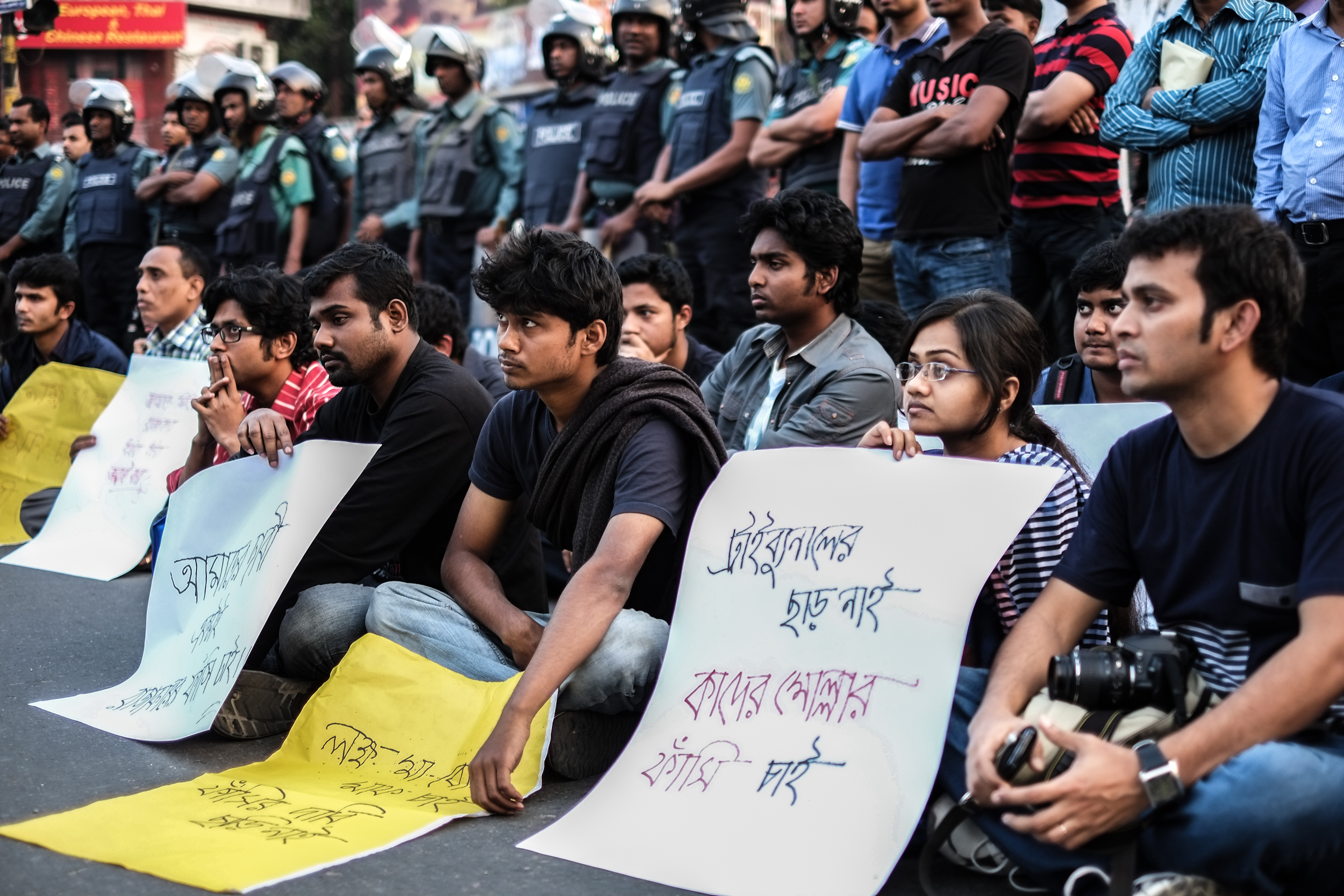
2013 Shahbag Protests
On the evening of 5 February 2013, a verdict landed like a spark on dry tinder. Abdul Quader Mollah -- convicted on five of six counts of war crimes for his role supporting West Pakistan during the 1971 Liberation War, including complicity in the murder of Bengali nationalists and intellectuals -- received a sentence of life imprisonment. To millions of Bangladeshis who had waited four decades for justice, life imprisonment was not justice at all. Within hours, bloggers and online activists issued a call, and by nightfall the intersection at Shahbagh in central Dhaka had become something unprecedented: a spontaneous, leaderless occupation that would swell to hundreds of thousands and force a nation to confront its bloodiest chapter.
Forty Years of Waiting
The wounds of 1971 never fully closed. During the Liberation War, Pakistani forces and their local collaborators -- particularly members of auxiliary groups like the Razakars and Al-Badr -- carried out systematic killings of Bengali civilians, intellectuals, and political activists. After independence, justice was deferred. The collaborators were granted amnesty, and several built political careers under the banner of Jamaat-e-Islami. By the 2008 election, public demand for accountability had become a central campaign issue. The Awami League won a landslide on a promise to prosecute war criminals, and in 2010 the government established the International Crimes Tribunal. But the tribunal's proceedings were slow and politically fraught, each verdict a flashpoint. When Mollah's sentence came -- life, not death -- it felt to his accusers not like justice delayed but justice denied.
The Square That Became a Movement
Shahbagh is an ordinary traffic intersection in central Dhaka, unremarkable except for its size. On 5 February 2013, it became extraordinary. Students and bloggers arrived first, carrying Bangladeshi flags and banners demanding the death penalty for convicted war criminals and a ban on Jamaat-e-Islami's participation in politics. By Friday the 8th, an estimated 100,000 people packed the intersection and surrounding streets. Traffic stopped. Human chains formed. A Bangladesh Premier League cricket match at the nearby Sher-e-Bangla Stadium fell silent as spectators joined the protests. The movement operated without traditional leadership -- Facebook events and blog posts replaced party structures, and the crowd self-organized around shared grief and shared fury. Social media carried images of the occupation worldwide, drawing coverage from the BBC, CNN, Al Jazeera, and The New York Times.
Counter-Currents and Violence
The backlash was swift and bloody. Jamaat-e-Islami and its student wing, Shibir, organized counter-protests challenging the tribunal's legitimacy and demanding the release of convicted leaders. When the tribunal sentenced Delwar Hossain Sayeedi to death on 28 February for war crimes committed in 1971, Jamaat supporters erupted in violence across the country. Clashes left dozens dead. On 15 February, blogger Ahmed Rajib Haider -- one of the Shahbagh movement's most prominent online voices -- was found murdered near his home, his killing linked to militants with ties to extremist networks. The murder chilled the movement but did not break it. Instead, it sharpened the protesters' demands: not just punishment for war criminals, but a reckoning with the political forces that had sheltered them for decades.
Reckoning and Legacy
The protests produced tangible results. The government amended the International Crimes (Tribunals) Act to allow prosecution appeals of sentences deemed too lenient, and the Supreme Court subsequently overturned Mollah's life sentence, imposing the death penalty. He was executed on 12 December 2013. Other convicted war criminals followed: Muhammad Kamaruzzaman, Ali Ahsan Mohammad Mojaheed, Salauddin Quader Chowdhury, and Mir Quasem Ali were all eventually hanged. Whether Shahbagh achieved justice or became a tool of political vengeance depends on who you ask. The movement's critics point to the slogans that veered toward vigilantism, the death threats directed at dissenters, and the political instrumentalization of genuine public grief. Its defenders argue that four decades of impunity demanded a dramatic response. What is undeniable is the scale of what happened: an entire generation, born long after 1971, filling the streets of their capital to demand that their country's founding trauma be acknowledged and answered.
From the Air
Located at 23.738N, 90.396E at the Shahbagh intersection in central Dhaka, near Suhrawardy Udyan and the University of Dhaka campus. The intersection is a major traffic node visible from low altitude. Best viewed at 2,000-3,000 feet. Nearby airport: Hazrat Shahjalal International Airport (VGHS), approximately 10 km north. The Buriganga River to the south and the green space of Ramna Park provide navigation references.