2014 IPC Swimming European Championships
Dmitrii Kokarev, a Russian swimmer with an S2 classification, touched the wall of the Pieter van den Hoogenband Swimming Stadium on 5 August 2014 with a time of 58.43 seconds in the 50m freestyle - the first European in his class ever to swim under a minute. He went on to break another world record in the 200m freestyle the next day. Across seven days in Eindhoven, around 375 athletes from 35 countries did things like this repeatedly. The 2014 IPC Swimming European Championships were not a sideshow to anything. They were one of the most record-dense weeks in the sport's history, contested by swimmers whose paths to that pool deserve more than a passing mention.
The Stadium South of Eindhoven
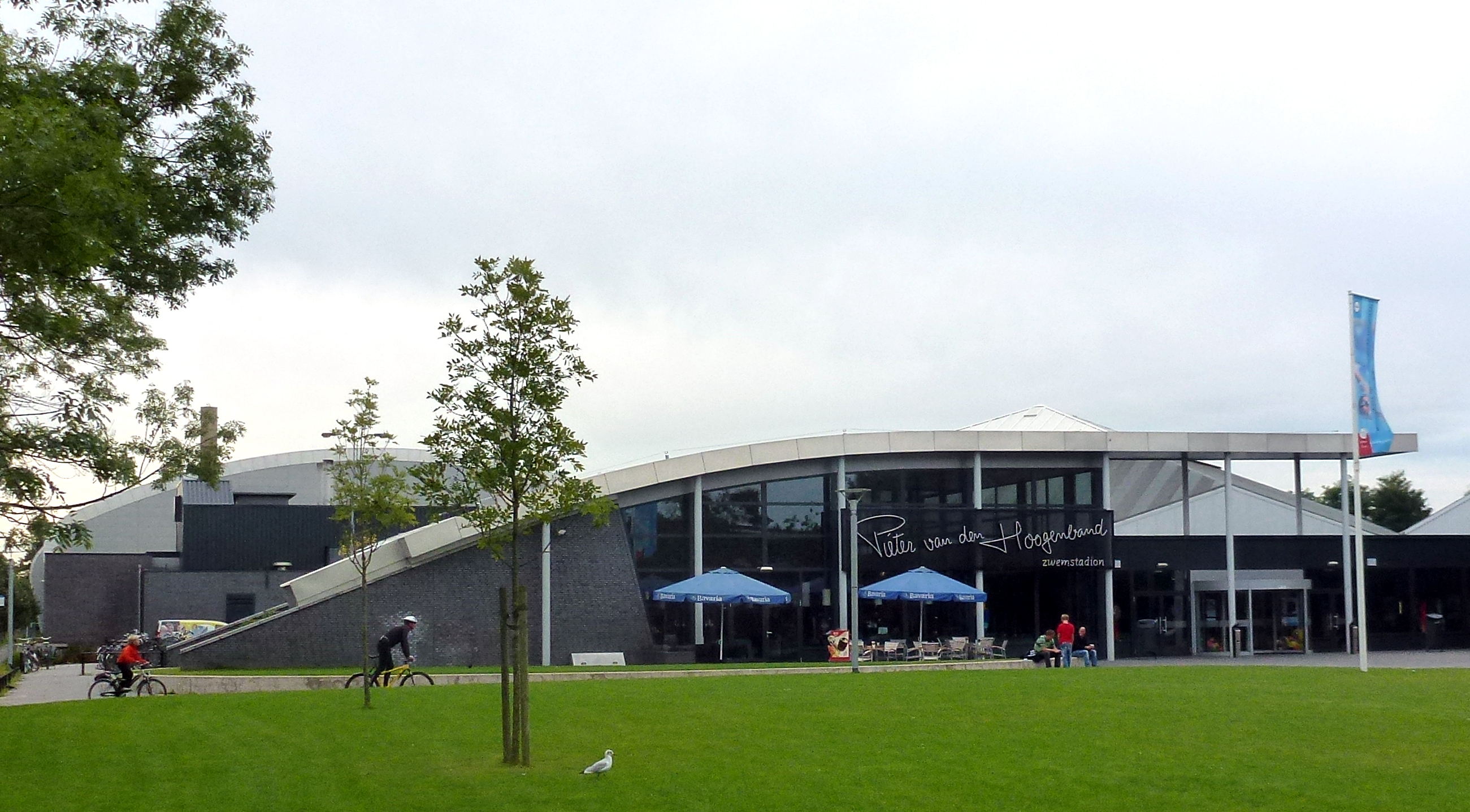
The venue takes its name from Pieter van den Hoogenband, the local sprinter who collected three Olympic gold medals at Sydney 2000 and Athens 2004. The complex sits in the south of Eindhoven, near the De Tongelreep sports park, and in 2014 its three pools had just been renovated. The same building had hosted the 2010 IPC Swimming World Championships, so it arrived with crowd-handling experience and a Paralympic culture already baked in. Television coverage in 2014 was broader than usual - Channel 4, fresh off its London 2012 commitment, broadcast extensive footage to British audiences, part of a continuing shift away from treating Para sport as a quadrennial novelty.
How a Race Becomes Fair
Para swimming uses three letters and ten numbers to make competition meaningful. S1 through S10 covers physical impairment, from most affected to least, for freestyle, backstroke, and butterfly. SB1-SB9 handles breaststroke. SM1-SM10 handles individual medley. S11-S13 covers visual impairment, with S11 swimmers totally blind and required to use blackened goggles; S14 is for athletes with intellectual impairment. The system is endlessly debated - any classification is - but it exists so that a swimmer missing both legs and one arm is not racing the same race as someone with limited use of one hand. Olga Sviderska, a Ukrainian S3 swimmer at these championships, had no S3 race available, so she swam up into the S4 50m freestyle and still set a world record in her own class while taking bronze.
The Records of Day One
Day one was Ukraine's. Six golds. Summer Mortimer, swimming for the Netherlands for the first time after years representing Canada, broke the European record for the women's 50m freestyle S10 in the morning and broke her own record again in the afternoon. Germany's Elena Krawzow set a new European record in the women's 100m breaststroke S13. Spain's Sarai Gascon Moreno equalled Natalie du Toit's world record in the 50m freestyle S9. The Dutch crowd had its own moment when Marc Evers broke his own world record in the 100m backstroke S14. Oleksii Fedyna of Ukraine took nearly two seconds off the world record in the 100m breaststroke SB12, beating the previous holder, Belarus's Uladzimir Izotau, into second place. And it was only the first afternoon.
Stephanie Slater's Two Gold Mornings
Day three started the way day one ended - with records falling. Great Britain's Stephanie Slater shaved more than a second off Jessica Long's world record in the 100m butterfly S8 to take her second gold of the championships. The host nation's Chantalle Zijderveld broke the European record in the women's 100m butterfly S8 minutes later. Russia completed the SB9 men's 100m breaststroke with a clean sweep - Pavel Poltavtsev, Dmitry Grigorev, and Dmitry Bartasinskiy taking gold, silver, and bronze. In the afternoon, Spain's Michelle Alonso Morales took a second off her own world record in the 100m breaststroke SB14, the record she had set at the London Paralympics two years earlier. Slater closed the day with another gold in the 200m individual medley SM8. Britain finished day three with five golds, including a new European record from Andrew Mullen in the men's 50m butterfly S5.
Thirty-Five Countries, One Week
The participation roster ran from single-athlete nations to teams of more than fifty. Italy sent Federico Morlacchi and Arjola Trimi, both of whom collected multiple golds. Denmark had its first medal of the championship when Amalie Vinther won the women's 400m freestyle S8. Ukraine kept piling on titles, with Dmytro Vynohradets, Yelyzaveta Mereshko, and Yevheniy Bohodayko all taking gold. A 17-year-old Polish swimmer, Oliwia Jablonska, broke the European record in the women's 100m butterfly S10. The week's record sheet, if you pulled it apart, is mostly a list of personal projects - individual stories of training arrangements, classification decisions, and journeys to a pool in Eindhoven, intersecting for seven days in August. The medals table is the visible part. The rest is the part that matters most to the people swimming.
From the Air
Coordinates 51.4157 N, 5.4778 E, in the south of Eindhoven near the De Tongelreep sports complex. Best viewing altitude 1500-2500 ft AGL. The three pools and curved roofs of the Pieter van den Hoogenband Swimming Stadium are visible from the air, set in green sports grounds. Nearest airports: Eindhoven Airport (EHEH) 9 km west-northwest, Weeze (EDLV, Germany) 65 km east. The Eindhoven approach passes nearby; mind the airport traffic pattern.