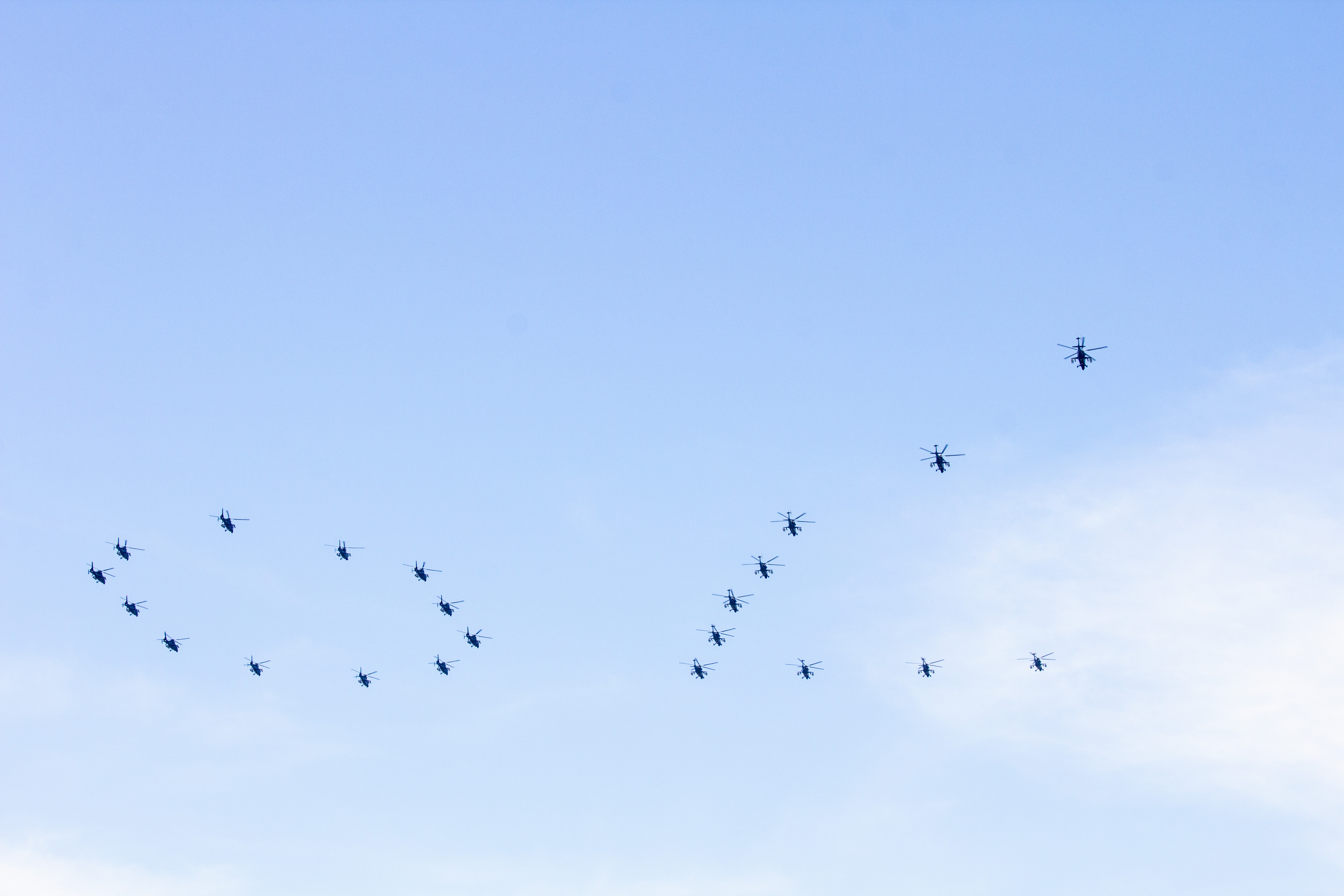
2015 China Victory Day Parade
The sky over Beijing was unusually clear on September 3, 2015. It should have been: the government had shut down factories and closed roads for days to ensure the capital's notoriously polluted air would cooperate. PM2.5 measurements dropped below 50, traffic jams vanished, and residents joked that they should hold military parades more often. Along Chang'an Avenue, 12,000 troops of the People's Liberation Army stood in formation for the first Chinese military parade ever held for an occasion other than the country's October 1 National Day.
Seventy Years After Surrender
The parade commemorated the 70th anniversary of Victory over Japan Day, marking the end of the Second Sino-Japanese War and World War II. It was also Xi Jinping's first major military parade since becoming General Secretary in 2012, a distinction not lost on observers. The most prominent previous parades had been held in 1959 under Mao Zedong, 1984 under Deng Xiaoping, 1999 under Jiang Zemin, and 2009 under Hu Jintao -- each one doubling as a display of the sitting leader's authority. The prevailing theme was 'peace and victory,' though the parade's sheer scale suggested other messages. Over 1,000 troops from 17 countries participated, and approximately 850,000 'Citizen Guards' were mobilized to secure the city.
Atop the Gate
Xi Jinping watched from atop Tiananmen Gate, wearing a Mao suit -- customary for leaders inspecting troops at military parades -- while his wife Peng Liyuan wore a red dress. General Song Puxuan, commander of the Northern Theater Command, greeted Xi at the start and declared the troops' readiness. Premier Li Keqiang served as master of ceremonies, breaking with the convention of having the Communist Party Secretary of Beijing host the event. The remaining political figures wore business suits. All living former members of the Politburo Standing Committee who were in good standing with the party attended, seated in strict protocol order to the right of the current leadership.
A Surprise Announcement
Xi's keynote address contained an unexpected element: the announcement that China would cut 300,000 personnel from its military. The reduction, which would bring the PLA down to about two million active troops, was framed as a peace gesture, though analysts noted it also served Xi's ongoing military modernization agenda -- replacing quantity with technological capability. Two new public holidays were also decreed: September 3 as Victory over Japan Day, and December 13 to commemorate the Nanjing Massacre. The second holiday was explicitly directed at Japan, ensuring that the war's memory would be institutionalized in the national calendar.
The Cost of Clean Air
The preparations revealed how much control the state could exercise over daily life when it chose to. Bloomberg reported that the central government intervened in the stock market to ensure stability. Line 1 of the Beijing Subway, which runs beneath Chang'an Avenue, was shut down entirely. Two hundred and fifty-six bus lines were restricted. Hospitals limited operations to emergencies. The stock markets closed. Domestic satellite television was restricted from airing entertainment between September 1 and 5, with CCTV replacing all programming with patriotic war films and documentaries. The factory shutdowns and road closures produced something Beijing residents rarely experience: genuinely clean air and empty streets. The parade lasted a few hours. The question of what it took to produce those hours lingered considerably longer.
From the Air
Located at 39.91N, 116.39E along Chang'an Avenue and Tiananmen Square in central Beijing. The parade route follows the broad east-west avenue that bisects the city center. Nearest airports are Beijing Daxing International (ZBAD) and Beijing Capital International (ZBAA).