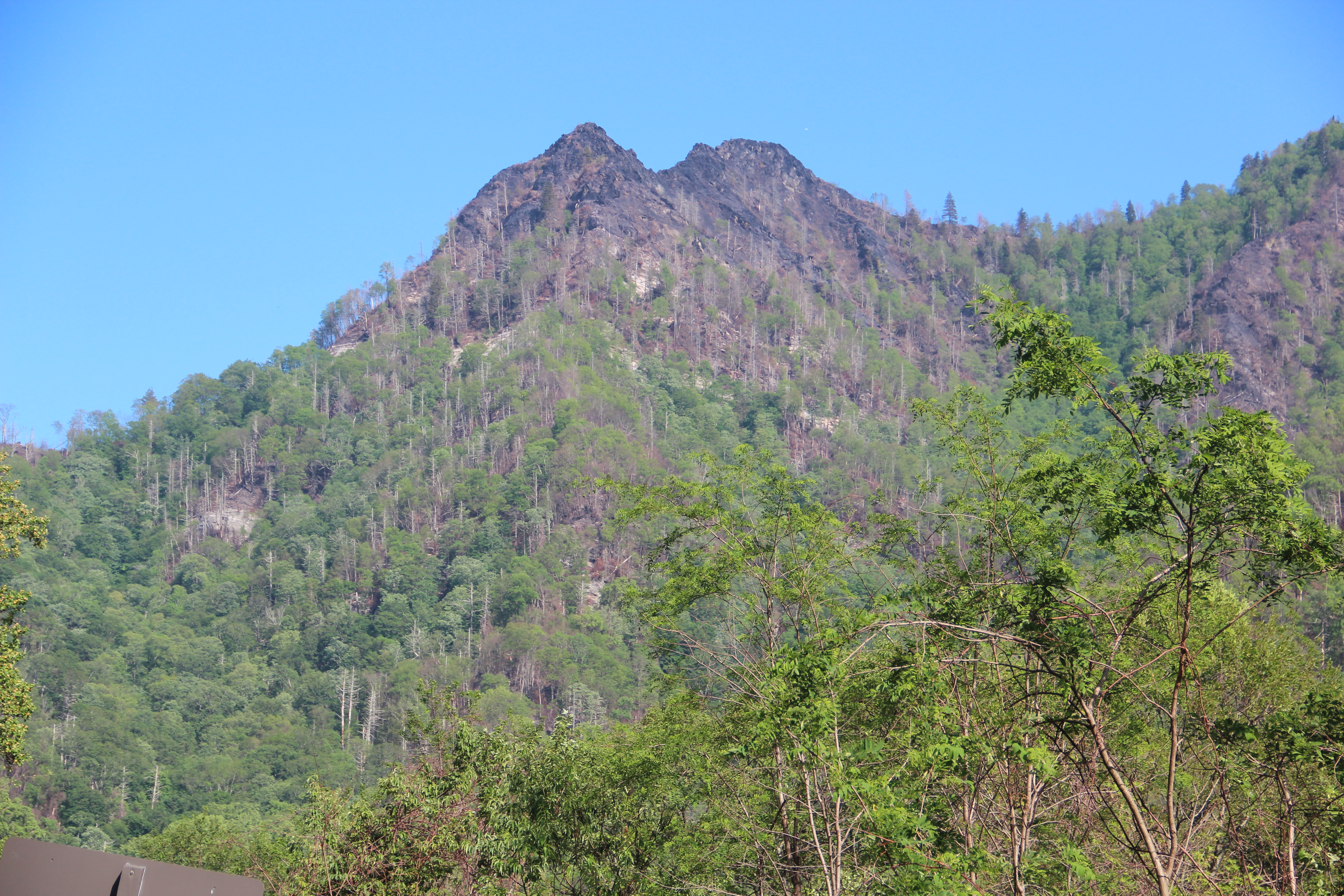
2016 Great Smoky Mountains Wildfires
The fire hydrants ran dry first. On the evening of November 28, 2016, with winds screaming through the hollows at 87 miles per hour, Gatlinburg Fire Chief Greg Miller called for help from all of Sevier County, then from the entire state of Tennessee. Power had failed at pumping stations. Other stations had burned outright. The radio system was overloaded, cell towers were down, and the 911 system was so overwhelmed that calls meant for Sevier County were routed to Putnam County, 100 miles to the west. In a national park that receives more visitors than any other in America, the infrastructure for fighting a catastrophe simply ceased to function.
Five Days of Inaction
The Chimney Tops 2 Fire was first reported on November 23, 2016, deep within Great Smoky Mountains National Park. Park fire officials chose not to suppress it. Instead, they drew a containment boundary using natural features -- ridgelines and streams -- and hoped it would hold. For four days, the fire smoldered within those lines while east Tennessee endured what the U.S. Drought Monitor classified as "Exceptional" drought. Humidity dropped to 17 percent. On November 27, three Chinook helicopters dumped water on the blaze in a belated effort at mitigation. The National Weather Service predicted wind gusts up to 40 mph for the following day. What arrived was far worse. Mountain wave winds -- a meteorological phenomenon where air accelerates as it flows over terrain -- generated gusts reaching 87 mph. The containment boundary became meaningless.
The Night Gatlinburg Burned
On November 28, park employees watched the fire jump past the Chimneys Picnic Area, north of the containment line. Wind-driven sparks and downed power lines ignited new blazes across Gatlinburg and Pigeon Forge throughout the afternoon and evening. A separate fire destroyed much of the Cobbly Nob subdivision east of Gatlinburg. Trees toppled onto power lines, starting still more fires. Emergency communications collapsed. The Gatlinburg emergency operations center lost power. Firefighters could not reach each other by cell phone or radio. By the time the chaos subsided, the fires had burned more than 11,000 acres inside the national park and thousands more beyond its boundaries. At least 14,000 residents and tourists were forced to evacuate. Over 2,000 buildings were damaged or destroyed. Fourteen people were dead -- making this the deadliest wildfire in Tennessee's history and the deadliest in the eastern United States since the Great Fires of 1947 killed 16 people in Maine.
Dolly's People Fund
Dolly Parton grew up in Sevierville, just miles from the devastation. Her theme park, Dollywood, in Pigeon Forge, was largely spared, but Parton was heartbroken. She acted fast. On December 13, a telethon in Nashville featuring Kenny Chesney, Brad Paisley, John Rich, John Oates, and Kristian Bush raised $9 million. Then she created the My People Fund, which provided $1,000 per month for six months to over 900 families who lost their homes. As fundraising exceeded expectations, the final monthly payment was increased to $5,000, bringing the total to $10,000 per family. A University of Tennessee study later found that the unconditional cash allowed recipients to return to baseline financial stability and build emergency savings -- concluding that direct cash transfers may be more effective for disaster relief than conditional support programs.
Questions of Accountability
Two juveniles were initially charged with aggravated arson but the charges were dropped, partly due to a jurisdictional agreement between Tennessee and the Department of the Interior that prevented the state from prosecuting crimes occurring entirely within the park. Investigations revealed that many of the area fires were caused by wind-blown embers from the larger blaze, not separate acts of arson. Local officials withheld information throughout the investigation, citing what was later characterized as an erroneous interpretation of a gag order. In May 2018, a federal lawsuit was filed against the National Park Service on behalf of victims. In September 2020, U.S. District Judge Ronnie Greer ruled that the Park Service had failed to adequately warn residents, opening the door to financial liability. The case was briefly dismissed in 2022 over a paperwork error, then reinstated by an appellate panel in August 2023.
Come Back and Visit Us
Gatlinburg Mayor Mike Warner delivered his city's message plainly: "If you really want to do something for Gatlinburg, come back and visit us." The region was already reeling. Small business owners on Second Avenue and throughout Gatlinburg's tourist district had been weathering the COVID-19 pandemic and the aftermath of a tornado that struck Nashville in March 2020. The fires compounded years of hardship. President Obama ordered federal disaster relief funds to the area. Governor Bill Haslam, surveying the damage from the air, called it "a little numbing." But Gatlinburg's recovery proved more resilient than the pessimists expected. Tourism researchers at the University of Tennessee noted that despite the negative press, the region recuperated fairly quickly. The Smoky Mountains still draw more visitors annually than any national park in the country. The scars from 2016 are healing, but they remain visible -- reminders of what happens when drought, wind, and fire converge on a landscape that millions of people call their favorite place.
From the Air
Located at 35.63N, 83.48W in the Great Smoky Mountains, straddling the Tennessee-North Carolina border. Gatlinburg sits in a narrow valley along the West Prong of the Little Pigeon River, with the national park rising steeply to the south. Chimney Tops (the fire's origin point) is a prominent twin-peaked rock formation visible at approximately 35.63N, 83.48W, elevation 4,724 ft. The Sugarlands Visitor Center and park headquarters are at the mouth of the valley. Pigeon Forge and Dollywood are 5 miles north along US-441. Nearby airports: KGKT (Gatlinburg-Pigeon Forge, 8nm north), KTYS (McGhee Tyson/Knoxville, 35nm northwest). CAUTION: Mountain wave turbulence is a real hazard here -- the same phenomenon that drove the 2016 fires. Strong southerly winds over the Smokies can produce severe downdrafts on the north slopes. Best viewed at 6,000-8,000 ft MSL. Clingmans Dome (6,643 ft) is the highest point in the park, visible to the southeast.