2016 Nice Truck Attack
The fireworks over the Baie des Anges had just ended. It was the evening of July 14, 2016 -- Bastille Day, France's most important national holiday -- and tens of thousands of people packed the Promenade des Anglais in Nice. Families with children, tourists, locals who had come for the celebration. At approximately 10:30 p.m., a 19-tonne cargo truck accelerated into the crowd and drove for nearly two kilometers along the seafront promenade, killing 86 people and injuring more than 450. Among the dead were citizens of France, Tunisia, Algeria, Germany, Switzerland, the United States, Russia, and several other countries.
A City's Night of Horror
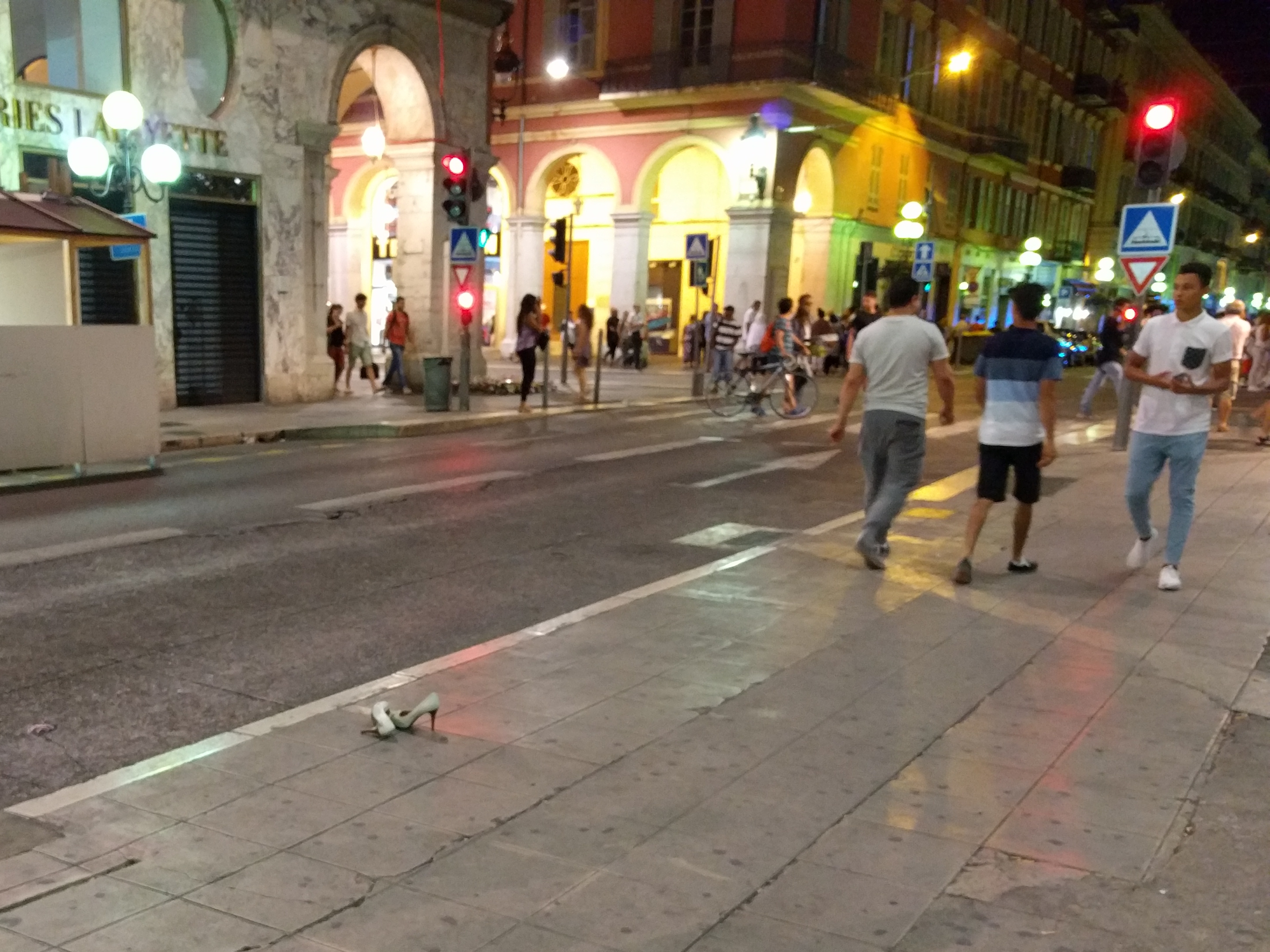
The attack lasted roughly four minutes. The truck drove along the Promenade des Anglais, swerving to hit as many people as possible. The attacker was eventually stopped and killed by police gunfire. In the confusion that followed, social media became a lifeline: residents used the hashtag #PortesOuvertesNice -- Open Doors Nice -- to offer shelter to strangers fleeing the promenade, echoing a response that had emerged during earlier attacks in Paris. False rumors spread rapidly: that hostages had been taken elsewhere, that the Eiffel Tower was under attack, that Cannes had been targeted. None were true. The reality on the Promenade was terrible enough. Bodies and abandoned belongings littered the famous seafront walkway where, hours earlier, families had sat watching fireworks over the Mediterranean.
A Nation Already Wounded
France was still reeling from the November 2015 Paris attacks when Nice was struck. President Francois Hollande, who had been in Avignon, returned to Paris for an emergency meeting and addressed the nation before dawn. He extended the state of emergency, already in effect since the Paris attacks, by three months. Prime Minister Manuel Valls announced three days of national mourning. When Valls arrived in Nice to observe a minute of silence on July 18, the crowd booed him -- an unprecedented response that the BBC described as 'a stark warning of how the mood in the country has changed.' Hollande received a similar reception when he visited the city. The anger reflected a growing frustration that successive attacks had exposed failures in intelligence and security that the government seemed unable to address.
Solidarity in Grief
The first Islamic funeral for victims of the attack took place on July 19 at the Ar-Rahma mosque, the oldest in Nice. The imam, Otmane Aissaoui, spoke over the bodies of a 23-year-old Tunisian woman, her 4-year-old child, and a young man. 'The sole frontier for which one should halt is this,' he said, 'the respect for a man, for a woman, irrespective of their colour of skin, their origin.' A Catholic priest from a nearby parish, Father Patrick Bruzzone, was invited to speak as well. 'My brothers,' he told the congregation, 'I say my brothers because, today more than ever, when one man is hurt, the whole of humanity is hurt.' Three Nice residents who had chased the truck during the attack, attempting to stop it, were later awarded medals for bravery by local authorities.
The Promenade Remembers
In the weeks and months that followed, memorials appeared along the Promenade des Anglais -- flowers, photographs, messages in dozens of languages. The attack prompted a fierce debate about whether CCTV footage of the event should be preserved or destroyed; Nice's local government refused a request from the national anti-terror directorate to destroy the recordings, arguing they might reveal inadequate security measures. The Promenade des Anglais itself -- built in the 1820s as an elegant English-funded walkway where aristocrats took the sea air -- has absorbed this tragedy into its long history. The walkway has survived two world wars, the transformation of Nice from aristocratic resort to modern city, and now this. People still stroll its length at sunset, still watch fireworks from its railings. But on every Bastille Day since 2016, the celebrations carry a weight they did not carry before.
From the Air
Located at 43.69N, 7.25E along the Promenade des Anglais in Nice. The promenade is the long curved seafront boulevard visible from the air, running along the Baie des Anges. Nice Cote d'Azur Airport (LFMN) is immediately to the west. The attack took place along approximately 2 km of the promenade. The memorial site is near the Jardin Albert 1er at the eastern end. Best viewed on approach to LFMN, where the full sweep of the promenade and bay are visible.